Over 200,000 people in England play this beautiful, slightly chaotic sport regularly, which is roughly the population of a small city all swatting at a feathered projectile and shouting “mine!” at each other in church halls across the country. Whether you’re a wide-eyed beginner who just found a dusty racket at the back of the garage, a seasoned club player whose current racket has more sellotape than string, or a parent who has been roped into “a quick game” by a small child with the wrist strength of a tiny demon — picking the right kit genuinely matters.
This guide reviews ten badminton products currently doing the rounds on Amazon. We’ve covered everything from “the whole family is going to the beach” starter bundles to “I’m not messing about, I want to win the league” individual rackets. Each one has been broken down by who it’s for, what it actually does, and whether it’ll survive contact with your enthusiastic cousin Steve.
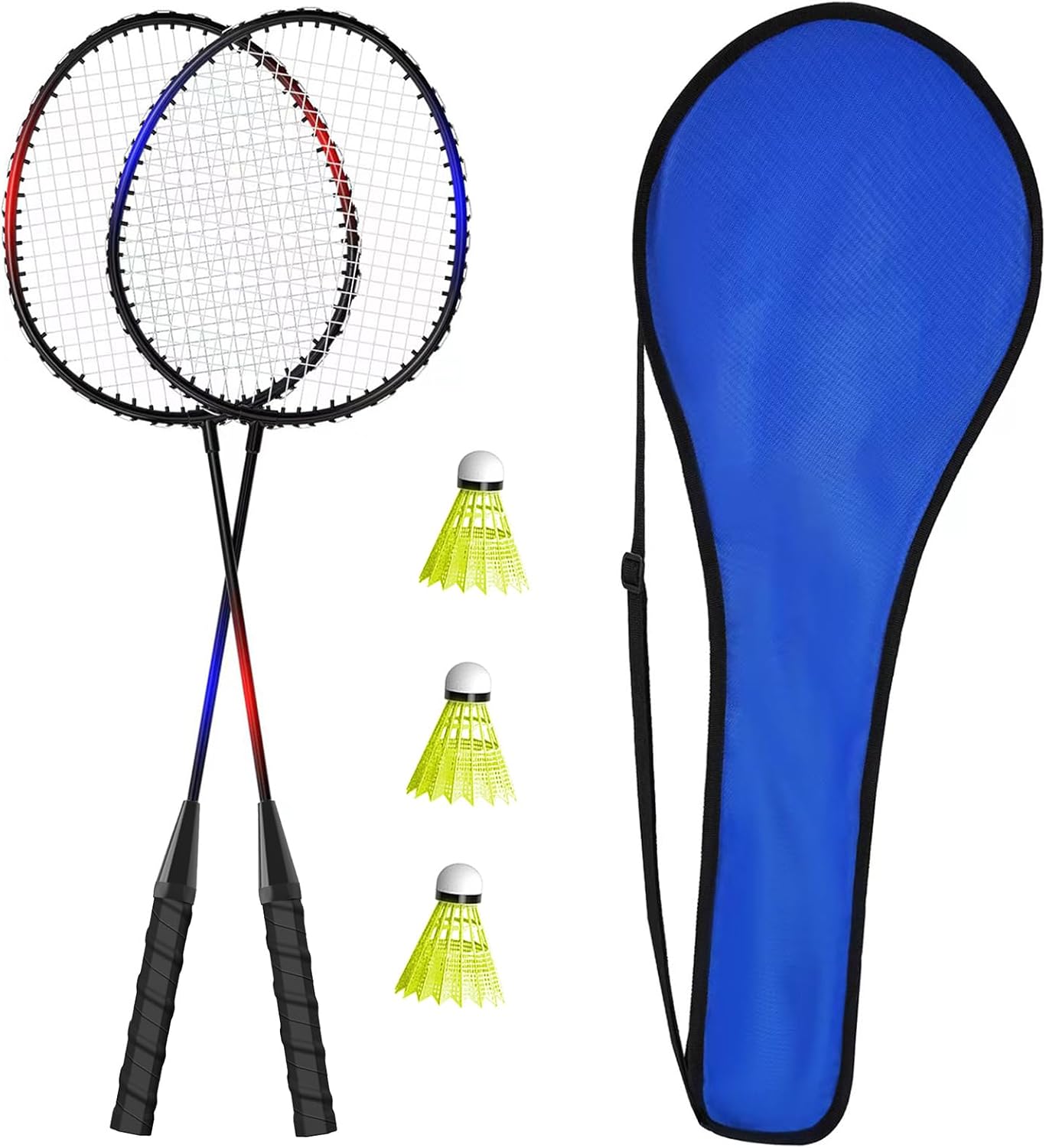
Use Case: Family barbecues. Beach trips. That one cousin who claims he’s “actually quite good” and then air-shots three times in a row. This is the bundle for first-timers who don’t want to fall down the rabbit hole of “do I need G4 or G5 grip” before they’ve even hit a shuttle. It’s perfect for the kind of bundle-buying beginner who wants a complete kit and a confidence boost without juggling six separate Amazon orders.
Review: A genuinely solid starter set. The aluminium frames are light enough not to dislocate your shoulder and durable enough to survive the inevitable moment when one ends up under a car tyre. Weather-resistant materials mean you can leave them in the boot for a fortnight and they won’t turn into modern art. The carry bag is a nice touch — small thing, big difference when you’re trying to wrangle three children and a picnic blanket.
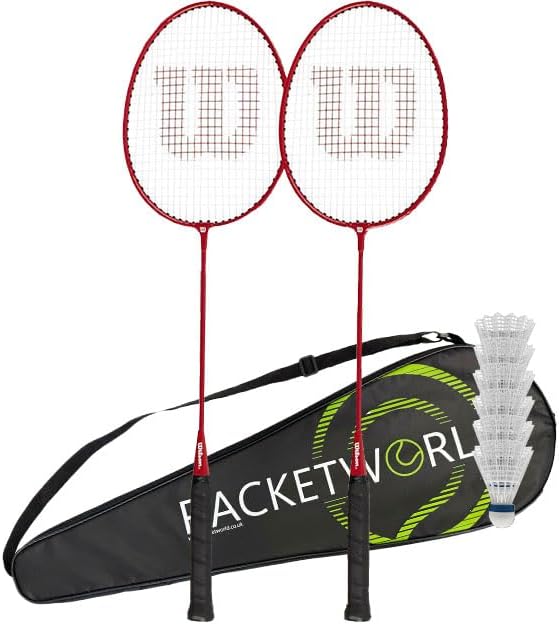
Use Case: You’ve graduated from “occasional garden games” to “we have a regular Tuesday slot at the leisure centre.” You want a brand name you can pronounce confidently in front of the receptionist. Wilson it is.
Review: Wilson have been making sports gear since approximately the dawn of the forehand, and it shows. The set includes cork-base plastic shuttles in a proper protective tube (not a sad plastic bag), and a carry bag with an actual shoulder strap that doesn’t snap the moment you load it. The rackets feel balanced — neither too heavy nor too whippy — which is exactly what you want when you’re trying to develop a technique that isn’t just “swing harder.” This is the racket equivalent of buying the mid-range trainers instead of the bargain bin ones. You won’t regret it.
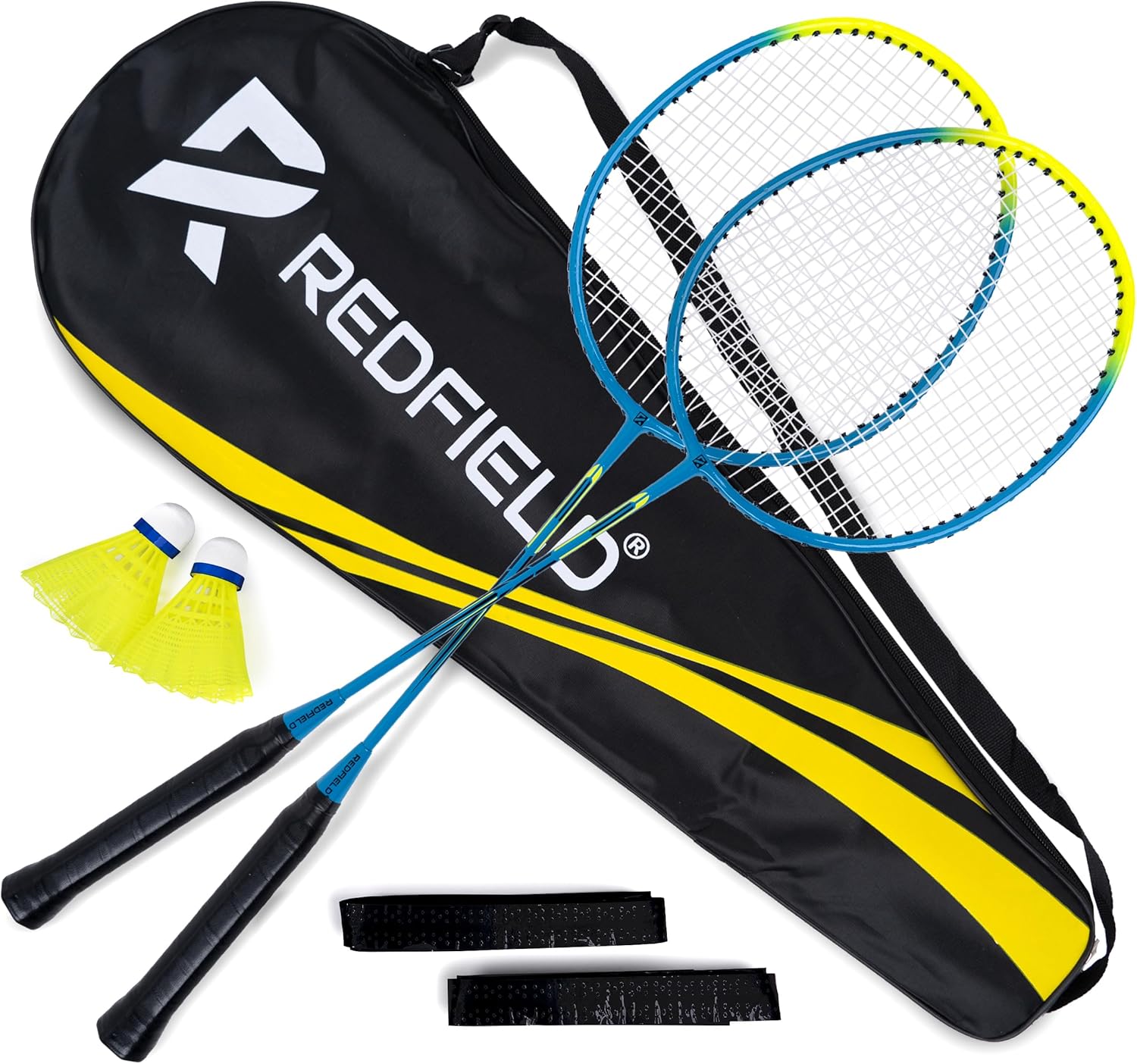
Use Case: Camping. Glamping. That weird stretch of grass behind the holiday cottage. Anywhere you don’t have a proper court but you do have a bit of wind and a strong urge to embarrass your in-laws.
Review: The Redfield set is the unsung hero of British summer — built specifically for outdoor chaos. The frames take a beating from breezes that would make indoor shuttles loop-the-loop, and the whole thing packs down small enough to wedge between the cool box and the inflatable flamingo. It’s not tournament-grade. Nobody’s pretending it is. But for “let’s have a quick knockabout before it inevitably rains,” it is genuinely brilliant.
Key Features:
Outdoor-specific design
Lightweight and portable
Durable weather-resistant construction
Compact carry bag included
Easy setup and storage
Specifications:
Frame Material: Aluminium alloy
Shaft Material: Steel
String Tension: Pre-strung (16–18 lbs)
Weight: ~90–100g per racket
Set Contents: 2 rackets, 2 shuttlecocks, carry bag
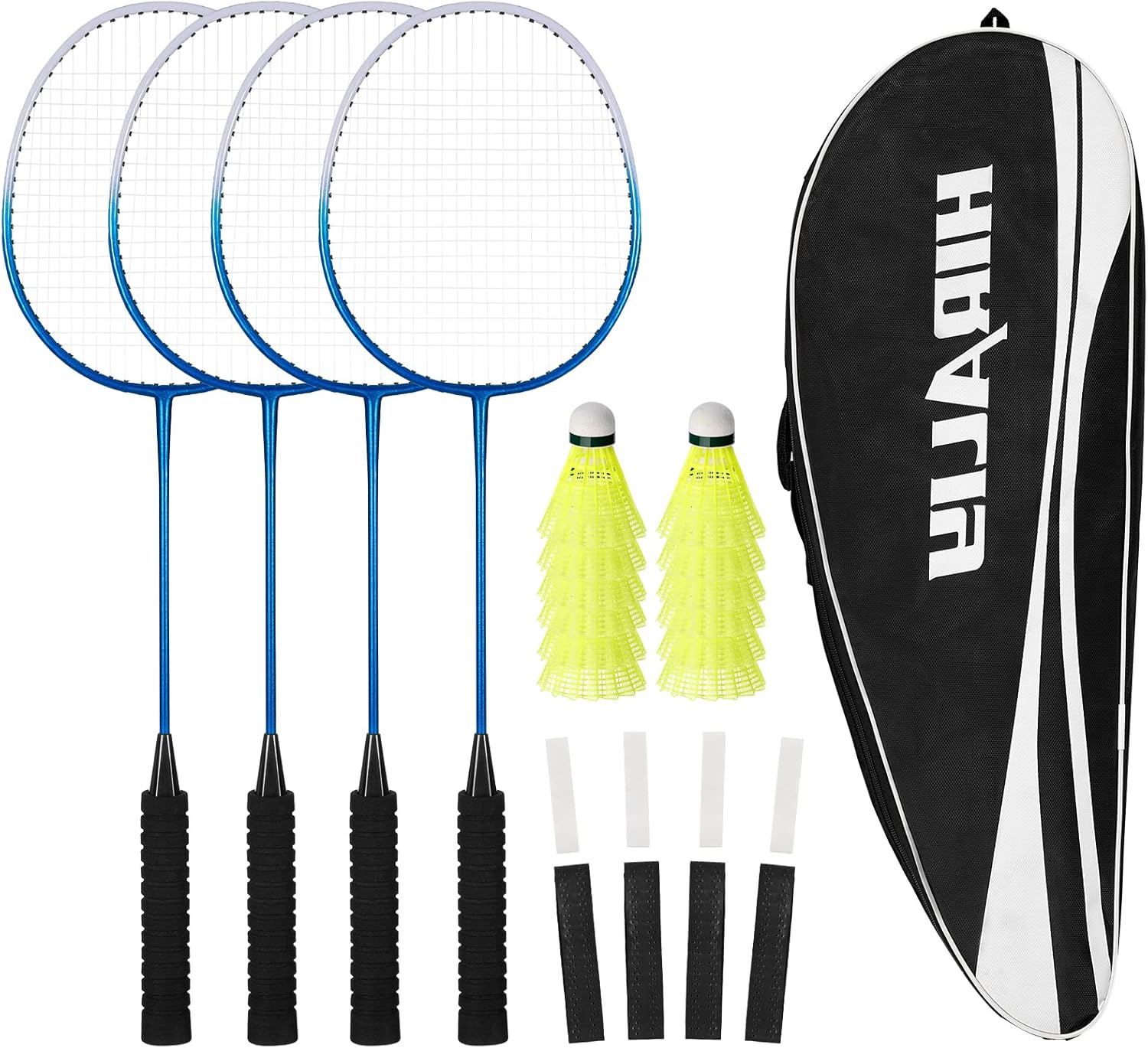
4. HIRALIY Badminton Set with Replacement Shuttlecocks
Use Case: You play. A lot. And you’ve finally accepted that shuttlecocks are basically consumables — like loo roll, but for sport. If you’re going through three a session and weeping each time one splits, this is your set.
Review: HIRALIY’s main flex here is the sheer volume of shuttles bundled in. There’s something deeply satisfying about reaching into the bag for a fresh shuttle and not having to ration them like a Victorian-era food coupon. The rackets themselves are perfectly competent — not breathtaking, not embarrassing, just honest, hardworking metal sticks. Solid value for the price.
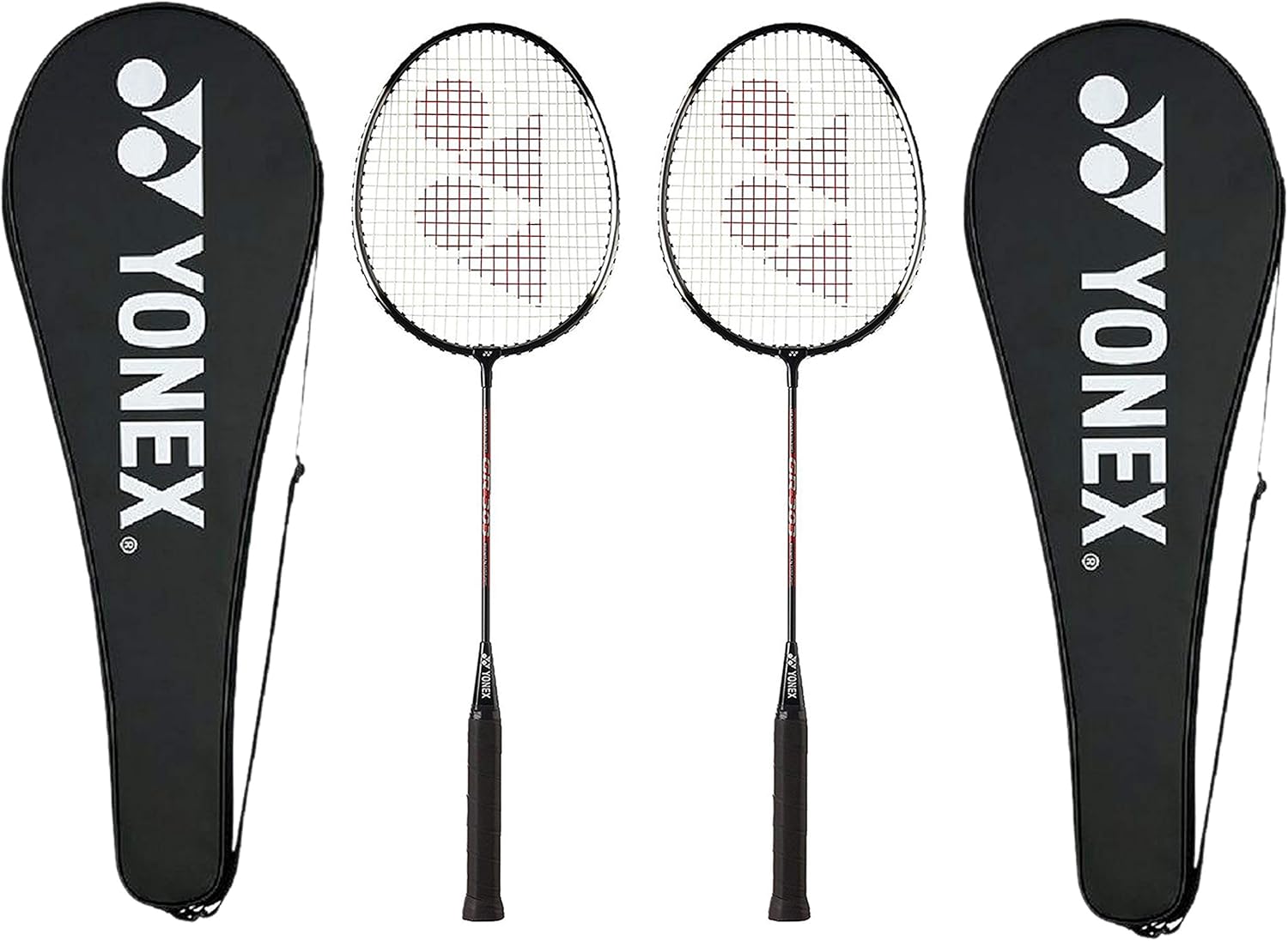
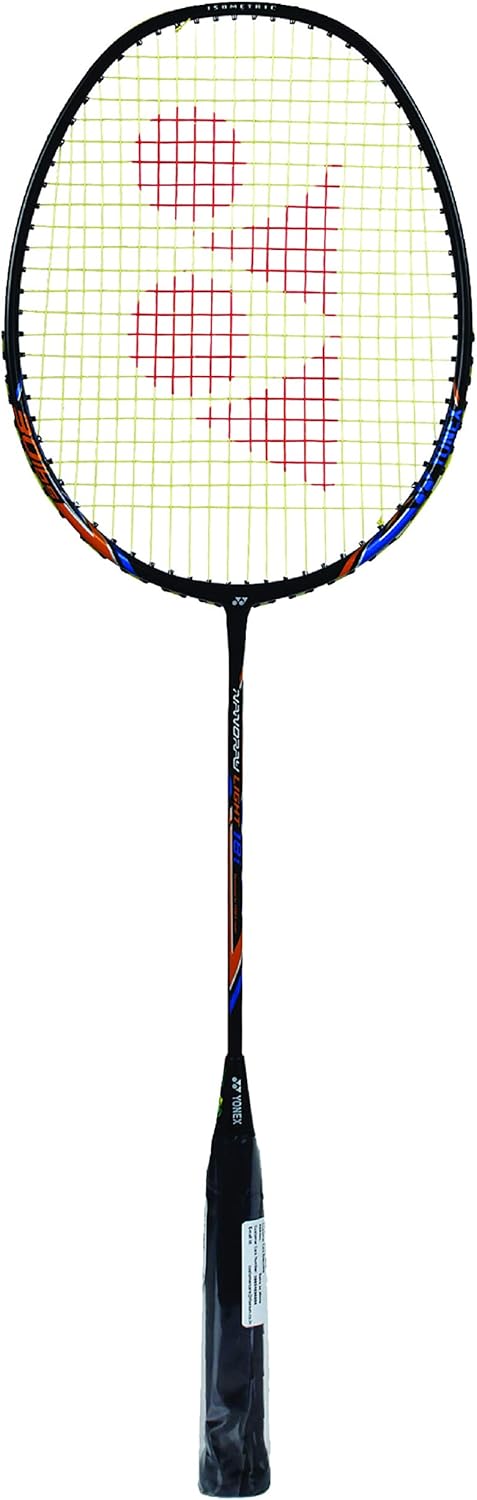
Use Case: The “I’m becoming a Person Who Plays Badminton” racket. You’ve outgrown the bargain bundle. You want something with a name. Yonex have a name. This is that racket.
Review: Yonex’s entry-level offering is what every brand’s entry-level offering should be — sensible, well-made, and properly engineered. The steel shaft keeps torsion low, which is a technical way of saying the racket doesn’t twist when you whack the shuttle slightly off-centre, which is approximately 73% of the shots most of us actually play. The weight is distributed evenly, the rubber grip is comfortable, and the whole thing feels like a small, confident handshake. Lovely.
Use Case: You’ve started saying things like “I prefer a head-light balance” in conversation. Friends are concerned. This is the racket for you.
Review: Graphite changes everything. The first time you swing a proper graphite racket after a season of aluminium, it feels like upgrading from a kazoo to a clarinet. It’s lighter. It’s stiffer. It does exactly what you tell it to do, which is a novel sensation for anyone used to their old racket going slightly rogue on the smash. Yonex’s engineering pedigree is plain in the frame geometry and string bed — this is a racket built by people who have clearly watched a lot of slow-motion footage of shuttles being hit and made very careful decisions accordingly.
Key Features:
Premium graphite construction
Enhanced power and control
Lightweight design
Tournament-ready performance
Superior shuttle feel
Specifications:
Frame Material: High-modulus graphite
Shaft Material: Graphite
String Tension: 20–30 lbs recommended
Weight: ~85–90g
Balance Point: Head-light
Grip Size: G4/G5 available
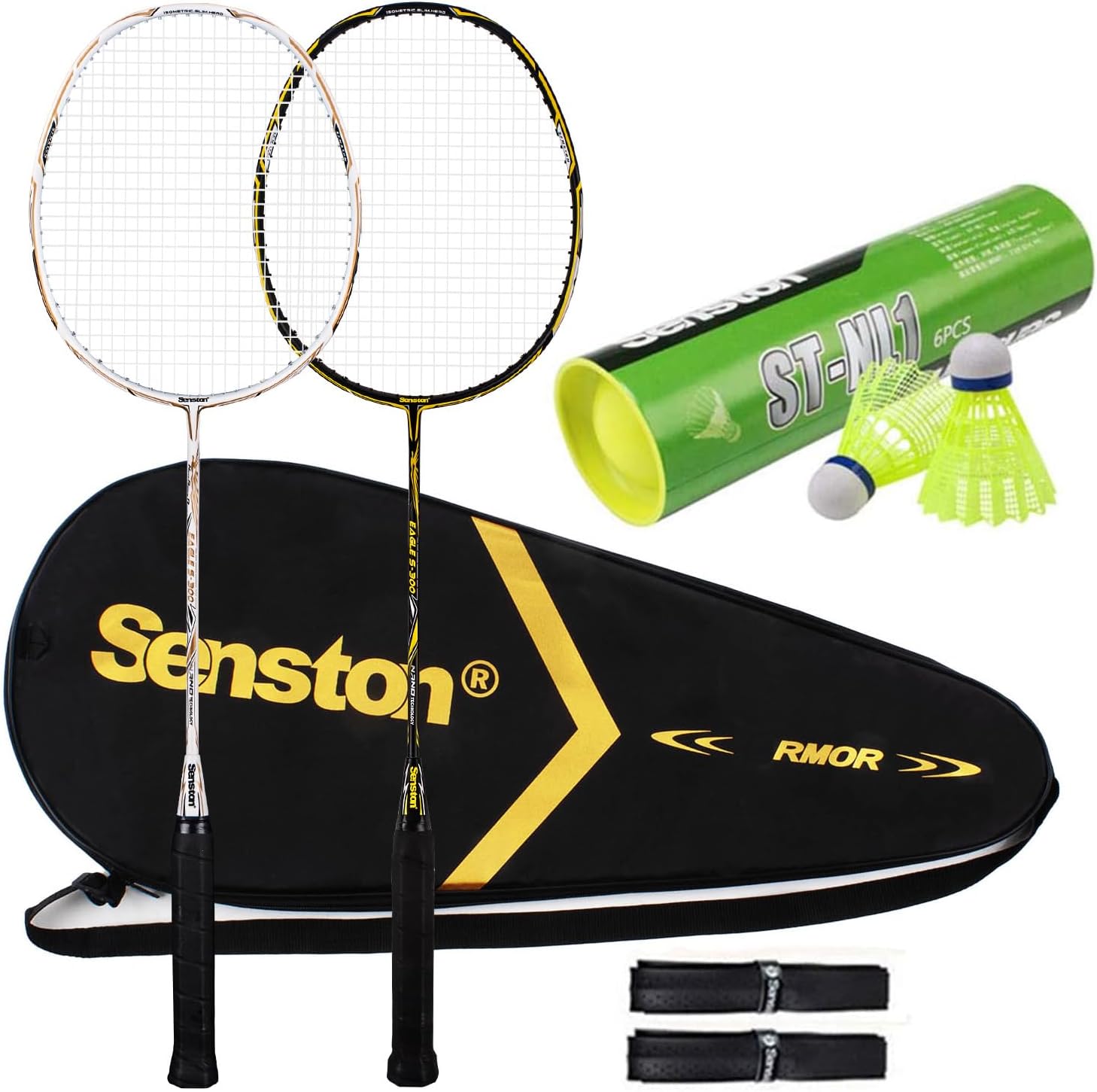
7. Senston Badminton Rackets with Protective Cases
Use Case: You are the kind of person who keeps the box. The receipt is filed. Your phone has never been screen-less. This is your racket.
Review: Senston have done the thing where they include the bits everyone else makes you buy separately — protective covers, spare overgrips, the lot. For the price, it’s almost suspicious. Build quality is genuinely good. Graphite construction. Plays well. Won’t make you feel daft turning up to a club session. The protective cases mean your rackets won’t get dinged in transit, which matters more than you’d think — half the rackets I’ve retired have died not from play but from being sat on, dropped, or attacked by a sibling.
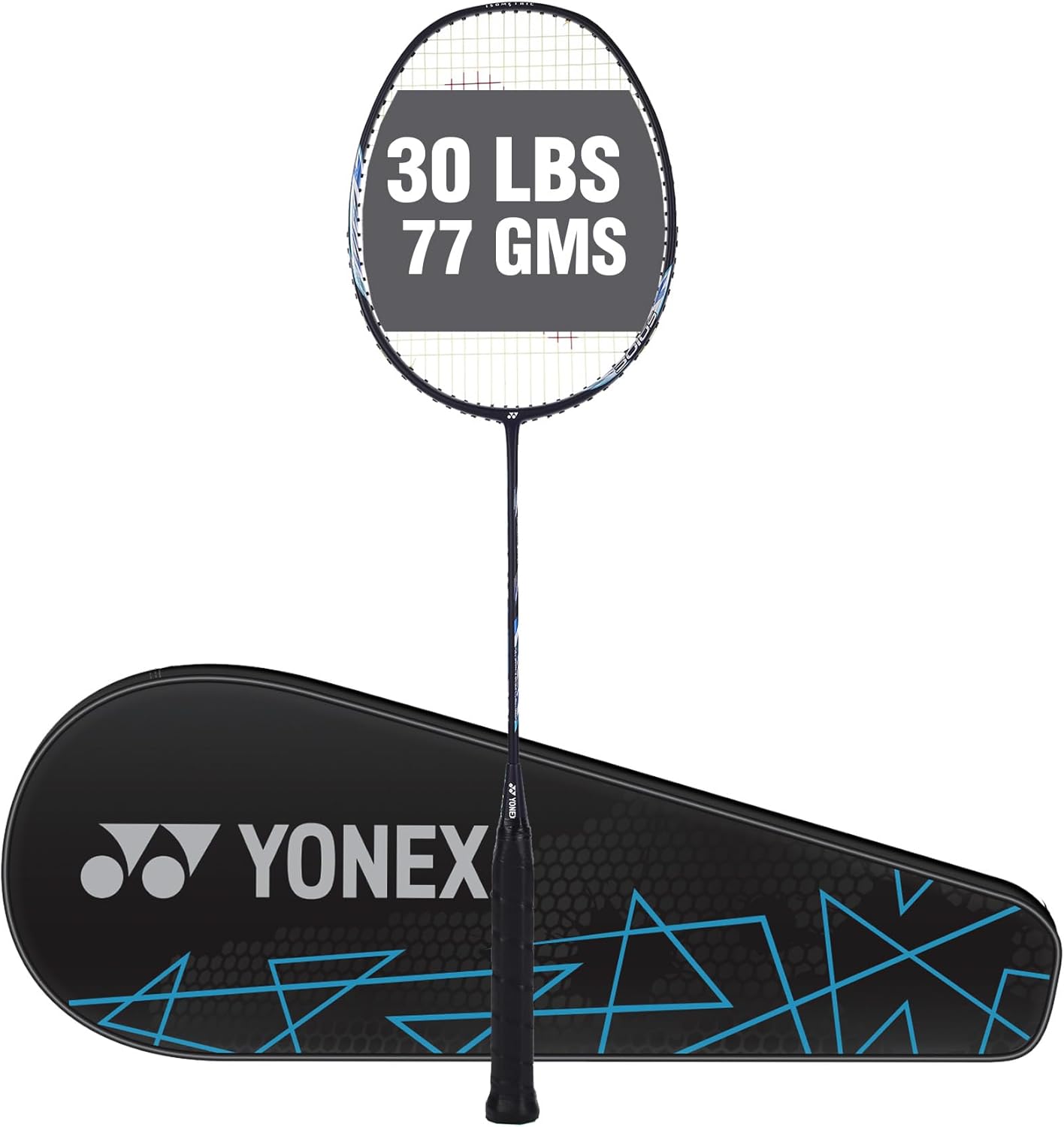
Use Case: You play doubles. You like to defend. You enjoy the feeling of returning a smash that the other team clearly thought was a winner and watching their faces go through the five stages of grief in 0.4 seconds.
Review: At 77g, the Nanoray Light 18i is so light you’ll genuinely wonder if it’s missing a component. It isn’t — that’s just modern materials science being annoyingly clever. The result is a racket that whips around your face fast enough to handle the most furious of front-court exchanges, and it’ll happily take strings up to 30 lbs of tension if you want to start getting precious about precision. Best for balanced players, particularly anyone who lives near the net and likes to fence rather than slug.
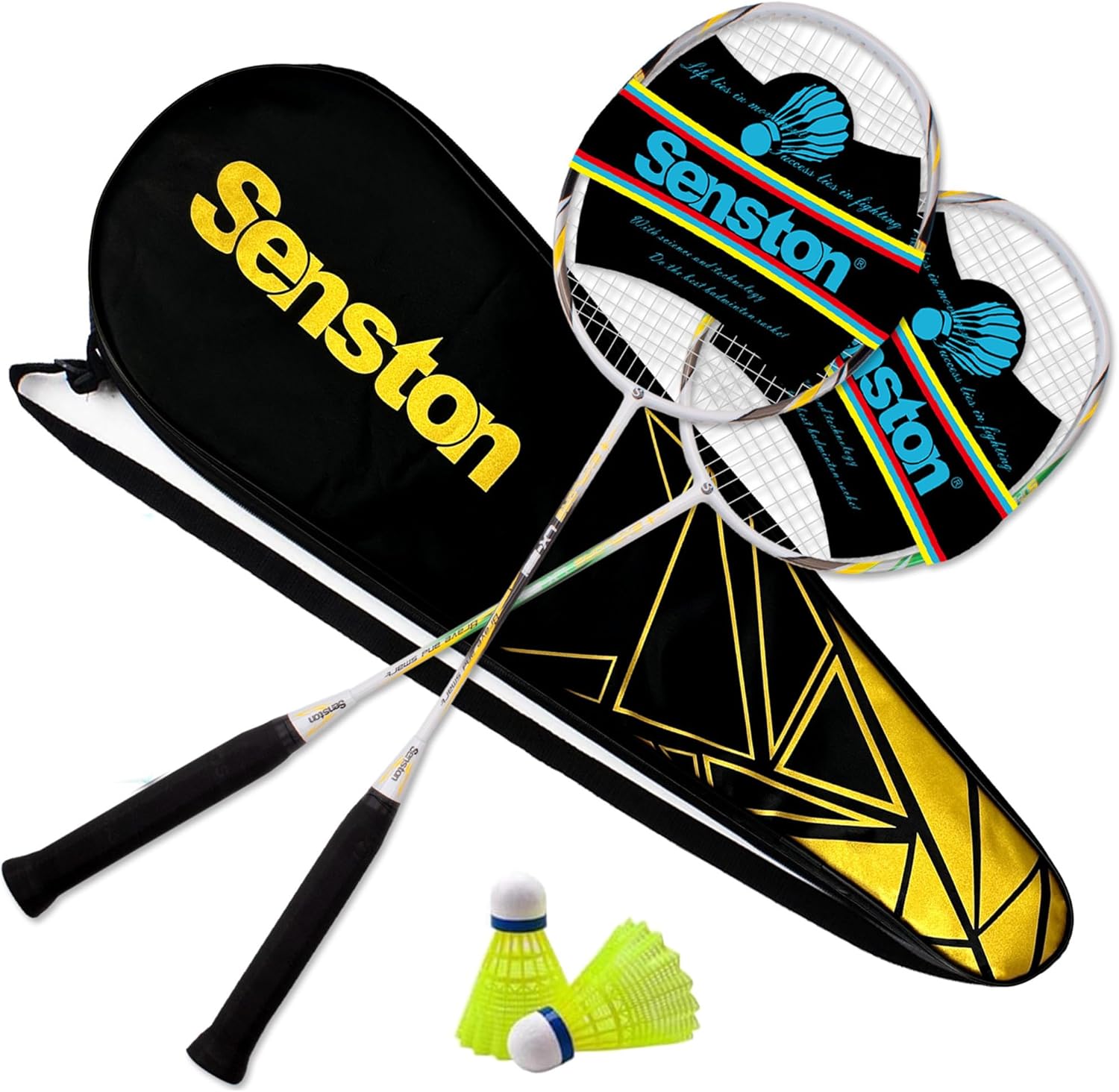
Use Case: You and one other human. Could be a partner. Could be a sibling. Could be a co-worker you’re trying to befriend. Whoever they are, this is the “no excuses, we’re playing” set.
Review: A focused two-player kit that does precisely what it says on the tin. Senston have built this for the social-but-serious player — better than a £15 set from a forecourt garage, more affordable than two individual graphite rackets. The construction punches above its price, the balance is friendly, and you can be hitting shuttles within four minutes of opening the box. There is something wonderful about a kit that doesn’t demand a degree in racket science to start using.
Key Features:
Complete 2-player setup
Beginner-friendly design
Strong build quality for the price
Ready-to-play out of the box
Reliable performance
Specifications:
Frame Material: Aluminium/graphite blend
Shaft Material: Steel reinforced
String Tension: Pre-strung 20–22 lbs
Weight: ~90g per racket
Set Contents: 2 rackets, shuttlecocks, accessories
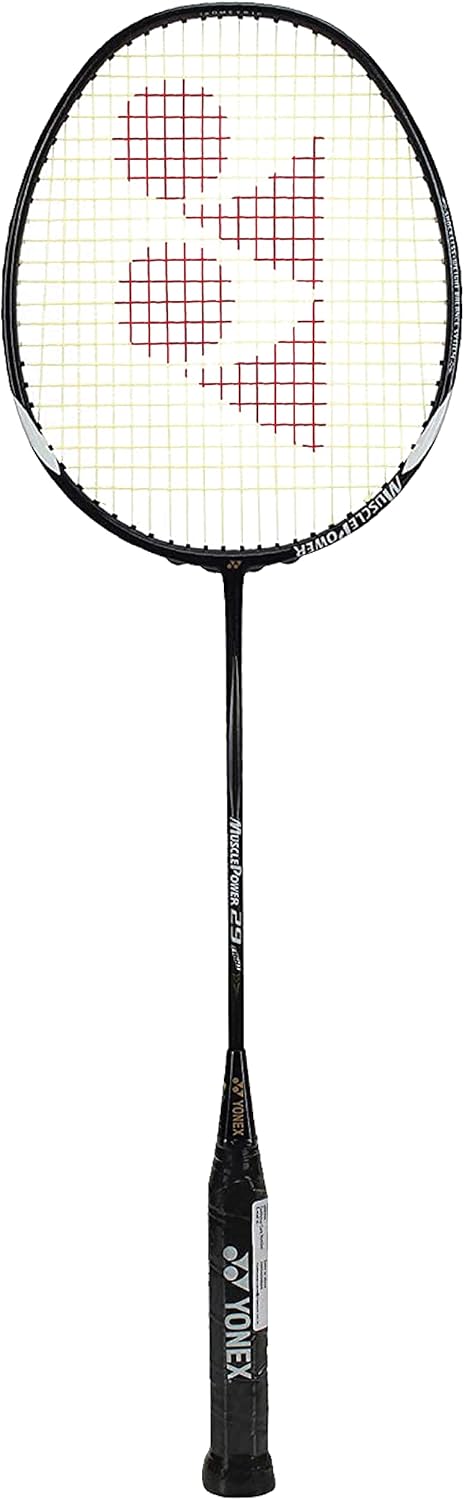
Use Case: You smash. Everything. You see a high serve and your eyes glaze over and somewhere, faintly, a brass band starts playing. This is the racket for you. Please don’t injure anyone.
Review: The Muscle Power series is Yonex’s love letter to people who want their shots to thwack. Head-heavy balance, stiff shaft, and a frame geometry built to transfer every ounce of effort you put in straight into the shuttlecock at terrifying speeds. The trade-off is that this racket is genuinely demanding — if your technique isn’t there, the extra weight just gives you a sore shoulder rather than a winning smash. But if you’ve got the fundamentals down, it’s an absolute weapon.
Key Features:
Power-focused design
Head-heavy balance for maximum leverage
Stiff shaft for direct power transfer
Built for aggressive attacking players
Yonex Muscle Power frame technology
Specifications:
Frame Material: High-modulus graphite
Shaft Material: Graphite
Weight: ~95g
String Tension: 20–28 lbs recommended
Balance Point: Head-heavy
Technology: Muscle Power frame design
Grip Size: G4/G5 available
Understanding Badminton Equipment Standards
Now for the slightly more technical bit, in which I attempt to explain string tension without making you fall asleep. Badminton England — the very official-sounding body that oversees the sport in England — supports players of every age, ability and gender, and they’re rather keen on the idea that the right gear genuinely helps you develop. Which is a polite way of saying yes, the racket does matter. Sorry.
Key Factors to Consider When Buying Badminton Equipment
Frame materials and what they actually do. Aluminium is the workhorse — cheap, sturdy, fine. Graphite is the upgrade — lighter, snappier, more responsive. Steel shafts give you consistency and don’t twist much (good); graphite shafts flex more and generate more power (also good, but trickier to control). If you’re starting out, aluminium is your friend. If you’ve been at it a while, graphite will feel like cheating. In a good way.
String tension and the great power vs control debate. Lower tensions (16–20 lbs) are bouncier and more forgiving — the shuttle leaves the strings with help from the strings themselves. Higher tensions (24–30 lbs) are stiffer, less forgiving, but ridiculously precise once you’ve got the technique to drive the shuttle yourself. Most recreational players live happily at 20–24 lbs. It’s the porridge that is, in fact, just right.
Balance points, briefly explained. Head-light rackets dance in your hand — great for defence, great for net play, great for “oh god how is the shuttle there already.” Head-heavy rackets hit like a freight train — great for smashes, great for clears, great for “ow my shoulder.” Even-balanced rackets do a bit of both. If you don’t know what you are yet, even is the safe bet.
Grip size, which is more important than you think. Wrong grip = sore hand, dodgy shots, possibly a long-term injury you’ll be blogging about in five years. UK adults mostly use G4 (standard) or G5 (smaller). Hold the racket properly — there should be roughly a 5mm gap between your fingertips and the base of your palm. Too small? Wrap an overgrip on it. Too big? Buy a different racket. There’s no patch for “too big.”
Equipment Care and Maintenance for UK Climate
This is the part of the article where we acknowledge that we live, regrettably, in a country with weather. Rackets do not love this. They especially do not love being stored in a car boot in January, or a conservatory in July, or anywhere with humidity levels that fluctuate like the stock market.
Keep your rackets in protective cases. Don’t leave them in the car. Restring annually if you play casually, every 2–3 months if you play competitively, or whenever they snap (which they will, usually mid-rally, ideally during a match point you were about to win).
For outdoor play during our infamously brief British summer, swap to plastic outdoor shuttlecocks. Cork shuttles fly beautifully indoors and tragically badly in a 4mph breeze. Don’t try to be a hero.
Budget Considerations and Value Analysis
Right. Money.
Entry-level bundle sets sit in the £20–50 range and are perfect for families, casual players, and anyone who wants to start playing immediately without taking out a small loan. The same bundle-rather-than-piecemeal logic applies across loads of hobbies — if you’ve ever browsed our roundup of the UK’s top airbrush starter kits, you’ll know the drill: buy the whole thing once, save yourself eight separate decisions, get on with the actual fun bit.
Mid-range individual rackets (£50–100) are aimed at regular club players who want noticeably better performance without remortgaging. Premium rackets (£100+) are for the seriously committed — people whose Strava equivalent for badminton would make you weep.
Don’t forget the running costs: shuttles (£10–20 a dozen for the good ones), restringing (£15–25 per racket), and replacement grips/overgrips (£5–10). A decent racket lasts ages. A bad racket lasts until it doesn’t, and then you buy another one, and then another, and suddenly you’ve spent more than the price of one good racket and you’ve got a drawer full of tragic aluminium ghosts. Don’t do that.
Choosing Equipment for Different Playing Levels
Beginners. Complete sets. Aluminium. Pre-strung. Light. Don’t overthink it. You will not, on your first day, need a racket optimised for late-stage doubles defensive footwork. You’ll need something that doesn’t fall apart when you accidentally hit the floor. The aluminium sets above are perfect for this.
Intermediate players. Time to leave the bundle behind. Graphite individual rackets — the Yonex GR-303 or Senston graphite models are excellent stepping stones. You can now legitimately have opinions about string tension. Lean into it.
Advanced players. You already know what you want. You’ve got a playing style, a preferred balance, and probably strong feelings about specific string brands. The Nanoray Light 18i and Muscle Power 29 sit at opposite ends of the spectrum — one is your scalpel, the other is your hammer. Pick accordingly.
Frequently Asked Questions
Q: What’s the difference between indoor and outdoor badminton equipment? Indoor uses cork shuttles, which fly beautifully but die in even a light breeze. Outdoor uses plastic/nylon shuttles, which are heavier, less elegant, and don’t care about wind. Rackets are mostly interchangeable, although heavier rackets handle wind a little better.
Q: How often should I replace my strings? Casual players: once a year, or whenever they break. Club players (2–3 sessions a week): every 3–4 months. Competitive players: monthly, sometimes more often, depending on how aggressively you tension them and how often you’re hitting the strings dead-centre. (Spoiler: less often than you think.)
Q: What string tension should beginners use? Start at 18–22 lbs. It’s forgiving and gives you a bit of free power. As your technique improves, work up. Most rec players settle around 22–24 lbs and never look back.
Q: Are expensive rackets worth it for casual players? Honestly? Not really. A £60 racket will do 90% of what a £180 racket does. The remaining 10% only matters if your technique is already good enough to feel the difference, which — and I say this with love — most casual players’ technique isn’t. Yet.
Q: How do I know if my grip is the right size? Roughly 5mm gap between fingertips and palm base. If your fingers overlap, too small. If there’s a clear gap big enough to lose a 5p coin in, too big. Most UK adults are G4. When in doubt, go smaller and wrap an overgrip on.
Q: Can I use tennis strings in a badminton racket? No. Please don’t. Tennis strings are thicker, heavier, and designed for a completely different sport. Badminton strings are typically 0.62–0.73mm thick and built for the kind of rapid acceleration that makes shuttles do their thing.
Q: What’s the ideal racket weight? Beginners: 85–95g (your arm will thank you). Intermediate: 90–100g. Advanced: 95–105g, but only if your technique can actually exploit the extra mass. Heavier rackets are not automatically better. Heavier rackets used badly are just more efficient injury delivery systems.
Q: How important is racket balance for casual players? Reasonably. Even-balance is the safest bet — it does a bit of everything. Head-light is brilliant for fast doubles. Head-heavy is brilliant for slow singles smashing. But you can learn to play with any balance, so don’t agonise.
Conclusion
Right. Big finish.
Picking a badminton racket isn’t about buying the most expensive one. It’s about buying the right one for who you are, where you play, and how often you play. A beginner with a £200 racket will play badly with a £200 racket. An intermediate player with a £60 racket will play perfectly happily with a £60 racket. Match the gear to the user.
For families, casuals, and anyone introducing kids to the sport: the bundle sets at the top of this list are unbeatable. The Wilson Fierce and the standard Badminton Rackets Set will see you through years of garden games and church-hall sessions.
For intermediate club players ready to step up: the Yonex GR-303 and the Senston graphite models are exactly the right rung on the ladder. Better feel, better control, won’t break your budget.
For advanced players who already know which way their game leans: the Nanoray Light 18i for the defenders and the Muscle Power 29 for the attackers. Choose your weapon.
Look after your kit, restring when it needs it, store it properly, and don’t leave it in the car. Whether you’re trying to win the local league, beat your nephew at his own game, or just spend more time off the sofa and on a court, the right racket genuinely makes it better.
Jodie Carter is a REPS Level 3 certified personal trainer with over 8 years of experience in strength training and home gym design. She holds qualifications in exercise physiology and has helped over 500 clients design effective home workout spaces. Jodie regularly contributes to UK fitness publications and maintains continuing education in the latest exercise science research.
Disclosure: This article contains affiliate links to products I personally use and recommend. When you purchase through these links, I may earn a small commission at no additional cost to you. All recommendations are based on my genuine experience and testing—I only recommend products I actually use in my own home.
Let’s be honest. You didn’t Google “multi-gym for small spaces” because you love the idea of assembling flat-pack fitness equipment at 11pm on a Sunday. You Googled it because you’re tired of paying £40 a month to a gym you visited twice in January, once in March (by accident), and…
Written By Sophie Langford, Homeware & Home Styling Specialist Let’s be honest with each other. You didn’t just stumble onto an article about adjustable beds while searching for something cool. No. You searched for this. Deliberately. Which means one of three things: your back is staging a full-scale revolt, your…
Let’s be honest. The last time most of us did any rowing, it was on a pedalo in a park while eating a Cornetto. And yet here we are — seriously considering buying a rowing machine to put in our homes, next to the pile of clothes we keep meaning…
We use cookies to ensure that we give you the best experience on our website. If you continue to use this site we will assume that you are happy with it.