Right. Let’s be honest with each other for a second. You’re not here because you’ve reached enlightenment and the universe whispered “thou shalt buy a yoga mat bag” into your third eye during savasana. You’re here because you’ve been carrying your mat under your arm like a rolled-up newspaper, it keeps unravelling on the bus, and last Tuesday someone on the Northern Line gave you a look that suggested they thought you were smuggling an unusually quiet ferret.
Welcome. You’re among friends.
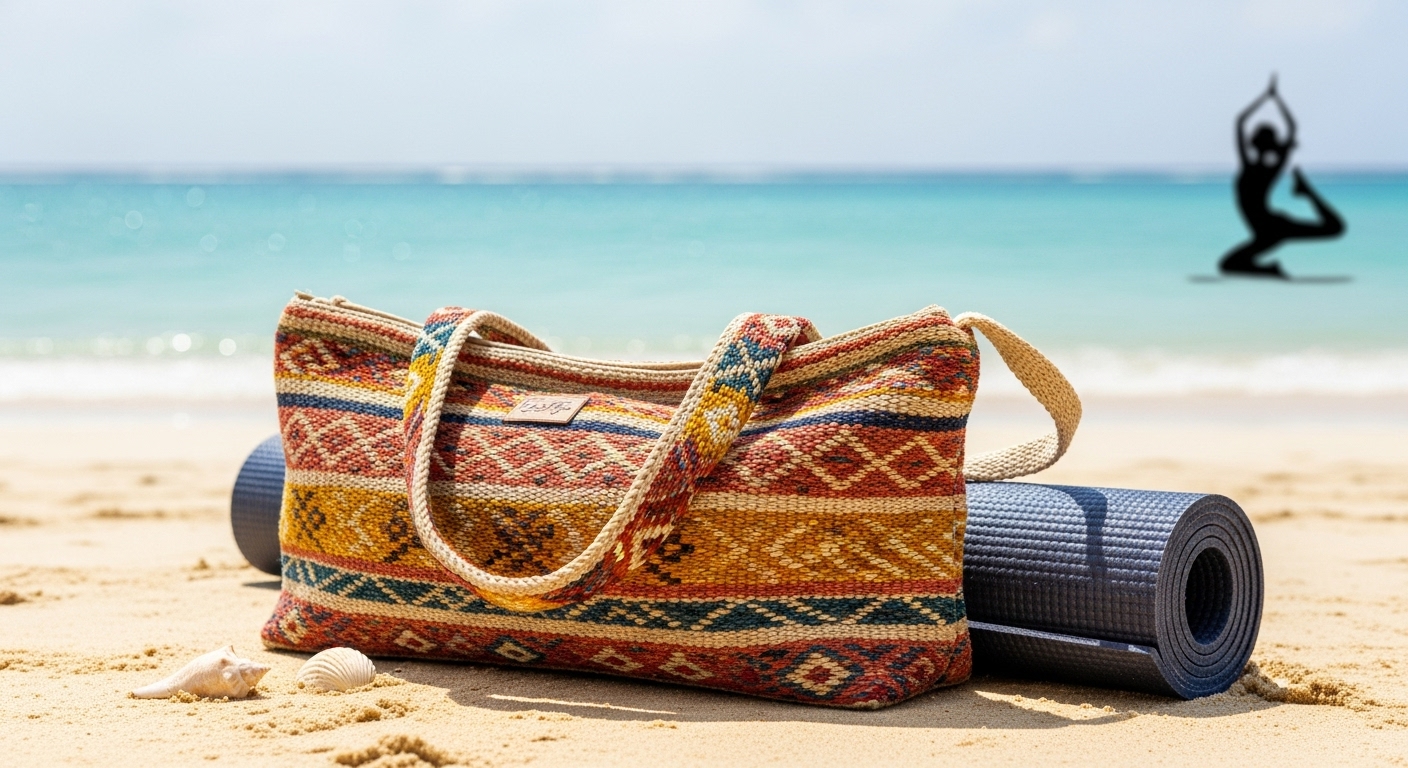
Britain is having a wellness moment. Converted Victorian warehouses, Cotswold barns, the slightly sad-looking community centre next to the chip shop — they’ve all got yoga timetables now. Which means most of us are spending more time than ever lugging foam tubes around the country. So we may as well have a chat about how to do that without looking like we lost a tussle with a swimming pool noodle.
Picture it: a drizzly Tuesday in Manchester. You’re sprinting for the 7:30 flow, mat under one arm, reusable water bottle in the other, keys clenched in your teeth like a dog with a stick. By the time you arrive, your hair is doing something interesting, your inner peace has filed for divorce, and the gentle yogi at reception is looking at you the way one looks at a wet pigeon. This is what a yoga mat bag is for. It is, essentially, dignity, with a strap.
Right. To the goods.
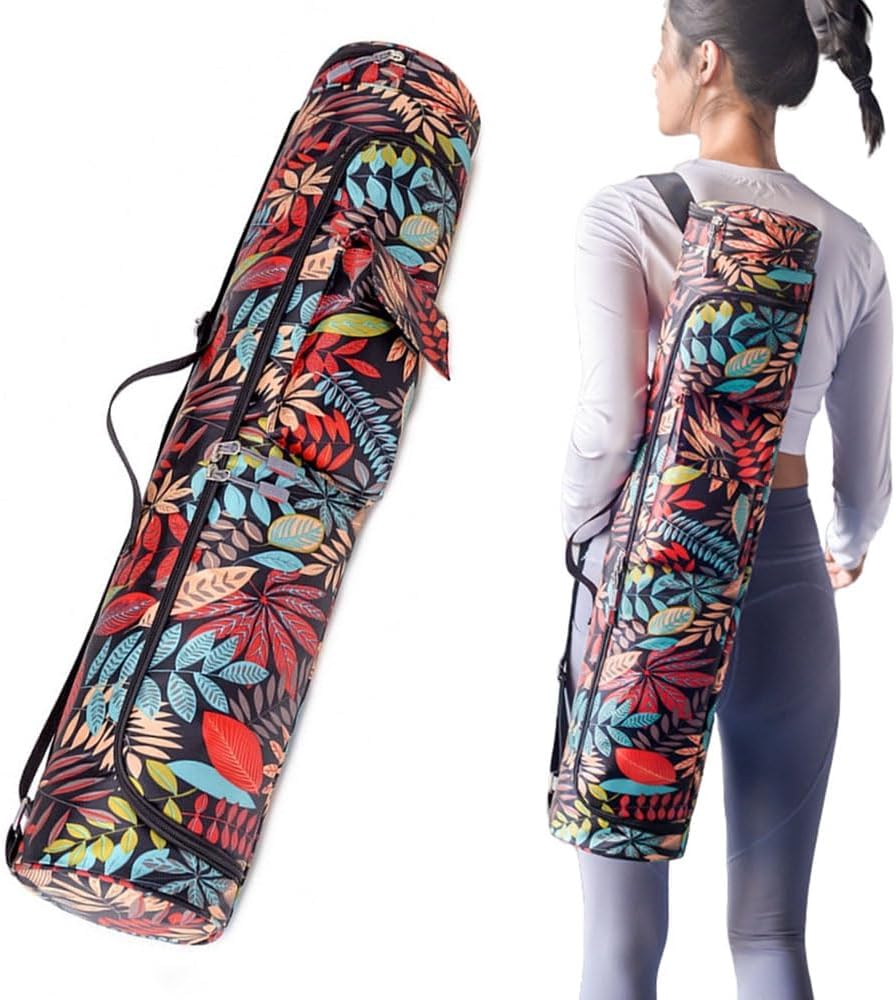
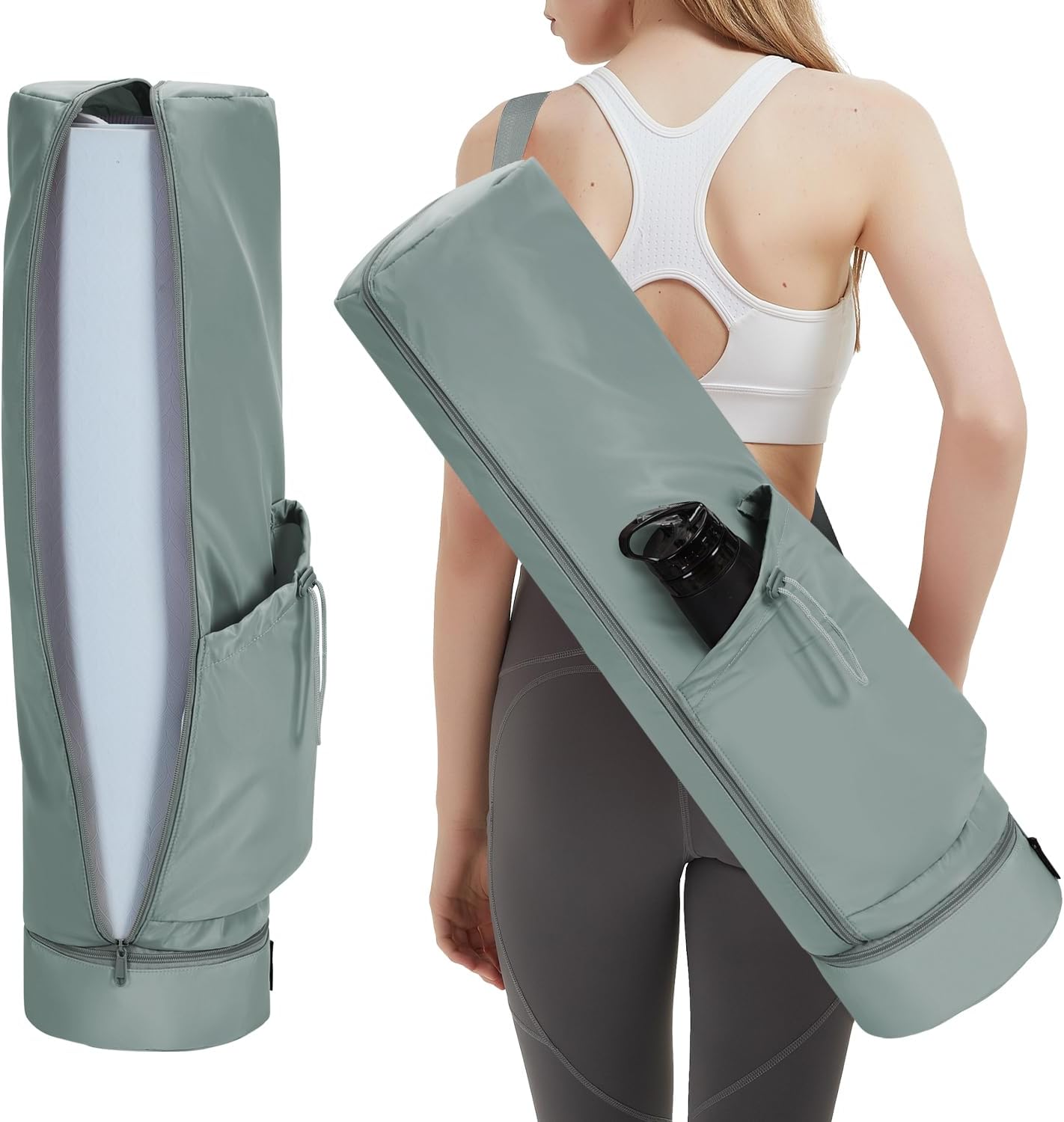
1. Carrier Portable Exercise Yoga Mat Bag with Carrying Compartment
The verdict: This is the bag for the person whose calendar is held together by sheer will and three colour-coded reminder apps. Gym in the morning, office during the day, hot yoga at 6pm, dinner with a friend at 8 (don’t worry, you can pretend you “forgot” and just go home). It’s got compartments for everything — keys, phone, snacks, the receipts you’ve been meaning to file since 2022 — and crucially, a wet pocket that keeps your sodden post-Bikram kit separate from your perfectly innocent sandwich.
The bits that matter:
Multi-compartment design with a proper mat sleeve
Adjustable shoulder strap (your shoulders will thank you, your dignity remains uncertain)
Water-resistant fabric — handy, given the climate we’ve signed up for
External pockets for phone, keys, miscellaneous existential dread
Full-length zip so you can actually see what you’re doing
Specs:
Canvas/polyester blend
Fits mats up to 73″ × 24″
Light enough that you’ll forget it’s there
Multiple colours
Strap and handles, because we’re spoilt
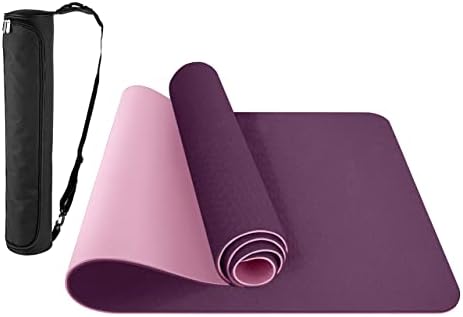
2. ComFyMat Yoga Mat – Non-Slip Premium TPE Waterproof Eco-Friendly
The verdict: Yes, technically this is a mat that comes with a bag. Bonus content. Like when you order a meal deal and they throw in a flapjack you didn’t ask for but absolutely needed. The 6mm thickness is the sweet spot — thick enough that downward dog stops feeling like a hate crime against your wrists, thin enough that you don’t have to wheel it about on a trolley. The TPE material is eco-friendly, which means you can mention it casually at parties and watch people’s pupils dilate with respect.
The bits that matter:
Eco-friendly TPE (none of the dodgy stuff)
Non-slip surface, so your warrior two stays a warrior two
Comes with a waterproof carry bag, gratis
No latex, no PVC, no chemicals with names that look like Wi-Fi passwords
Wipes clean, which is the most you can ask of anything in life
Specs:
183cm × 61cm × 6mm
Premium TPE
Cushion-y, but not bouncy-castle cushion-y
Lightweight
Free waterproof bag (we love free)
3. Senprity Multi-Functional Lightweight Water-Proof Wear-Resistant Yoga Bag
The verdict: “Multi-functional” is one of those phrases that usually means “we couldn’t decide what it was for.” In this case, that’s a feature. It does yoga. It does hiking. It does that thing where you wander around Cornwall pretending you’re in a Sally Rooney novel. The waterproofing is the headline act — because in this country, “sunny with light showers” is meteorological code for “you are about to be assaulted by water from three different angles, including underneath.”
The bits that matter:
Waterproof, properly so
Wear-resistant (it will outlast at least two of your relationships)
Multiple storage compartments
Light as anything
Various ways to wear it on your person
Specs:
Water-resistant synthetic fabric
Reinforced seams and zips
Genuinely ultra-light
Fits a standard mat
IPX4 weather rating
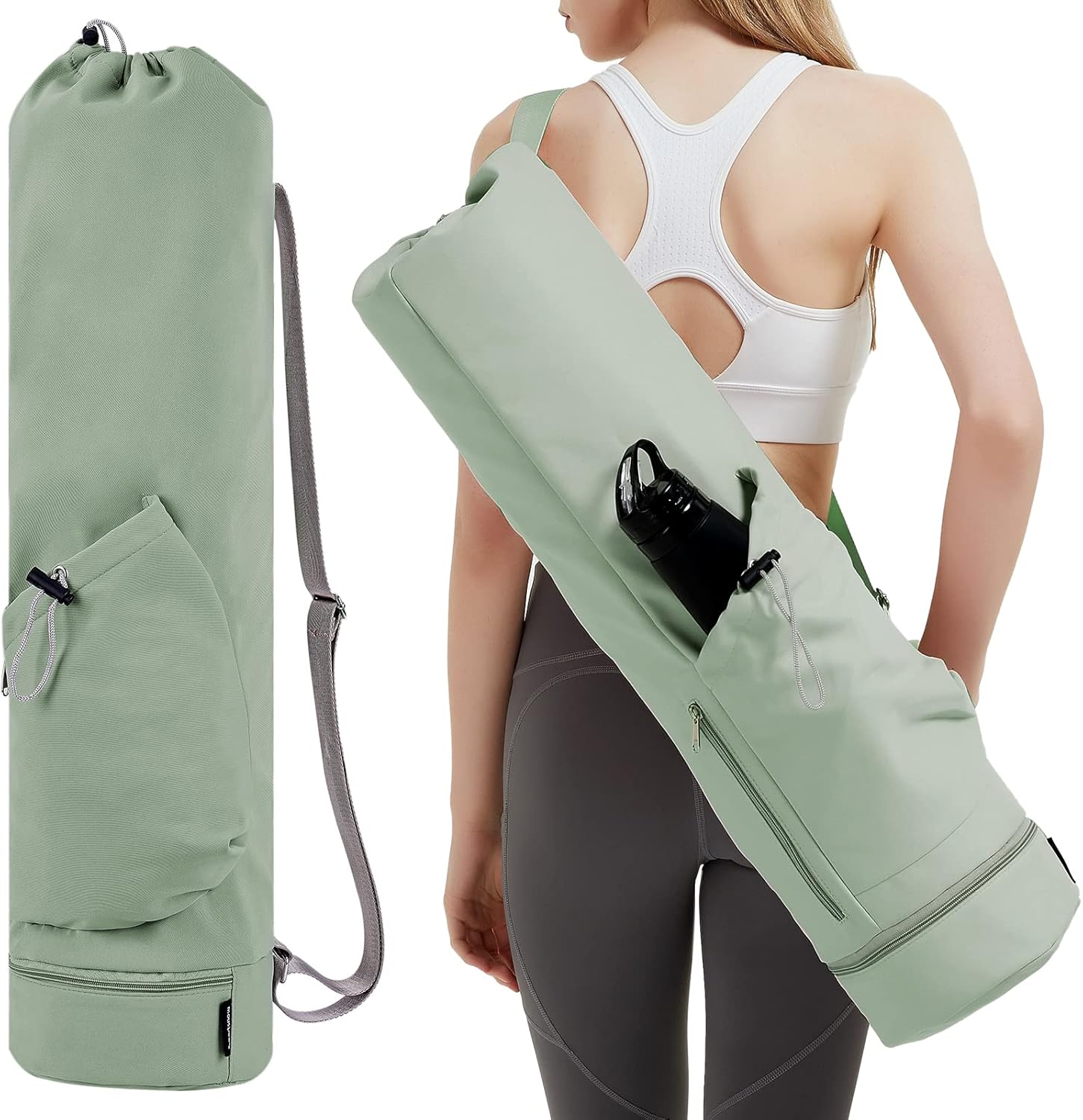
4. Sportsnew Yoga Mat Bag with Water Bottle Compartment and Pilates Storage
The verdict: This is for the organised yogi. The one with the planner. The one who has Opinions about reusable straws. There’s a dedicated water bottle slot — sealed, so no, your phone won’t drown — and enough room for blocks, straps, towels, the lot. If you’ve graduated from “I sometimes do yoga” to “I have equipment,” this is your bag.
The bits that matter:
Dedicated water bottle pocket that actually contains the water bottle
Room for Pilates accessories (blocks, straps, your slightly bruised ego)
Full-zip main compartment
Adjustable strap
Built to be used, not just looked at
Specs:
Main compartment fits mats up to 26″ wide
Standard bottles welcome
Heavy-duty canvas blend
Sized for studio life
That sort of pleasant sage green
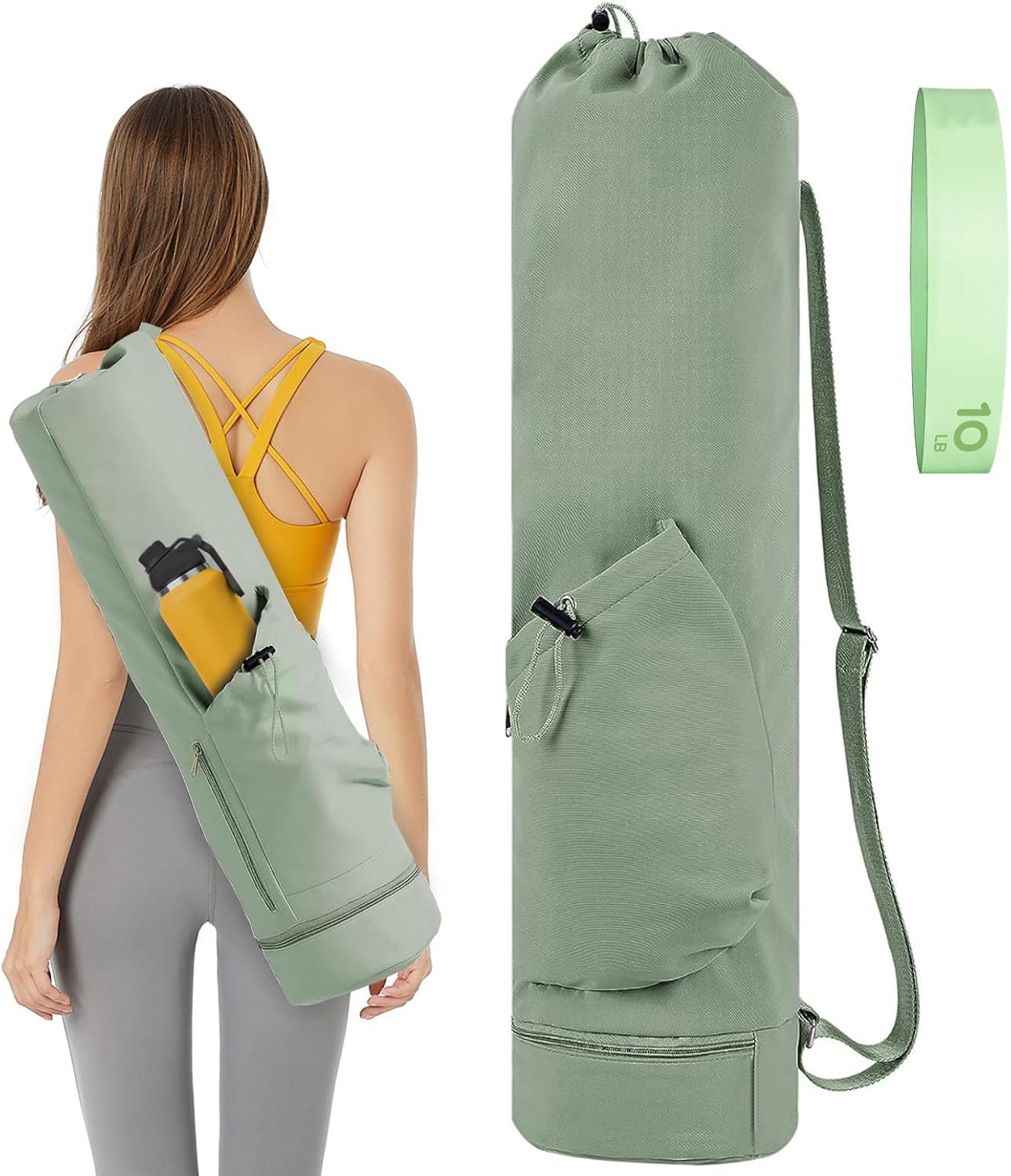
5. Sportsnew Adjustable Yoga Mat Carrier with Pilates Water Bottle Compartment
The verdict: The bag equivalent of those trousers with the elastic waistband that you secretly love. Adjustable everywhere. The strap goes from “petite human” to “human plus winter coat plus extra layer because the studio is cold for some reason.” Brilliant for anyone who does multiple disciplines — yoga, Pilates, that thing where you stand on a wobbly board and pretend it’s exercise.
The bits that matter:
Adjustable strap system that fits actual humans
Built-in water bottle storage
Plays nicely with Pilates gear
Versatile enough for most fitness situations
Closes properly (a bar tragically low to clear, yet many bags fail it)
Specs:
Strap goes 28″–52″
Fits bottles up to 32oz (a journey, that)
Durable polyester blend
Universal mat fit
Carries up to 5lbs
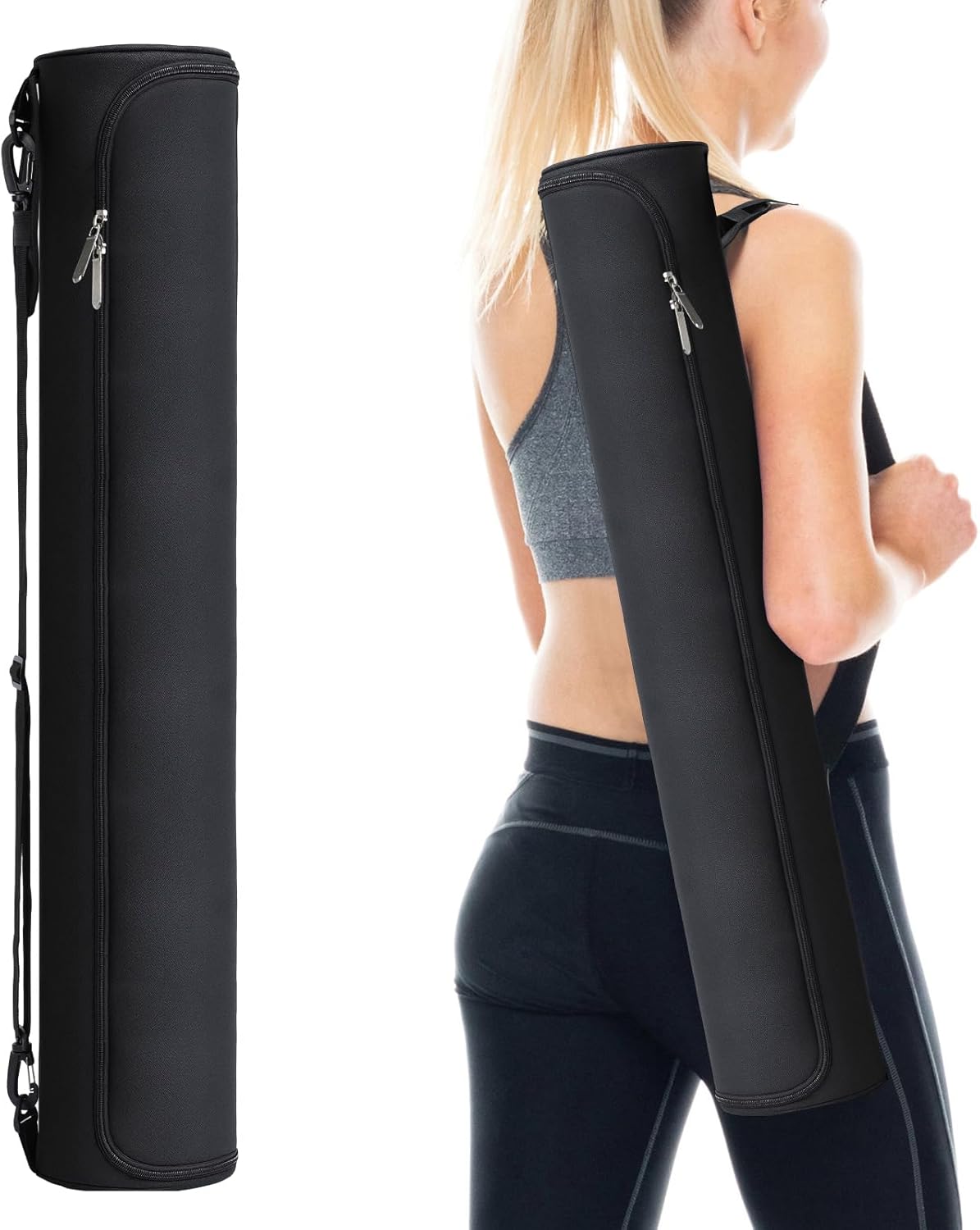
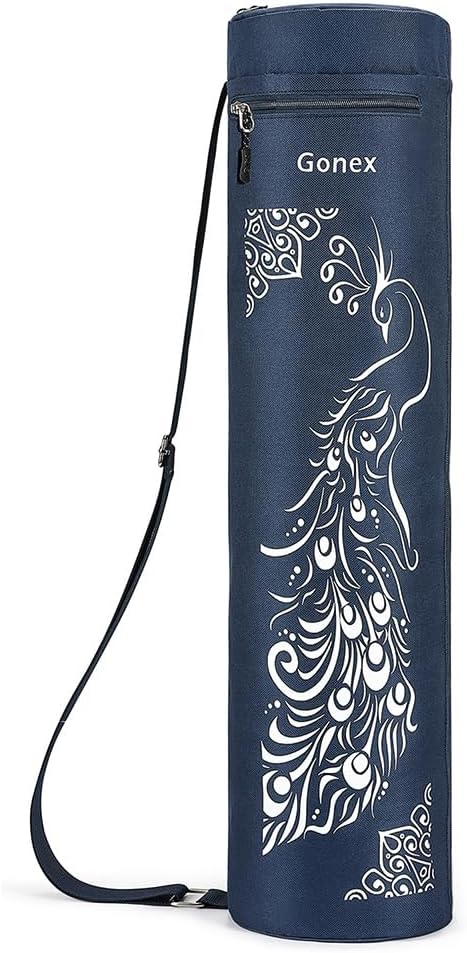
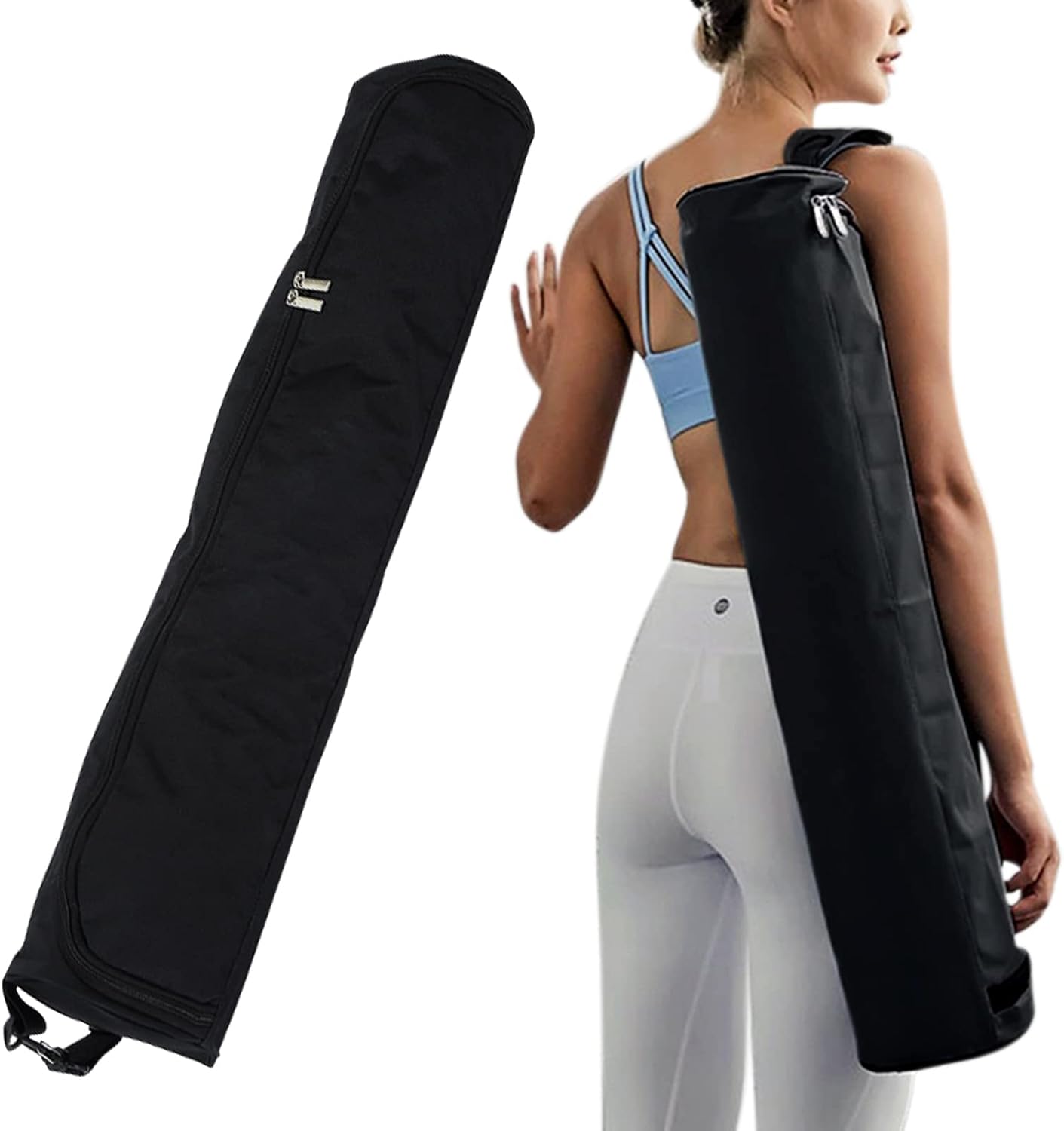
6. Gonex Full-Zip Exercise Yoga Mat Bag - Water-Resistant with Adjustable Strap
The verdict: Right, full-zip bags are simply better, and I’m prepared to die on this hill. Drawstring bags are charming until you’re scrabbling for your mat in the dark while a small queue forms behind you. Full-zip means you open it like a book, the mat is right there, you carry on with your life. The Gonex has YKK zips, which is the brand of zip people on the internet get oddly passionate about — and they’re right to.
The bits that matter:
Full-zip opening (see passionate rant above)
Water-resistant DWR coating
Adjustable strap (24″–48″)
Built like it means it
Multiple carrying options
Specs:
Heavy-duty full-length YKK zip
DWR water-resistant coating
Padded nylon strap
25″ × 7″ internal cylinder
Two external pockets
7. XdealCozyxc Portable Yoga Mat Bag for Pilates with Adjustable Shoulder Strap
The verdict: The name sounds like a Wi-Fi password generated under duress, I know. But this is a genuinely lovely bag for anyone who actually walks or cycles or — gasp — uses public transport to get to class. The strap is properly padded, which matters more than you’d think. Carrying anything across your shoulder for half an hour will reveal exactly how unpadded most straps are. Your traps deserve better.
The bits that matter:
Properly cushioned, ergonomically considered strap
Compact and portable
Works for Pilates kit
Comfortable for actual journeys, not just car-to-studio
Slim profile (slides under café tables without taking out a stranger’s ankle)
Specs:
2″-wide cushioned strap padding
30″–55″ adjustment
Lightweight ripstop nylon
Fits a mat plus the basics
Under 12oz empty
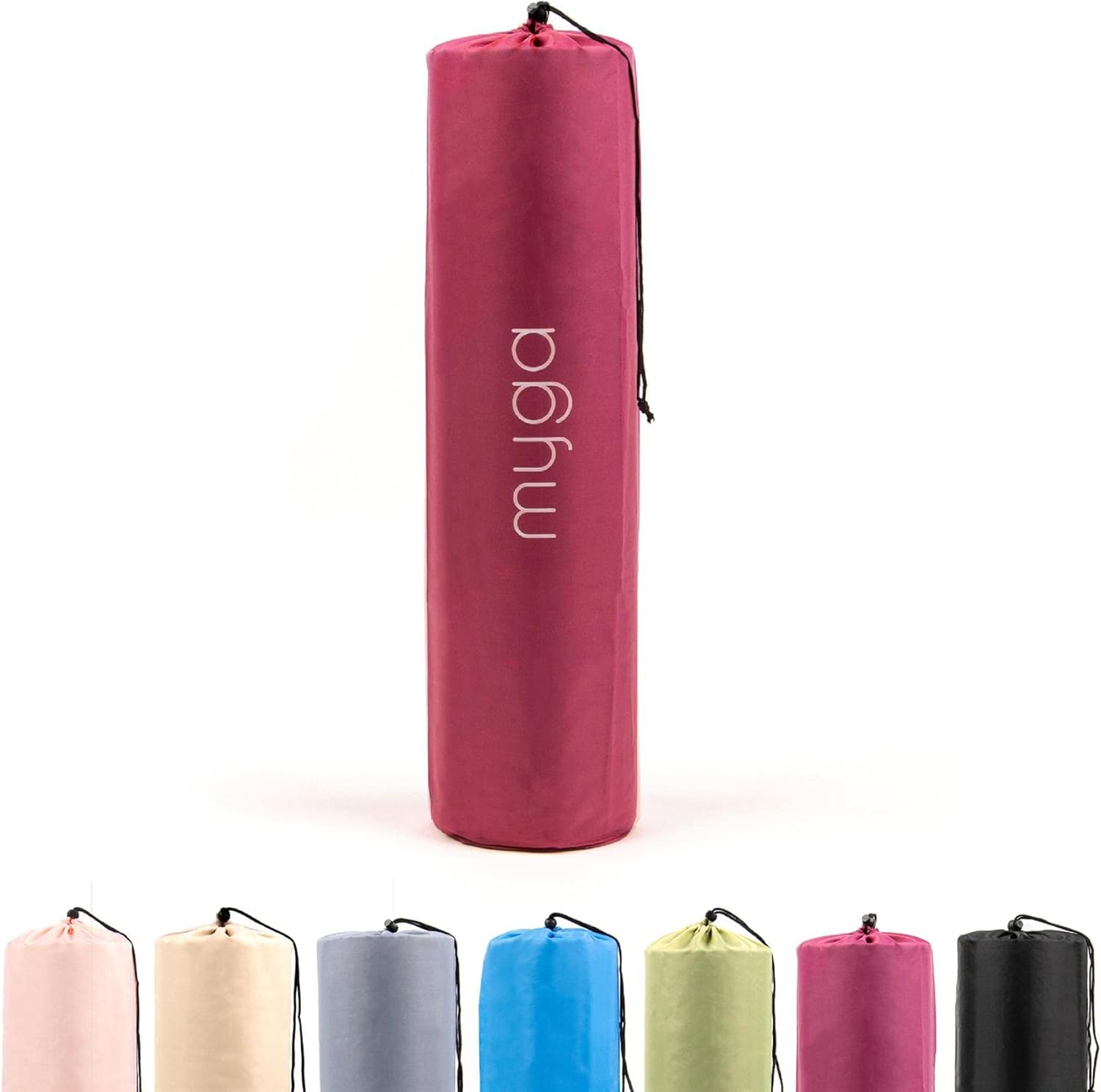
8. Myga Lightweight Yoga Mat Bag with Practical Design
The verdict: Minimalists, this is your moment. If the idea of having “compartments” makes you feel a bit overwhelmed and you long for the simple life — one bag, one mat, one purpose — Myga has heard you. There are no bells. There are no whistles. There is a bag. Your mat goes in it. The bag has a strap. You walk to yoga. Wordsworth would have approved.
The bits that matter:
Genuinely ultra-light
Minimalist design, none of the faff
The protection you need, none you don’t
Easy in, easy out
Folds flat when you’re not using it
Specs:
Under 8oz
Breathable mesh panels
Drawstring with a toggle lock (charming, in a 1990s-rambling-club way)
Fits 72″ mats
Flat-packs for storage
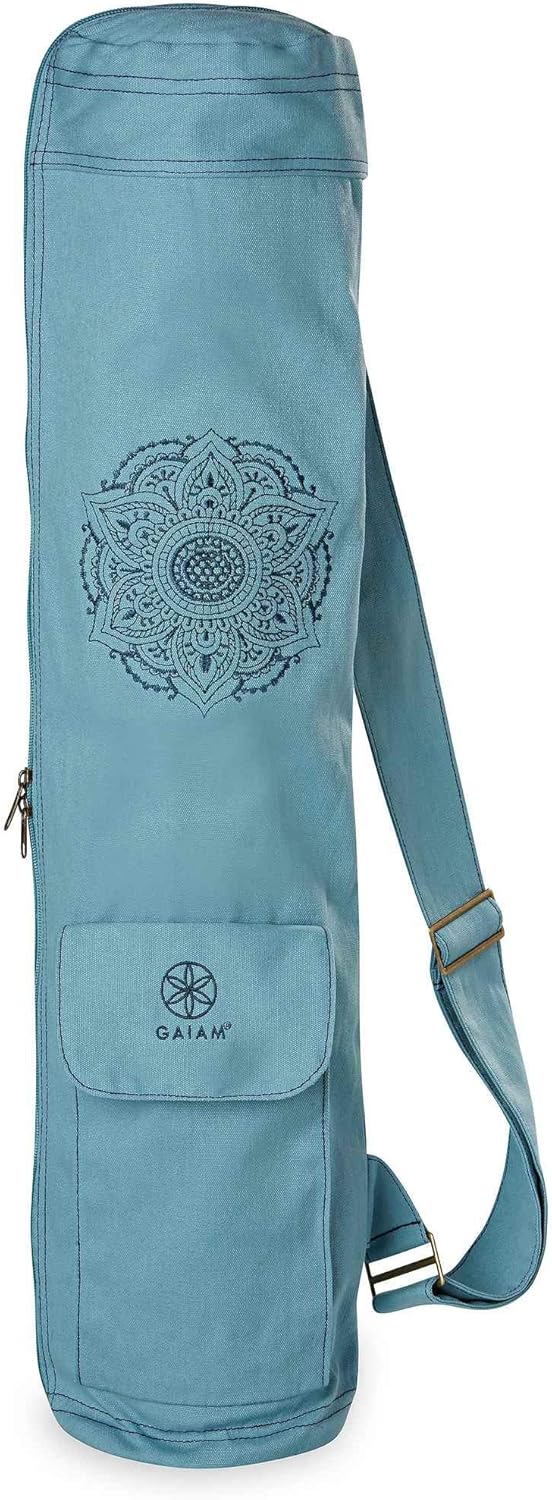
9. Gaiam Embroidered Cargo Yoga Mat Bag - Niagara Design
The verdict: Some bags are functional. Some bags are gorgeous. This one is both, which is annoying, because it means you can’t dismiss it. The Niagara embroidery is properly nice — the sort of thing that makes the woman in the changing room go “oh, where’s that from?” and you get to do a casual little shrug and say “oh, just this thing.” Gaiam knows what it’s doing; the brand has been at this for decades.
The bits that matter:
The embroidered Niagara pattern (actually beautiful)
Cargo-style pockets (so many pockets)
Genuinely good-looking
Made of decent stuff
The brand reputation does some heavy lifting here, and deservedly
Specs:
Embroidered Niagara design
Four external pockets
Premium cotton canvas blend
Antique brass hardware (look at us)
26″ long, 8″ diameter
10. Ogetok Exercise Yoga Mat Carrier - Adjustable Waterproof Design
The verdict: This is the bag for people whose hobbies involve weather. The serious-waterproof-jacket types. The ones who do beach yoga in February and call it “invigorating.” The Ogetok has heat-welded seams, which is the sort of thing you say smugly to your friends after they’ve left their mat in a puddle. IPX6 means it could probably survive being aggressively misted by a Brighton seafront and still keep your mat dry.
The bits that matter:
Genuinely waterproof, not just “water-resistant when you mean it”
Adjustable carrying system
Built for the great outdoors
Holds more than just a mat
Heat-welded waterproof seams (a smug pleasure)
Specs:
IPX6 waterproof rating
Quick-adjust buckle straps
Waterproof TPU-coated fabric
Heat-welded seams
Sized generously for thicker mats and extra kit
So, About the British Yoga Boom
Something quietly enormous has happened in this country. A decade ago, “doing yoga” was a thing your slightly intense cousin did and wouldn’t shut up about. Now there’s a class in every leisure centre, three studios in every market town, and a man in Bristol who teaches goat yoga from a converted shed. The goats are apparently very chill about it.
[Switches to serious face for one paragraph, won’t make a habit of it.] The wellness landscape across the UK has shifted dramatically in the last ten years. From boutique studios in central London to community-run sessions in Yorkshire village halls, yoga and Pilates have become genuine fixtures of how Britons look after themselves — physically, mentally, and (whisper it) socially. Good kit makes the practice easier to sustain, which is why we’re spending so many words on what is, ultimately, a tube with a strap. According to the British Wheel of Yoga — the UK’s actual governing body, who knew? — looking after your equipment and being able to find your things actually matters for sticking with the habit. Turns out the people who do this professionally agree: the easier it is to get to class, the more likely you are to go.
[Returns to normal face.] You’re welcome.
Knowing What You Actually Need
Let’s not overthink this. But also, let’s slightly overthink it, because that’s why you’re here.
The right bag depends on a fairly short list of questions. Where do you practise? How do you get there? Do you sweat like you’ve just remembered something terrible, or do you finish class looking like you’ve been gently misted? Are you a “just the mat thanks” person, or do you need room for blocks, a strap, a bolster, a towel, a change of clothes, a flask, and a small philosophical text?
Hot yoga people need ventilation and a way to keep wet things away from dry things. Restorative yoga people need room for their bolsters and their incredibly nice eye pillows. Pilates people often need to squeeze in resistance bands and a couple of small weights, which a yoga sling absolutely cannot accommodate — for that you want something more like a proper kit bag built for small-space fitness gear than a tube. Outdoor types need waterproofing because, again, we live here.
Your bag isn’t just a bag. It’s a low-key statement about how seriously you take this. Don’t read too much into that. But also, do.
Looking After the Thing You Just Bought
A quick word about hygiene, because nobody else will say it: the inside of a yoga bag is, if you’re not careful, a small biology experiment.
Damp towels and sweaty leggings, when left in a zipped tube for three days, will produce a smell that is genuinely difficult to describe. Linguists have tried. So: unpack the bag when you get home. Hang the towel up. Let everything air out. Wipe the bag down every now and then with a slightly damp cloth and mild soap. Most quality bags now come with antimicrobial linings, but those linings work much better if you also do basic things like “open the bag.”
Climate matters too, because Britain has six different seasons, sometimes in one afternoon. Humid summer days mean moisture builds up; winter cold can make zips brittle and fabrics stiff. Dry the bag fully before storing it. Check the zips occasionally. It is, I admit, riveting maintenance advice. But a £30 bag that lasts five years is much cheaper than a £30 bag that dies in six months and has to be replaced repeatedly, which is one of those small modern truths that nobody learns until they’ve personally bought four bags.
The Bag as a Tiny Spiritual Object
Right, let me be slightly earnest for a moment, because I think it’s actually worth saying.
You will, over time, develop a fondness for your bag. This is annoying to admit. It’s a tube. It cost less than dinner. And yet — the worn handles, the small ink mark from the time you forgot the pen lid, the slightly faded fabric where the sun has hit it on your morning walks — it becomes a sort of quiet record of your practice. It witnesses you, in the most low-stakes way possible.
Some people give yoga bags as gifts to friends starting their wellness journey, which is genuinely lovely. (Quick aside: if you’re trying to give strength training gifts instead, a starter kettlebell set for beginners is the equivalent gateway present.) A thoughtful gift like a well-chosen mat bag says “I see what you’re doing and I support it” without anyone having to say it out loud, which is the British dream.
Building the Full Kit
If you’re new, get a mat and a bag and start there. You do not need the blocks. You do not need the strap. You absolutely do not need the bolster shaped like a cloud that costs £80. Start with what you’ve got.
As you go, you’ll figure out what you actually use. Some people end up with three blocks and a meditation cushion. Some people stay loyal to one mat and a water bottle until the end of time. Urban practitioners often swing between studio classes, outdoor park sessions in summer, and home practice when it’s tipping down — each of these benefits from slightly different kit configurations. A versatile, multi-pocketed bag that doubles for general gym workouts and core sessions is often the best long-term shout, because you’ll get more use from it.
If you’re a gadget person, you’ll want a slot for your phone, your earbuds, maybe a fitness tracker charging cable. The modern bag has caught up with this; most now have a small zipped pocket of dignity for electronics.
Eco-Friendly, Because We’re Trying
Lots of UK yogis care about where their kit comes from, which is wonderful. Look for recycled materials, ethical sourcing, brands that don’t seem deeply suspicious. Buying durable kit that lasts is, in itself, a sustainable choice — the most eco-friendly bag is the one you don’t have to replace in eighteen months.
Some studios run swap programmes where you can pass on kit you’ve outgrown, which is a nicer model than chucking things in the bin and pretending you didn’t. Cruelty-free, fair-trade — these aren’t just marketing words, they reflect a quietly nice idea that yoga’s philosophical bits (compassion, mindfulness, not being a horror) can extend to how we shop.
The Community Bit
Walk into any UK studio on a weekday evening and you’ll see the full British cross-section: the solicitor with the immaculate bag, the student with a tote that’s seen things, the retired teacher with the kind of thoughtfully organised carrier that suggests several decades of being the most-prepared person in any given room, the guy who has clearly come straight from work and is unrolling his mat with the energy of someone who needs this. Everyone’s got their setup. Everyone’s making it work.
Lots of studios will lend you a mat your first time, which is brilliant — go and try things before you buy. Online communities exist for everything now, including the very specific niche of “yoga bag reviews,” and they’re often more useful than you’d expect.
Frequently Asked Questions
What size yoga mat bag do I need for a standard UK mat? Most UK mats are 68–72 inches long, 24–26 inches wide. Look for a bag with an internal length of at least 73 inches and a diameter of 8 inches or so. If you’ve got a thicker mat (6mm or more), go up in diameter rather than fighting the zip every time.
Sling or full-zip — which? Slings are quick, light, and very Cool Urban Yogi. Full-zip bags are easier to use, better in bad weather, and let you actually carry other stuff. If you mostly walk or cycle to one studio and back, a sling is grand. If your bag has to survive school runs, hot yoga, and the occasional weekend away, get the full-zip and don’t look back.
Are waterproof yoga bags necessary in the UK? You live in the country where the weather presenter once said “scattered showers” and meant “Old Testament conditions for the entire weekend.” So: yes, water resistance at minimum, full waterproofing if you’re outdoorsy.
What pockets are actually useful? A water bottle holder is the single most-used pocket. After that: a wet/dry separator, a small zipped compartment for keys and phone, and somewhere for blocks or straps. Pilates folks tend to want a bit more room for resistance bands and small weights.
How often should I clean my yoga bag? If you use it daily: weekly. If you use it casually: every few sessions. Spot clean with mild soap. Some are machine washable on gentle — check the label before you confidently destroy it in a 60° cycle.
Can I use a yoga bag for other workouts? Absolutely. Most yoga bags happily double for general gym kit, Pilates, outdoor sessions, you name it.
What should beginners look for? Simplicity, comfort, durability. Don’t buy the bag with seventeen pockets until you know which two you actually use.
How do I stop the bag from smelling? Air it out. Don’t leave damp things zipped inside it overnight. Wipe it down occasionally. Maybe pop a little muslin bag of dried lavender in there, if you fancy being the sort of person who pops a little muslin bag of dried lavender in there.
Are pricier bags worth it? Often, yes. Better materials, better zips, last much longer. If you practise regularly, the maths works out in your favour quickly.
What about as a gift? Neutral colours, water bottle holder, decent strap. Or — and this is the safe option — a gift card so the recipient can pick their own. Nobody has ever been disappointed by being trusted to choose their own yoga bag.
So, Then
Look, here’s the bottom line. The right yoga mat bag is the one that makes you slightly more likely to actually go to class. That’s it. That’s the whole metric. If owning it makes you think “yes, I will go to that 7:30 flow on Tuesday,” it has done its job. If it sits in the hallway making you feel mildly guilty, it hasn’t.
The ten bags above cover the full spectrum — from minimalist tubes for people who already have too much stuff in their lives, to organised cargo numbers for people whose idea of relaxation is a well-labelled compartment. There’s something for every kind of UK yogi, whether you’re flowing in a sunlit studio in Bath, sweating it out in a Manchester basement, or doing a slightly self-conscious sun salutation in your back garden while your neighbour pretends not to watch.
Roll your mat up. Put it in something nice. Go to class. The rest of it sorts itself out.
Jodie Carter is a REPS Level 3 certified personal trainer with over 8 years of experience in strength training and home gym design. She holds qualifications in exercise physiology and has helped over 500 clients design effective home workout spaces. Jodie regularly contributes to UK fitness publications and maintains continuing education in the latest exercise science research.
Disclosure: This article contains affiliate links to products I personally use and recommend. When you purchase through these links, I may earn a small commission at no additional cost to you. All recommendations are based on my genuine experience and testing—I only recommend products I actually use in my own home.
Let’s be honest. At some point this year, you stood in front of the mirror, sucked in your stomach, and made a solemn vow to “get fit this time.” You meant it. You really did. And then you found yourself on the sofa at 11pm eating biscuits and watching a…
Introduction Somewhere between “I’ll start Monday” and “I bought a gym membership I’ve used twice,” most of us realise that the real answer to getting fit is dragging some heavy metal into our homes and hoping for the best. Welcome to strength training — the sport where you voluntarily make…
By Emily Hawthorne outdoor gardening specialists with over 5 years of experience Let’s be honest with each other. You didn’t land on this page because everything is going swimmingly. No. You’re here because the last time you went camping, you tried to boil water on a stove the size of…
We use cookies to ensure that we give you the best experience on our website. If you continue to use this site we will assume that you are happy with it.