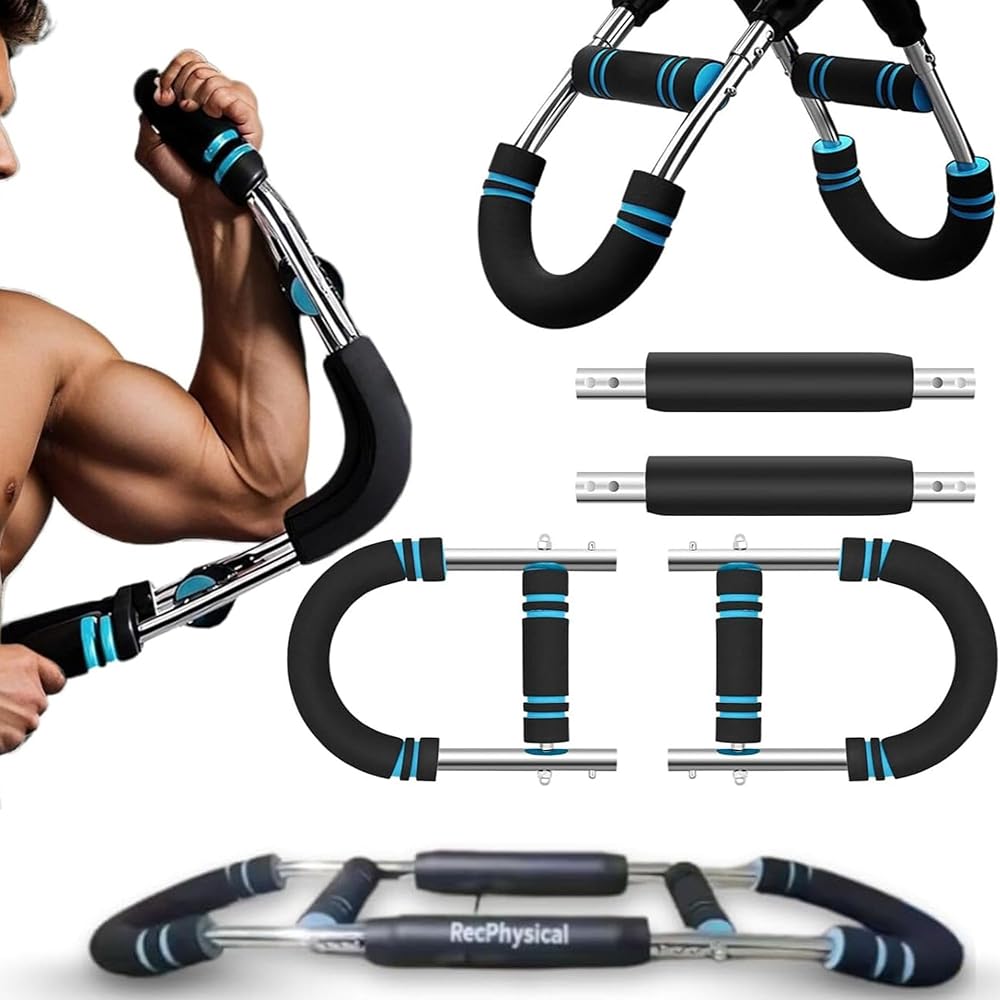
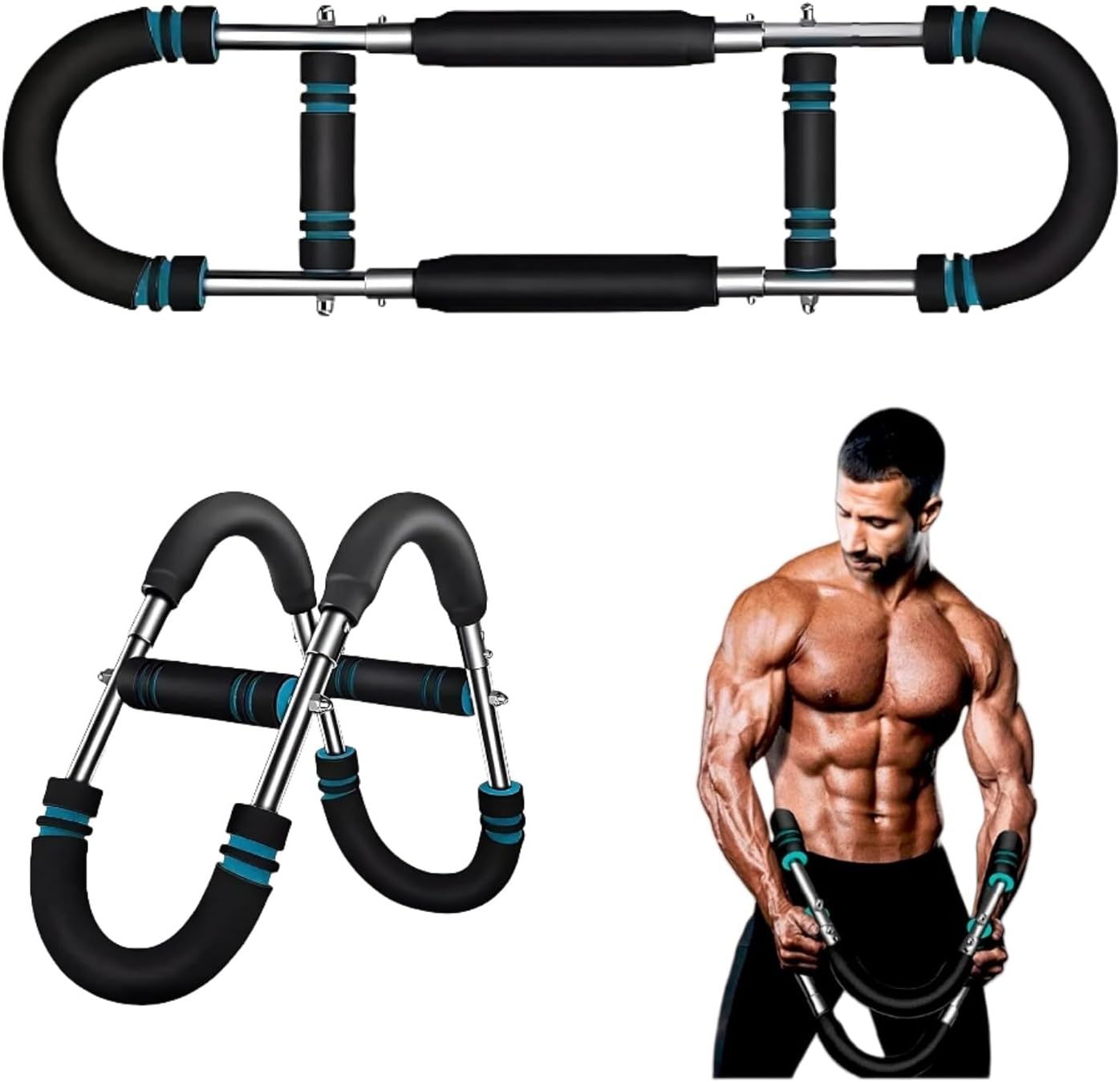
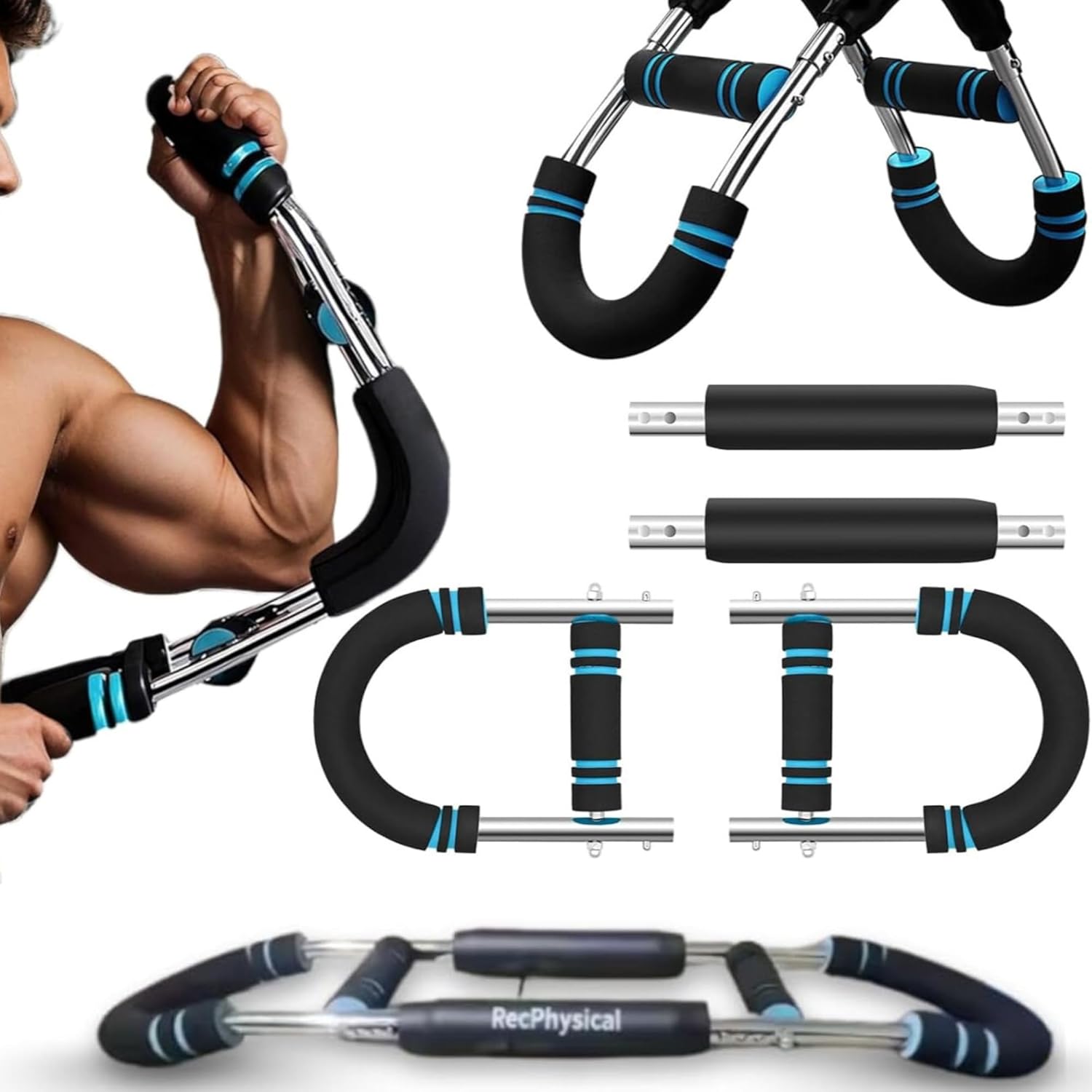
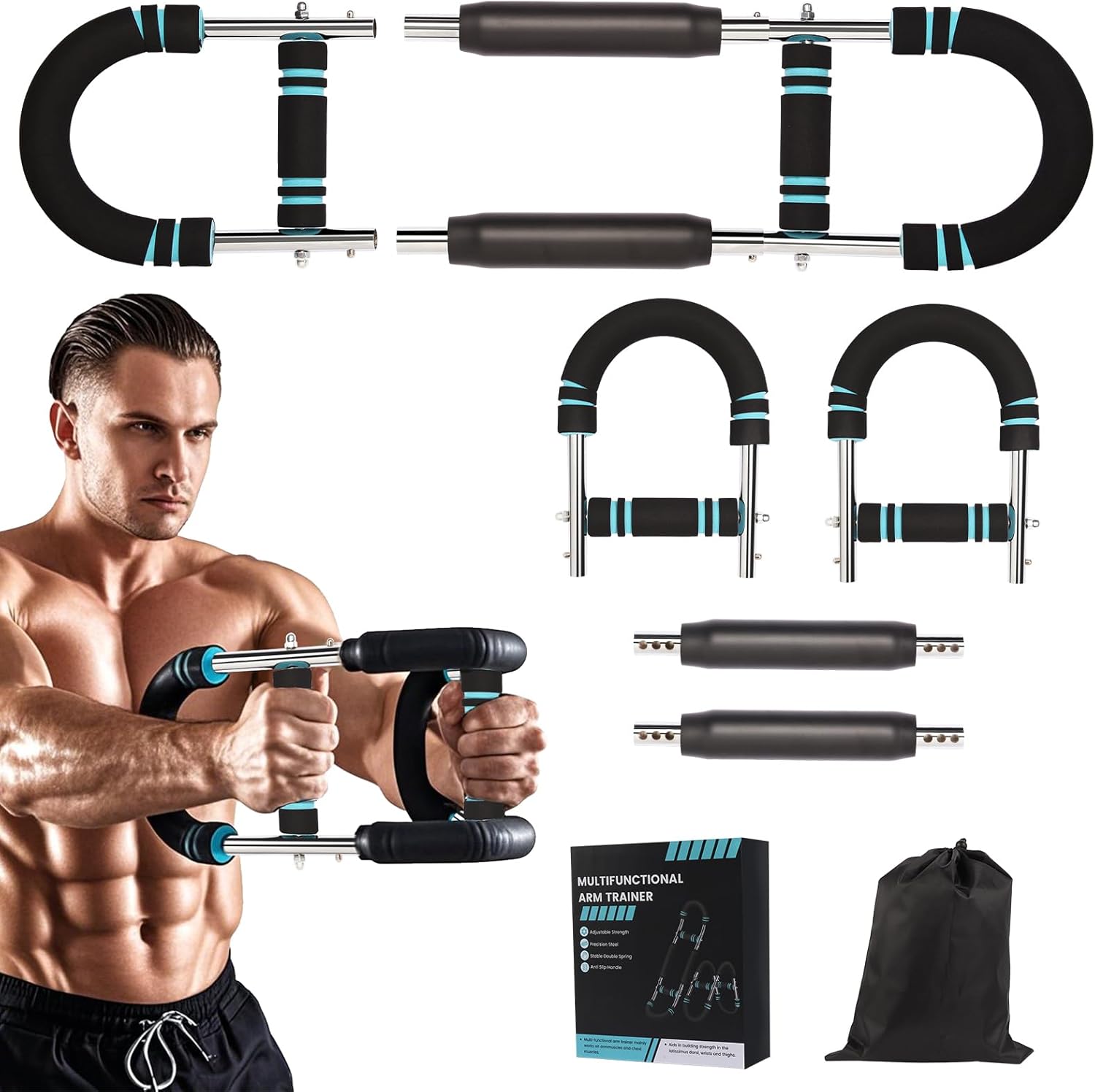
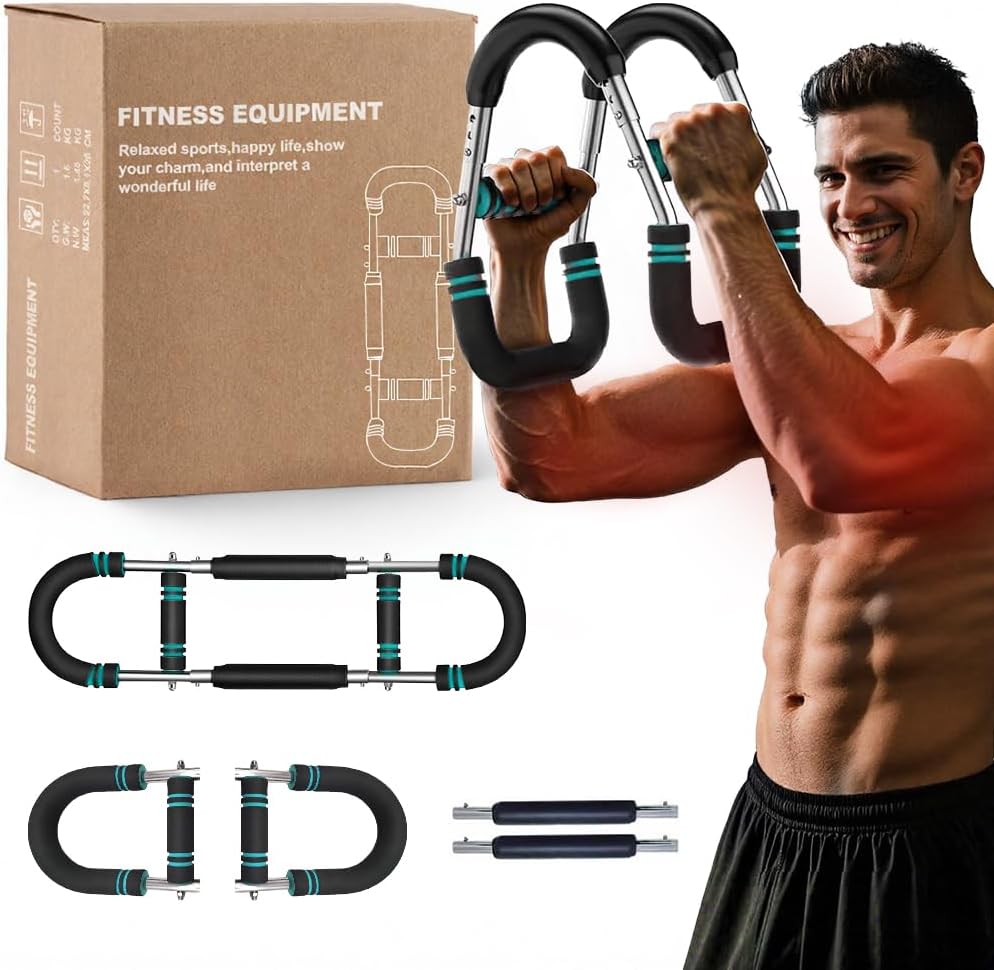
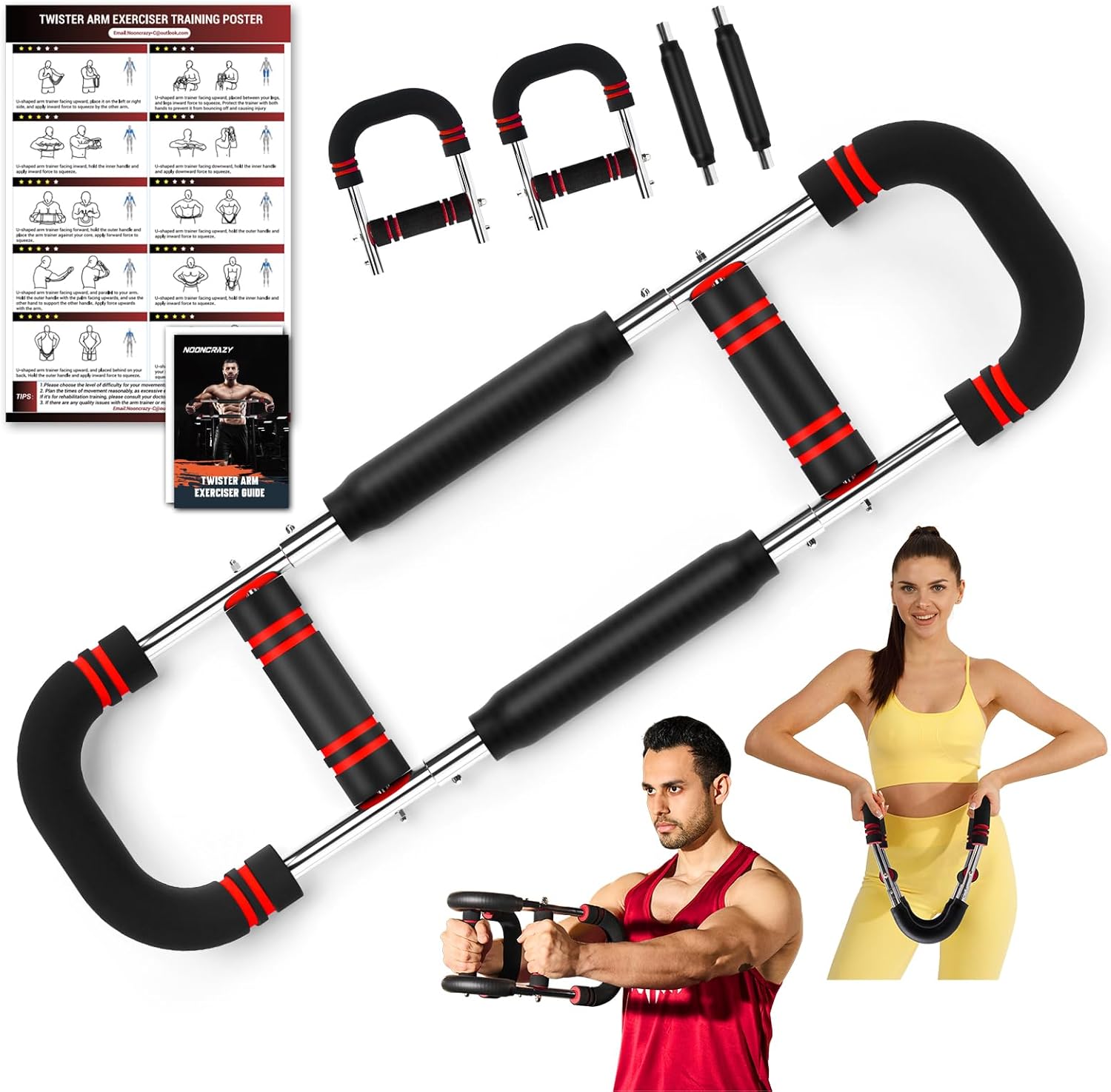
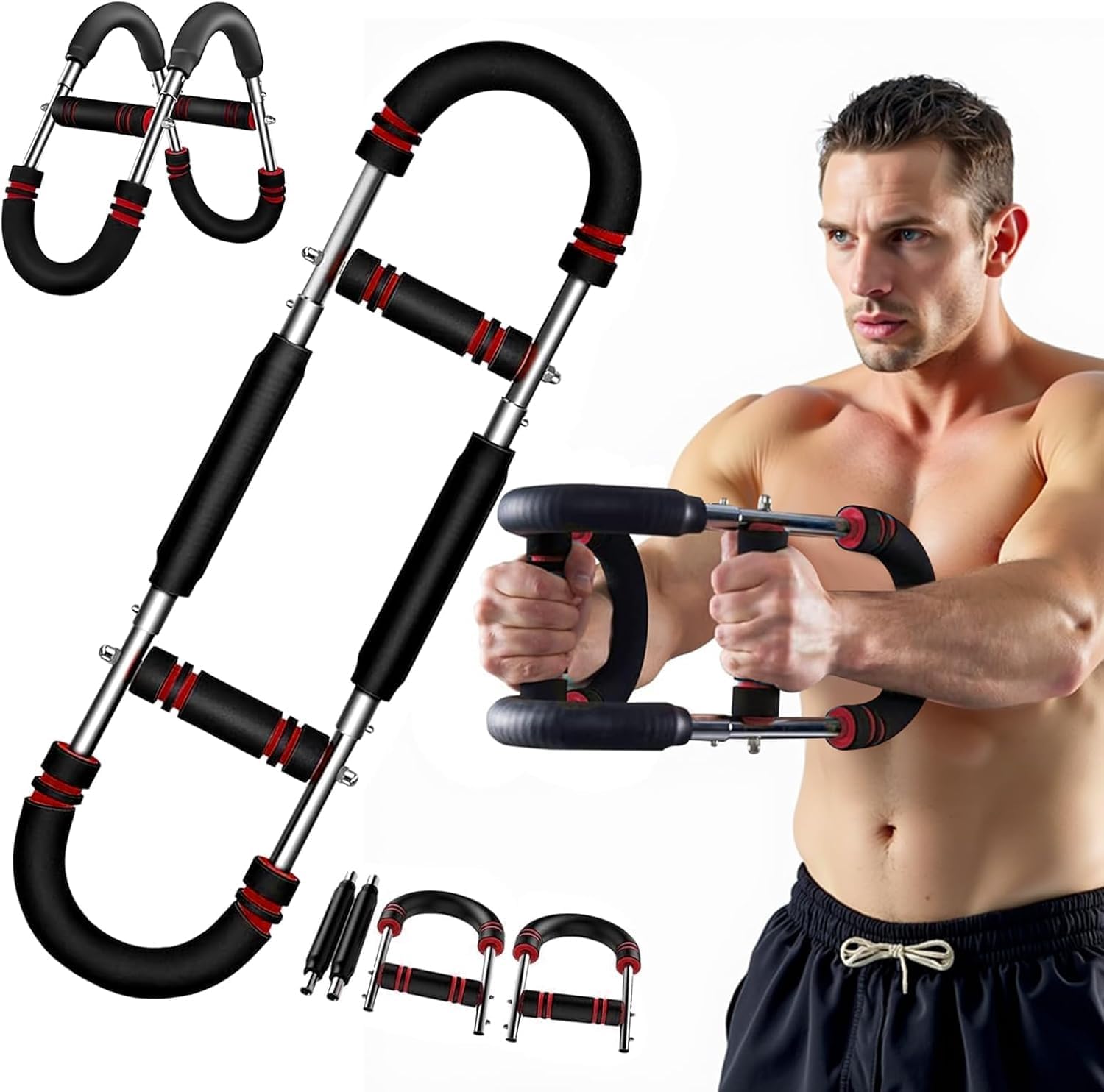
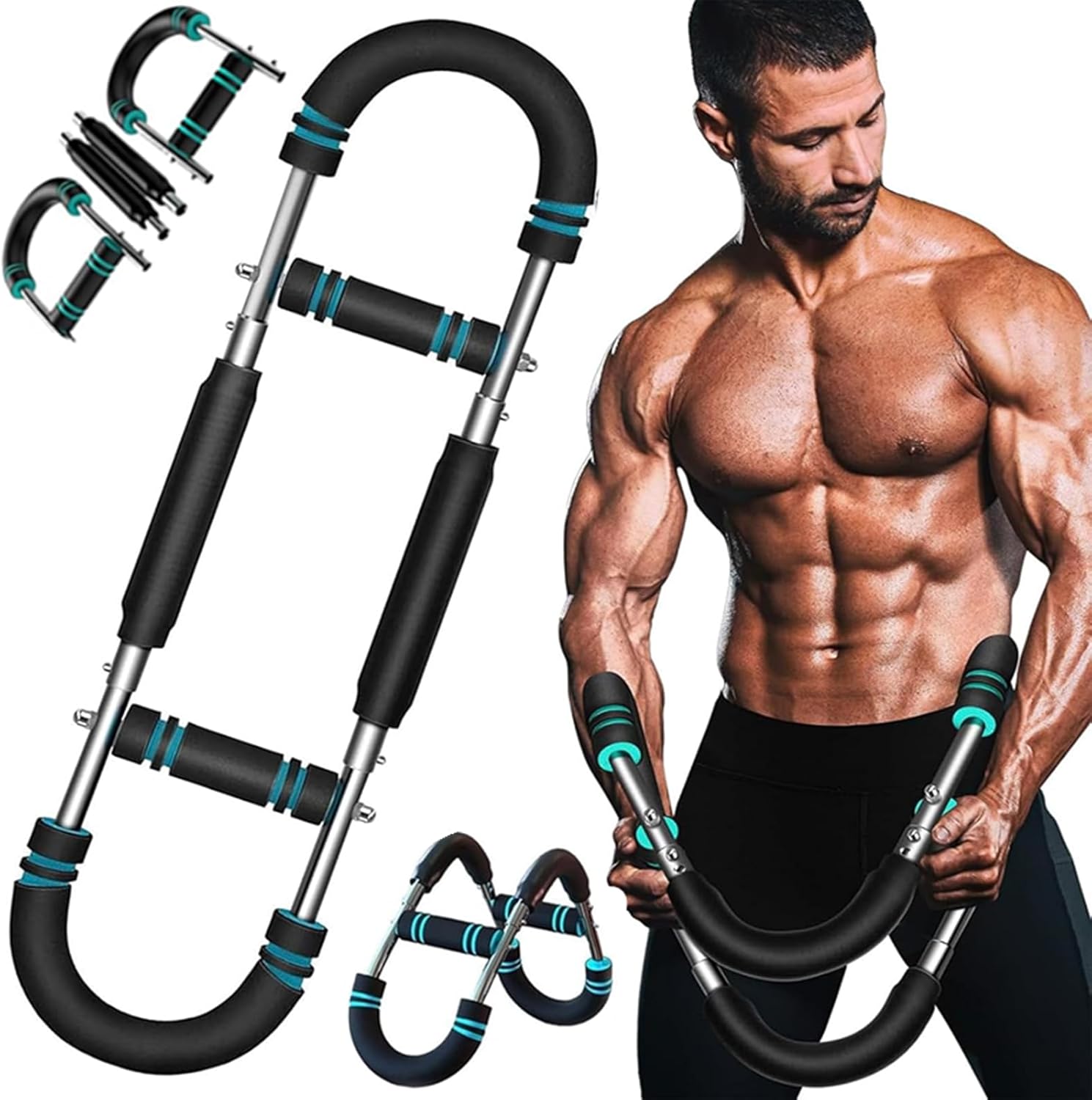
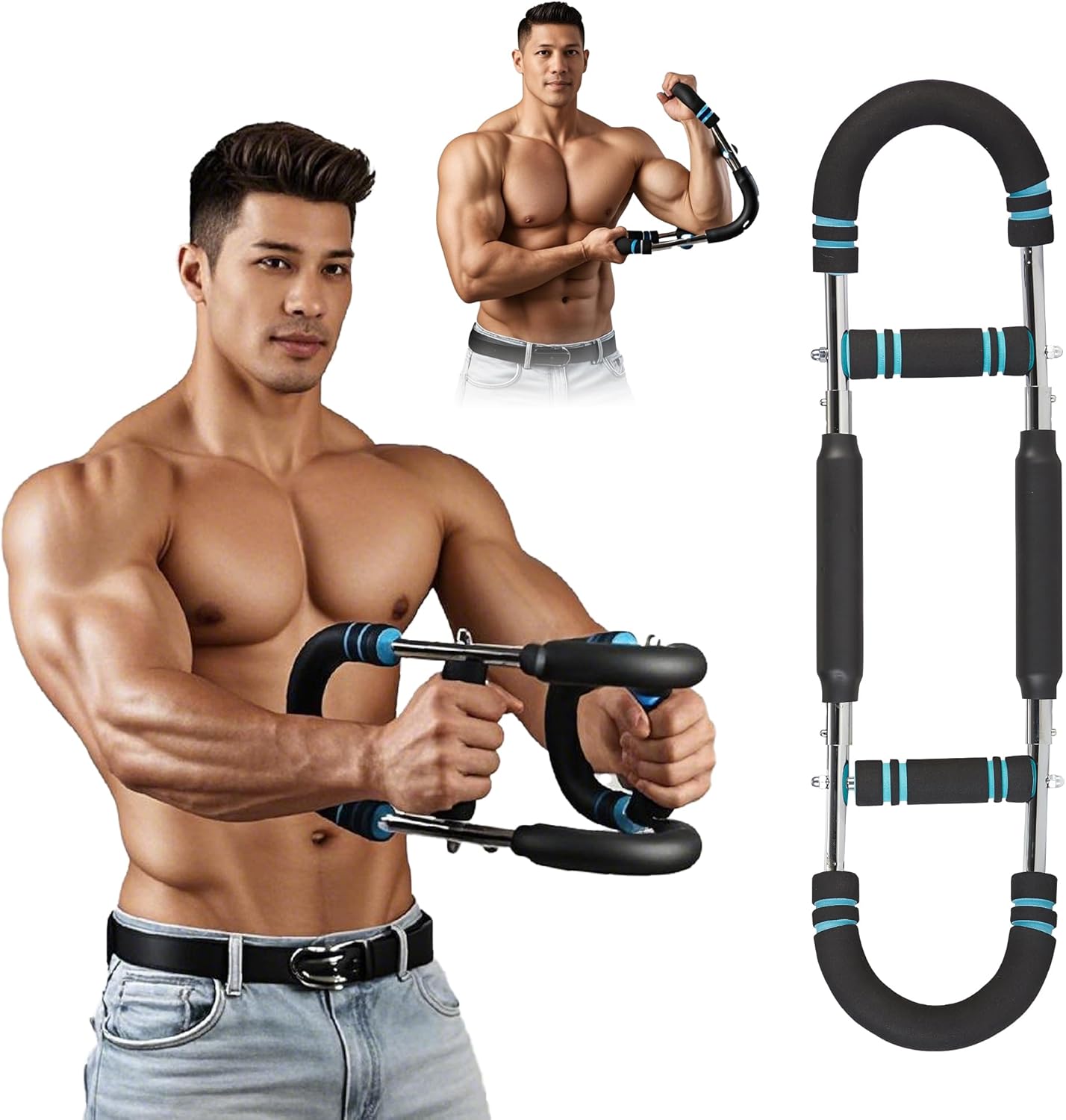
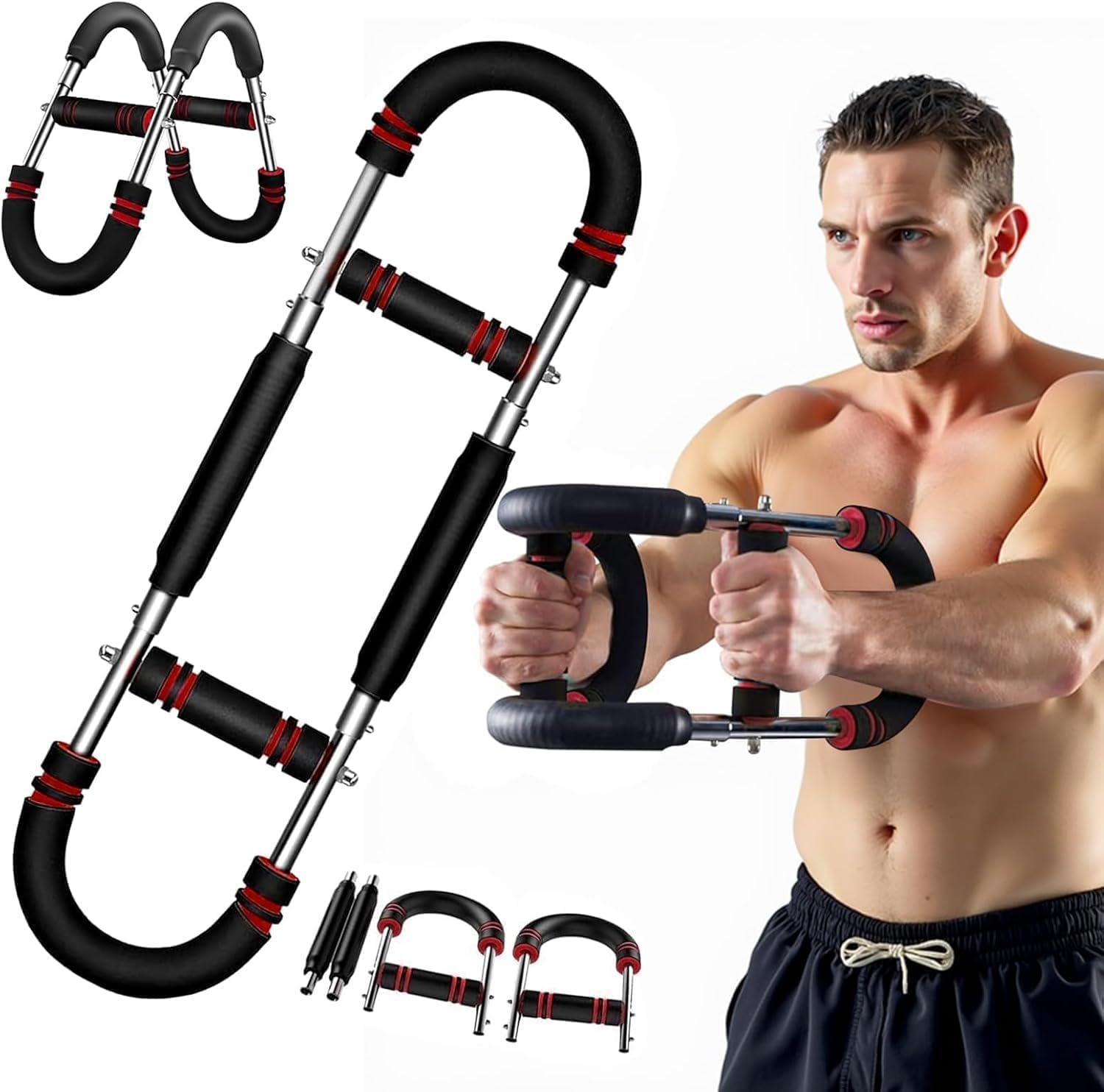
Let’s be honest — at some point we’ve all stood in front of the mirror, flexed, and thought: “There’s potential here. Untapped, deeply buried, possibly hibernating potential.” Enter the twister arm trainer: a gloriously simple device that looks like a prop from a low-budget sci-fi film but quietly delivers upper body results that would make your past self genuinely jealous.
These compact resistance gadgets have exploded in popularity across the UK, and for good reason. They’re affordable, they fit under the bed (you know, next to all the other fitness equipment you definitely use regularly), and they don’t require a gym membership, a spotter, or explaining to your neighbours why a barbell just came through the ceiling.
Unlike traditional weights or resistance bands — which have a talent for catapulting across the room at the worst possible moment — a quality twister arm trainer uses hydraulic or spring-based resistance to deliver smooth, controlled tension. This means you can actually work your chest, shoulders, biceps, and triceps without performing involuntary acrobatics. The NHS physical activity guidelines recommend adults smash strengthening exercises at least twice a week. Twister arm trainers tick that box brilliantly — no gym commute, no judgement, no one watching you struggle with 15 lbs and pretending it’s 50.
Whether you’re a total beginner who still confuses biceps with triceps, someone recovering from an injury, or a seasoned gym-goer looking for a compact bit of kit to complement your home gym setup, there’s a twister arm trainer on this list with your name on it. Probably not literally — manufacturers aren’t that thorough — but you get the idea.
We’ve reviewed ten models so you don’t have to spend three hours on Amazon at midnight making questionable decisions. You’re welcome.
Best for: Beginners who want to start sensibly rather than throwing their shoulder out on day one.
This is the entry-level option, and there’s absolutely nothing wrong with that. In fact, starting with a beginner-friendly trainer rather than immediately reaching for 110 lbs is what fitness professionals call “being smart.” This adjustable spring resistance bar does the job reliably without the complexity of something designed for competitive strongmen. Think of it as the sensible hatchback of twister arm trainers — not flashy, won’t impress anyone at a party, but incredibly dependable for daily use.
The resistance levels suit casual progressors building real strength over time, and the ergonomic grips mean your hands won’t be screaming for mercy after ten minutes. Construction is solid for the price, which in the UK fitness market is always a pleasant surprise rather than a given.
If you’re pairing this with something like a dedicated bicep-isolation setup, you’ve genuinely got a solid upper body home routine going. Well done. Your hibernating potential is stirring.
Key Features:
Adjustable resistance for gradual progression (no need to be a hero on day one)
Ergonomic grip handles so your hands stay cooperative
Best for: Intermediate users who’ve graduated from “I wonder if this works” to “I need more resistance, immediately.”
This mid-range trainer punches well above its weight class — metaphorically, since it is the one doing the punching. The hydraulic resistance system provides smooth, consistent tension rather than the jarring snap you sometimes get from cheaper spring alternatives. Which matters, because surprises are great at birthdays, less great mid-rep.
The ten progressive adjustment levels mean you’ll be using this for years as you get stronger, rather than outgrowing it in three weeks and relegating it to the loft. Users consistently praise how the tension stays even throughout the full range of motion, which is the kind of thing that sounds boring until you experience the alternative.
Key Features:
Hydraulic resistance — smooth like butter, not like a bungee cord
Ten adjustment levels to grow with your gains
Anti-rebound technology (it’s not going to fight back)
Best for: Anyone recovering from an injury and doing things properly for once.
Nobody wants to end up injured. Nobody wants to re-injure themselves because they were too impatient with the recovery process either. That’s why this rehabilitation-focused trainer exists — for people who are doing the sensible, slightly frustrating thing of starting light and progressing carefully.
The lower starting resistance and buttery-smooth motion mean you’re not putting sudden stress on healing tissue. It’s genuinely CE marked for medical use, which puts it in a different category from your average Amazon special. Healthcare professionals often recommend this type for gradual strength rebuilding, and while it won’t challenge experienced athletes, that’s entirely the point. This is a marathon, not a sprint — which is advice nobody wants to hear, but everyone eventually agrees was right.
Key Features:
Low starting resistance — no ego required
Smooth, controlled motion that won’t ambush your joints
Medical-grade materials because this is serious
Progressive resistance to keep things moving forward
Best for: Serious strength athletes. If you winced reading “66 lbs minimum resistance” — this is not that product for you, and that is completely fine.
This beast is for experienced lifters who look at a beginner trainer and feel nothing. Starting at 66 lbs, this heavy-duty unit means business. The robust construction handles intensive training sessions without complaint, and the high resistance ceiling genuinely challenges even strong users. It’s the gym bro of twister arm trainers — won’t say much, just wants to work.
Fair warning: if you’re new to this style of training, start elsewhere. But if you’ve been lifting consistently and need something that keeps pace with your strength, this one will do nicely.
Key Features:
High-resistance hydraulic system — for when everything else feels easy
Professional-grade construction built for regular hammering
Wide resistance range for progressive overload
Heavy-duty frame that won’t bend under your enthusiasm
Best for: Frequent travellers, people in small flats, or anyone who has ever said “I’ll just train at the hotel gym” and then found the hotel gym was one broken treadmill and a yoga mat from 2003.
The detachable design is the whole selling point here — and it delivers. Assembly is quick, secure, and doesn’t require an engineering degree or a YouTube tutorial watched at 2x speed. The resistance adjustment works smoothly, the packed dimensions mean it slides into a bag without drama, and it means you have absolutely no excuses for skipping training while away.
There’s something quietly satisfying about pulling a training device out of your luggage and working out in a hotel room while everyone else is at the complimentary breakfast. Deeply peculiar, but satisfying.
Key Features:
Detachable design — packs down, shows up ready to work
Best for: Intermediate to advanced users who want to build serious upper body mass without mortgaging the house for gym equipment.
This trainer hits a genuinely sweet spot between resistance range and usability. The 70–110 lb range suits most people who’ve been training consistently for a while, the hydraulic system keeps everything smooth, and the build quality is the kind you notice because nothing creaks, wobbles, or makes worrying sounds during use.
It’s a reliable, no-nonsense addition to any home gym collection. The rotary knob adjustment system is satisfyingly clicky, too. Sometimes the small things matter.
Key Features:
Wide resistance range for continued strength progression
Hydraulic technology for consistent, controlled tension
Durable construction — built for the long haul
Rotary knob adjustment (clicky and oddly satisfying)
Best for: All-rounders who want one piece of kit that works their chest, shoulders, and arms without needing a spreadsheet to figure out the exercises.
This versatile spring chest developer is the Swiss Army knife of the group. Six-plus exercise positions mean you’re not just doing one thing repeatedly and hoping for the best — you’re actually targeting different muscle groups through different angles. Research on how to train complementary muscle groups together consistently shows this kind of varied approach produces better, more balanced results.
Users consistently report solid muscle activation across the chest, shoulders, and arms, which is about as comprehensive as upper body training gets from one portable device. Good value, genuinely versatile. Like a good friend who’s also a competent handyman.
Key Features:
Targets multiple muscle groups — efficient, not lazy
Ergonomic handle design for proper form
Progressive resistance system so you’re always challenged
Best for: Beginners to intermediate users who want a sensible starting range that actually has room to grow.
The 40–100 lb range is genuinely ideal for most people picking up a twister arm trainer for the first time. It’s not so light that you plateau immediately, and not so heavy that the first session becomes a cautionary tale. The eight adjustable settings give you plenty of runway for progression without constant equipment upgrades. And for those interested in exploring power twister techniques as a beginner, this range is the perfect entry point.
Portable, reliable, and sensibly designed. This is the “just start training and stick with it” option — which, honestly, beats any fancy gadget you use twice and abandon.
Key Features:
Sensible resistance range that grows with you
Lightweight and easy to carry around
Reliable adjustment mechanism — it does what you tell it to
Best for: Advanced users chasing strength gains who need a trainer that won’t tap out before they do.
At 66–110 lbs, this is another high-resistance option for people whose forearms have their own postcodes. The robust hydraulic system keeps tension consistent even at the upper end, which is where cheaper trainers tend to become unreliable. Construction quality supports intensive, regular use without any structural complaints, which is exactly what you want when you’re pushing the limits.
A note for anyone thinking “I’ll just start with this one”: you won’t enjoy it. Start lighter, build up, come back to this. Future you will thank you, and your physiotherapist will thank you too.
Key Features:
High-resistance capability for advanced training
Professional hydraulic system — no surprises
Heavy-duty construction that takes a beating
Built for people who are genuinely serious about this
Best for: Busy people who need both portability and performance, and absolutely refuse to choose between the two.
The final entry on the list combines the convenience of a detachable design with a resistance range that suits the majority of fitness enthusiasts. Under-two-minute assembly means you’re training before you’ve had time to talk yourself out of it — a feature that deserves more credit in fitness product marketing.
At 40–100 lbs with a lightweight frame, this is the kind of trainer that slots effortlessly into real life. Keep one in your bag, one at your desk, one for the glove compartment. Actually, maybe not that last one.
Key Features:
Detachable design for grab-and-go convenience
Fast assembly because procrastination is real
Moderate resistance range for most users
Built for people who actually live busy lives
Specs:
Resistance Range: 40–100 lbs
Material: Lightweight steel alloy
Weight: 2.6 lbs
Assembly Time: Under 2 minutes
Benefits of Twister Arm Trainer Workouts
Right, so beyond the obvious “it trains your arms” benefit — which to be fair is doing a lot of heavy lifting on its own — twister arm trainers offer a genuinely impressive range of advantages for home fitness.
First, they’re space-efficient in a way that matters in the UK, where “open plan living” often means your sofa is six inches from your oven. These trainers store vertically, fit in a bag, and provide resistance comparable to much bulkier kit. Your chest, shoulders, biceps, triceps, and even your core all get involved, making this a properly multi-use piece of equipment.
The hydraulic resistance found in quality models delivers consistent tension throughout the movement — unlike cheaper spring alternatives that feel fine for the first few inches and then mysteriously easy for the rest. Consistent tension means better muscle engagement, which means better results. Simple maths.
The portability factor also means there’s no “I can’t get to the gym today” excuse. You are carrying the gym with you. You’ve become the gym. Profound, really. For anyone considering building out a more complete setup, it’s worth knowing these pair brilliantly alongside portable bench press and squat rack options if you ever want to go full home-gym mode.
Choosing the Right Resistance Level
Picking the wrong resistance is one of the most common mistakes people make — usually because they overestimate their current strength and end up training their ego rather than their muscles.
Here’s a rough guide that won’t lead you astray:
Beginners: Start with 20–40 lbs. Focus on form. Accept that this will feel easy and trust that it won’t for long.
Intermediate users: 40–80 lbs is the sweet spot. Enough challenge to drive real gains without compromising technique.
Advanced athletes: 80–110 lbs and above. If you’re here, you probably already knew that.
Age, injury history, and current conditioning all affect this. The sensible approach — which is somehow the least popular approach — is to start lighter than you think you need to and build up. Slower is faster in the long run. Yes, that sentence works.
Exercise Variations and Workout Techniques
One of the genuinely underrated things about a quality twister arm trainer is how many different movements you can get from one piece of kit. It’s not just “hold it in front of you and squeeze.”
Biceps: Hold at chest height, compress inward. Keep breathing. Don’t hold your breath — you’ll know if you do.
Triceps: Overhead positioning. Extend the trainer above your head, then apply compression force. Engages triceps and challenges shoulder stability simultaneously.
Forearms and wrists: Adjust grip position and focus on slow, controlled compression. Underrated exercise, unfairly neglected.
Chest variations: Wide stance hits the outer chest. Narrower positioning targets the inner chest and triceps. One trainer, multiple angles.
Here’s the section everyone skips and then later wishes they hadn’t. Please don’t skip this section.
Warm up before every session. Yes, every session, including the quick ten-minute one. Cold muscles are unhappy muscles. Keep your core engaged, shoulders stable, and resist the urge to use momentum — if you’re swinging the thing around, you’re cheating the movement and potentially acquiring an injury.
Stop if something hurts. Not the good burn of muscles working — the sharp, sudden, “something is wrong” pain. If that happens, stop, rest, and consult a professional if it persists. No gains are worth a proper injury, and anyone who tells you otherwise has probably never dealt with a rotator cuff issue.
For anyone using high-resistance trainers above 80 lbs, it’s genuinely worth getting form checked by a qualified personal trainer before going heavy. One session of coaching now saves months of recovery later.
Building Your Workout Routine
A sustainable routine beats an impressive-sounding one that falls apart by week two. Starting simple: 2–3 sets of 8–12 reps, three times a week, with rest days between. That’s it. That’s the entire framework.
As you progress, introduce variations, add resistance levels, and experiment with isometric holds — ten to fifteen seconds in the compressed position builds muscle endurance brilliantly. Alternate between chest-focused and arm-focused sessions to prevent overuse and promote balanced development.
Track what you’re doing. It doesn’t need to be a fancy app — a note on your phone or an actual piece of paper works fine. Progress that isn’t recorded is progress that gets forgotten, and “I think I’m getting stronger” is less motivating than “I’ve gone up three resistance levels in six weeks.”
Frequently Asked Questions
How often should I use a twister arm trainer? Three to four times per week, with rest days between sessions. Muscles grow during recovery, not during training — a fact that should make rest days feel significantly less like failure.
Can it replace gym workouts entirely? For upper body? It goes a long way. For a fully balanced fitness routine, pair it with cardio and lower body work. It’s excellent, not omnipotent.
Hydraulic vs spring-based — which is better? Hydraulic systems win for smoothness, consistency, and longevity. Spring trainers can feel uneven and tend to wear out faster. If the budget allows, go hydraulic.
Are these suitable for women? Completely. Many models start at 10–20 lbs, making them ideal for beginners of any gender, and the resistance scales well for muscle toning and strength building alike.
How long before I see results? With consistent use three to four times weekly, most people notice improved strength and tone within four to six weeks. Visible definition usually comes after eight to twelve weeks, paired with decent nutrition.
Can I use one during injury recovery? Low-resistance models are often recommended for rehabilitation, but always check with a healthcare professional first. The Gecool rehabilitation model (Product 3 above) is specifically designed for this.
What maintenance do they need? Wipe them down after use, store in a dry place, and lubricate moving parts if the manufacturer recommends it. They’re not high-maintenance. Unlike some gym memberships.
Are expensive models worth it? Generally, yes. Better build quality, smoother resistance, longer lifespan. A quality trainer used consistently beats a cheap one that breaks or frustrates you into quitting.
Maximising Your Training Results
The biggest predictor of results isn’t which model you buy. It’s whether you use it consistently. A mid-range trainer you pick up five days a week will outperform any premium model gathering dust on a shelf.
Progressive overload — gradually increasing resistance as you get stronger — is the actual mechanism behind muscle development. Don’t get comfortable. When ten reps feels easy, add resistance. When the current setting feels manageable, turn it up.
Nutrition matters more than most people want to hear. Adequate protein supports muscle repair and growth. Proper hydration maintains performance. Neither of these are exciting, but both of them are non-negotiable.
Sleep more. Seriously. Seven to nine hours. Muscles repair themselves while you sleep. Skimping on sleep for the sake of extra training sessions is a losing trade. The maths on this is unforgiving.
Track your sessions, celebrate incremental progress, and don’t compare your week three to someone else’s year three. You’re on your own timeline, and it’s going fine.
Comparing Twister Arm Trainers to Other Equipment
Versus free weights: twister arm trainers win on space, price, portability, and accessibility. They lose on versatility for lower body training and the social element of catching someone’s eye in the free weights section. Tough trade-off, that last one.
Versus resistance bands: hydraulic twister trainers provide more consistent tension and significantly better durability. Bands snap. Bands lose elasticity. Bands shoot across the room when you least expect it. Hydraulic systems simply… work.
Versus bulky home gym equipment: the bilateral compression mechanism of a twister arm trainer promotes symmetrical development — both arms have to work equally, which prevents the strength imbalances that often sneak in with unilateral training. The portability comparison with bench press setups is perhaps the starkest: one fits in your bag, the other does not.
For small-space training solutions, few things match the efficiency of a quality arm trainer. It’s one of those rare cases where compact genuinely doesn’t mean compromised.
Wrapping It Up
There’s a twister arm trainer on this list for everyone — from the cautious beginner who wants to start gently and sensibly, to the seasoned athlete who needs something that won’t give up before they do.
The technology has come a long way from basic spring bars. Hydraulic resistance systems have genuinely transformed what’s possible from a pocket-sized piece of kit. For UK fitness enthusiasts working around limited space, realistic budgets, and actual busy lives, these trainers offer exceptional value without demanding you build an extension on the house.
A final word of wisdom: the best twister arm trainer is the one you’ll actually use. Not the most expensive, not the most impressive-sounding, not the one with the most glowing reviews. The one that fits your life, your space, your budget, and your current fitness level.
Start there. Progress from there. The untapped potential won’t hibernate forever.
Jodie Carter is a REPS Level 3 certified personal trainer with over 8 years of experience in strength training and home gym design. She holds qualifications in exercise physiology and has helped over 500 clients design effective home workout spaces. Jodie regularly contributes to UK fitness publications and maintains continuing education in the latest exercise science research.
Disclosure: This article contains affiliate links to products I personally use and recommend. When you purchase through these links, I may earn a small commission at no additional cost to you. All recommendations are based on my genuine experience and testing—I only recommend products I actually use in my own home.
By Daniel Huxley Trusted DIY Professional Let me paint you a picture. It’s a Saturday morning. You’ve got a full cup of tea, a project in mind, and the unshakeable confidence of a man who once successfully assembled flat-pack furniture with only three parts left over. You stride into your…
By Jodie Carter, Certified Personal Trainer (REPS Level 3) & Home Gym Specialist Introduction: You’ve Decided to Get Fit. Congratulations, You Absolute Hero. Let’s be honest about how you got here. You didn’t wake up one morning in a zen-like state of physical motivation, brew a green tea, and calmly…
From someone who’s tested dozens of Bluetooth speakers – this one hits different. The Bottom Line Up Front After three months of putting this speaker through its paces at beach parties, backyard BBQs, camping trips, and even as my daily work-from-home companion, I can confidently say: the Bose SoundLink Max…
We use cookies to ensure that we give you the best experience on our website. If you continue to use this site we will assume that you are happy with it.