Let’s paint a picture. You’ve finally decided to take up martial arts. You’ve watched every Rocky film (including Rocky V, which showed real commitment). You’ve shadowboxed in the mirror. You’ve thrown a few air punches that you’re fairly certain were impressive. And now you’re about to walk into your first sparring session wearing approximately nothing protective.
Your ribs would like a word.
A boxing body pad — also called a chest protector, torso guard, or “the thing standing between you and a very awkward conversation with your GP” — is one of those pieces of kit that serious martial artists treat as non-negotiable. Whether you’re training in taekwondo, kickboxing, karate, or MMA, quality chest protection means you can train hard without spending the next week wincing every time you sneeze.
This guide reviews four of the best chest protectors available to UK martial artists right now. We’ve done the research so your ribcage doesn’t have to.
Best for: MMA, kickboxing, Muay Thai, and anyone whose sparring partner has a worryingly powerful left hook.
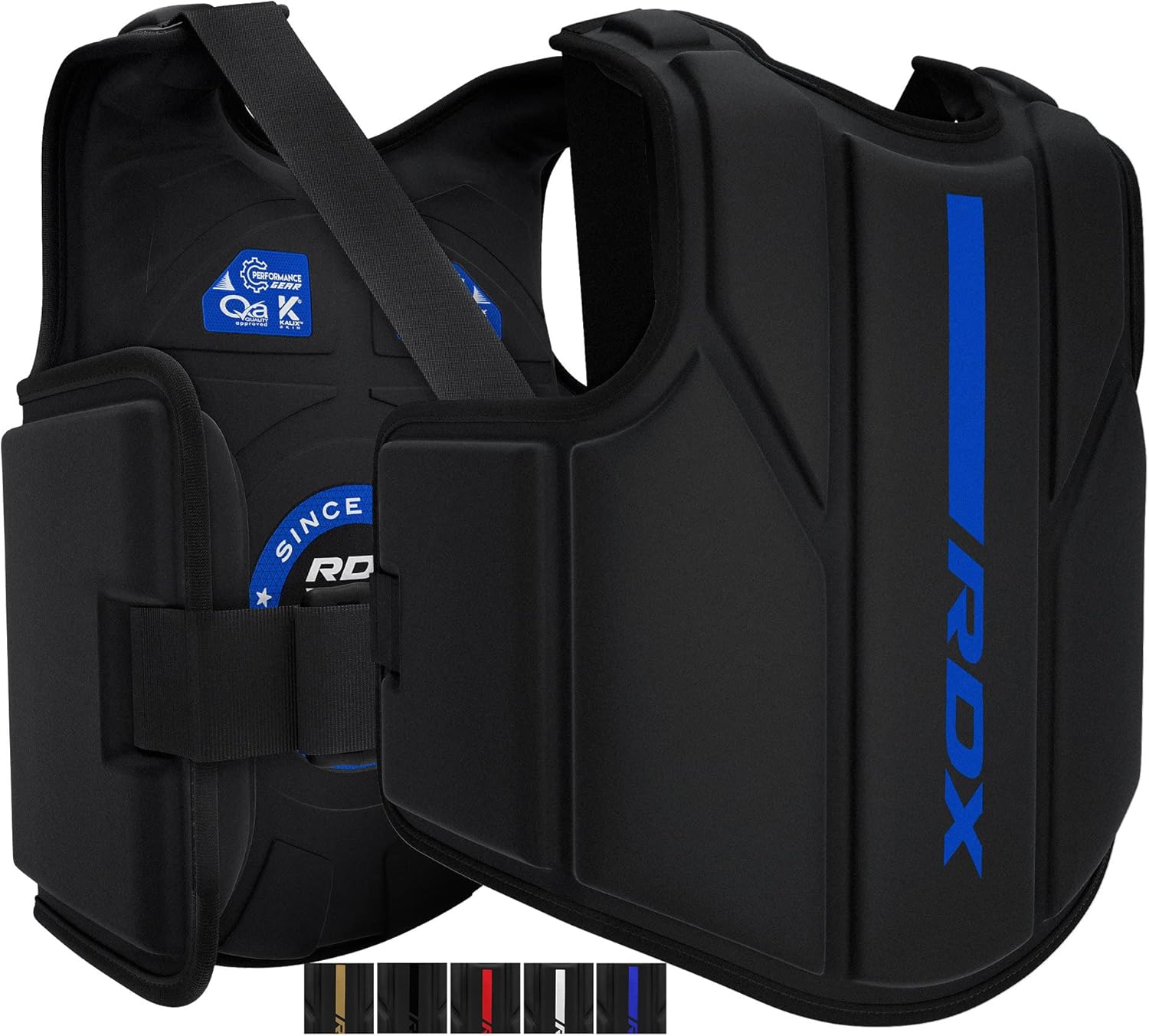
If chest protectors had a personality, the RDX Kickboxing Protector would be the reliable mate who always shows up on time, never complains, and somehow manages to be useful in every situation. It’s not flashy. It doesn’t do party tricks. It just quietly gets on with the job of stopping kicks from rearranging your internal organs.
The star of the show is RDX’s KARA strike shield technology — which sounds like something from a Marvel film but is actually a very sensible anatomical design that distributes impact across a wider surface area. Paired with a trio padding system (three layers of foam working together like a highly motivated committee), it handles high-intensity shots with admirable composure.
Lightweight? Yes. Secure fit? Absolutely — the adjustable velcro straps mean it won’t migrate to your armpit mid-sparring, which we can all agree is important. Some users report the sizing runs a touch generous, so if you’re in between sizes, go down.
Rating: 4.3/5 — A solid, dependable choice that won’t let you down. Unlike that protective mouthguard you keep forgetting at home.
Best for: Training centres, clubs, competitive sparring, and anyone who has ever stood on a pitch in the wrong-coloured bib.
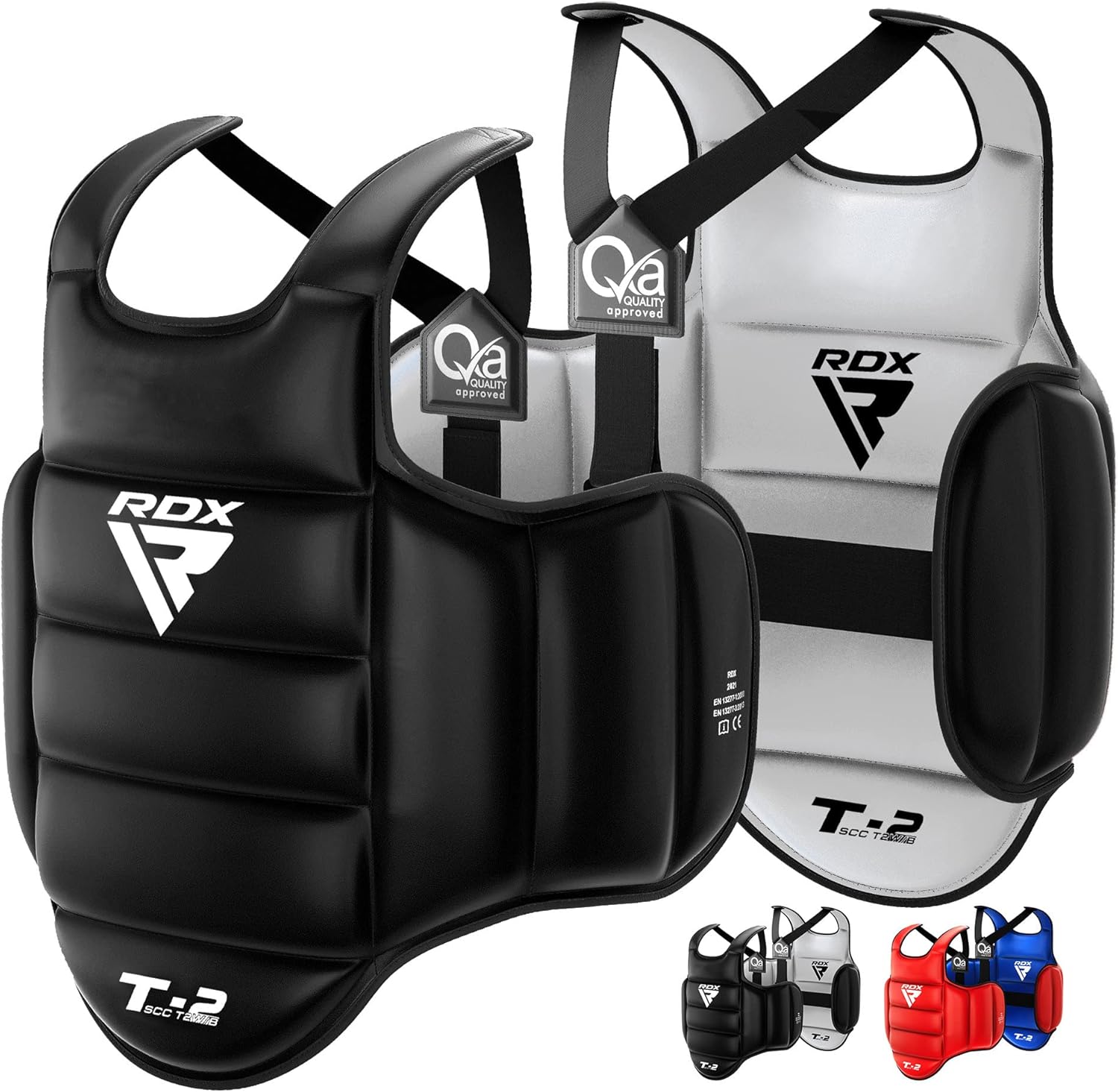
You know that moment in team sports when half the players are wearing red bibs and the other half are wearing blue, and someone always ends up punching their own teammate because they got confused? Taekwondo sparring has a similar problem. The RDX Reversible Kickboxing Protector solves it with elegant simplicity: flip it inside out and boom — different colour, no confusion, no accidental friendly fire.
This is the most practical chest protector on our list, and frankly, it’s a bit annoying how useful it is. The Maya Hide leather exterior (a premium synthetic that laughs in the face of wear and tear) is built for the kind of training centres where kit gets used hard, used often, and occasionally used by people who forget to wipe it down after. The Quick-EZ closure system means you can switch between opponents without a 10-minute strap-adjustment ceremony.
Multi-layer padding provides excellent shock absorption, and the reversible design genuinely adds value — effectively giving you two protectors for the price of one. For clubs and coaches, this is a no-brainer.
Rating: 4.5/5 — The highest-rated protector in this guide, and rightfully so. Two protectors’ worth of utility in one rather clever package.
Key Features:
Reversible dual-colour design (red/blue or black/white)
Maya Hide leather for long-lasting durability
Quick-EZ closure for rapid opponent changeovers
Multi-layer foam padding throughout
Full torso coverage
Specs at a glance:
Material: Maya Hide leather exterior
Padding: Thick multi-layer foam
Closure: Quick-EZ adjustable system
Colors: Reversible (typically red/blue or black/white)
Best for: Taekwondo practitioners, karate students, beginners, and anyone who thinks “I just want something comfortable that won’t make me feel like I’m wearing a mattress.”
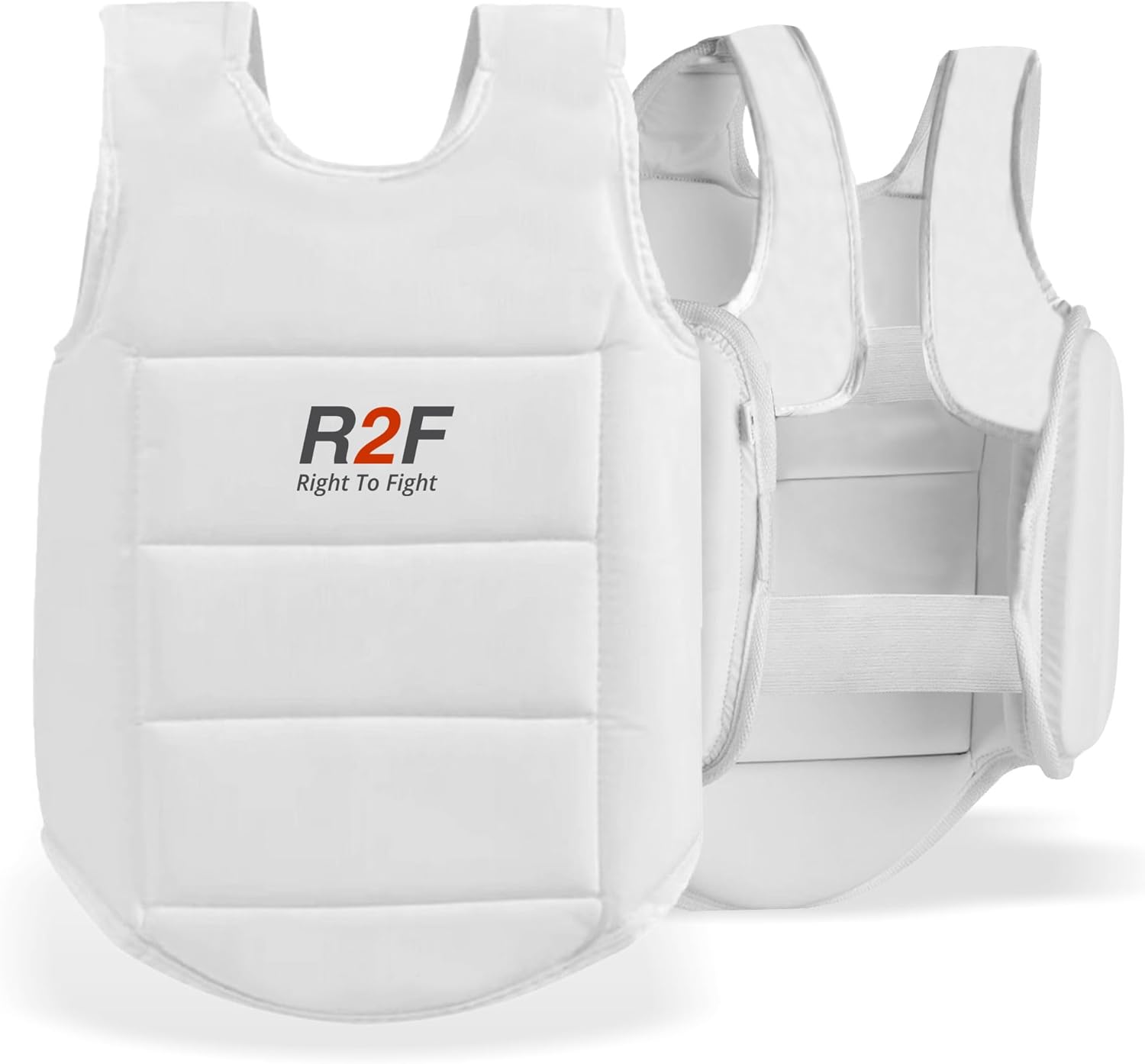
Here’s the thing about taekwondo: a significant portion of the sport involves kicking people in the head at improbable angles. To do this, you need to be able to move. Freely. Without feeling like you’ve strapped a suitcase to your chest. The R2F Sports Protector understands this on a spiritual level.
Built around SpongeX technology — which sounds like a sponge but performs considerably better under pressure — this protector keeps kicks and punches from doing their worst while staying genuinely lightweight. The dual stretch elastic straps are flexible enough that you can pull off a spinning heel kick without the protector staging a protest.
It’s designed for men, women, and youth, which makes it one of the more versatile options for clubs with mixed membership. The tradeoff for all this glorious lightness is that it’s better suited to light-to-moderate sparring and technique work than to full-contact heavy rounds — but for recreational practitioners and beginners finding their feet (and their kicks), it’s an excellent starting point.
Rating: 4.1/5 — Brilliant for traditional martial arts training. Light, flexible, and won’t intimidate beginners into reconsidering their life choices.
Key Features:
SpongeX technology for impact resistance
Dual stretch elastic straps for unrestricted movement
Best for: Competitive fighters, professional training facilities, serious martial artists, and anyone whose sparring partner has “professional” somewhere in their title.
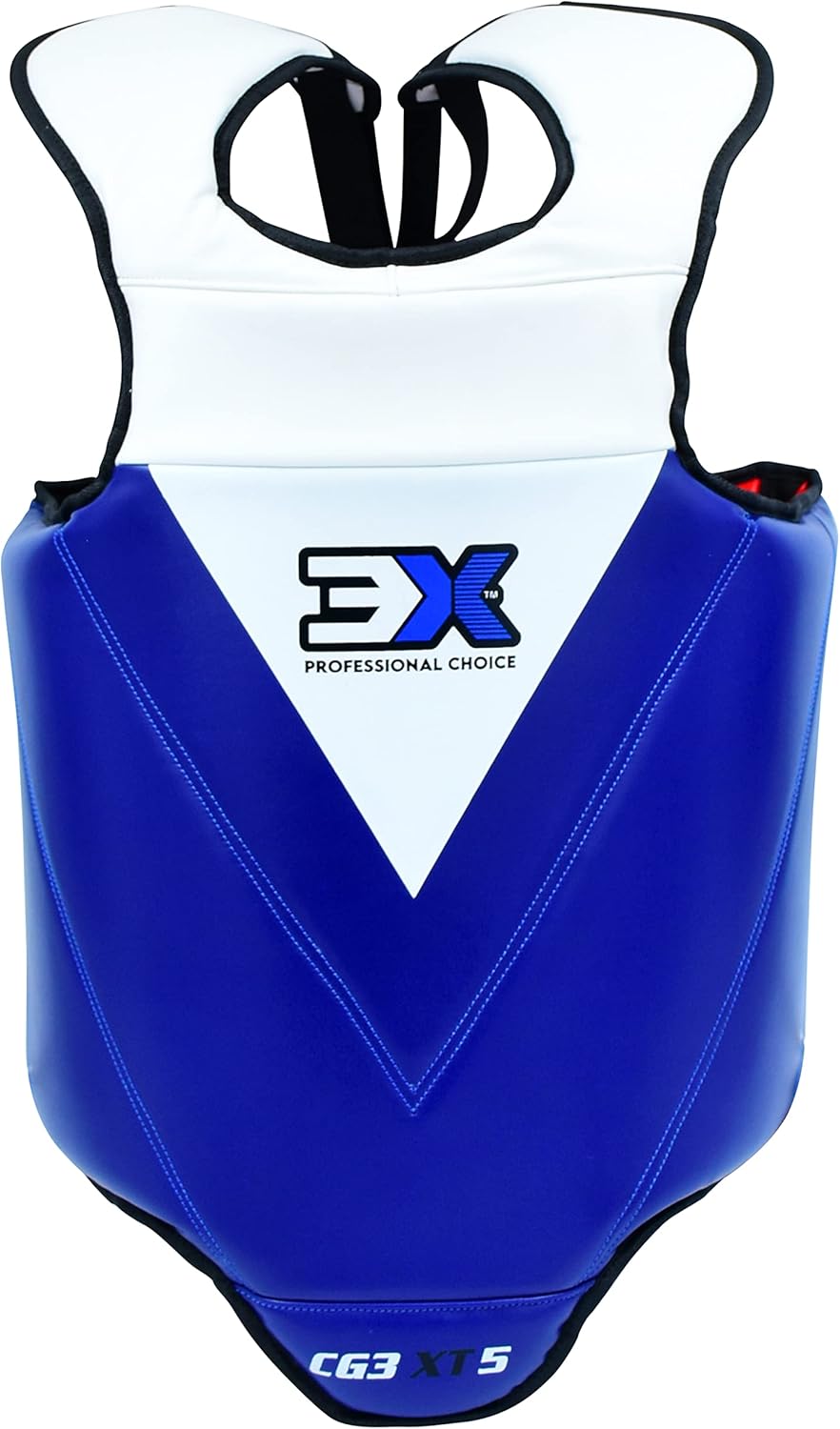
If the other protectors on this list are sensible family cars, the 3X Professional Choice is a tank. A CE-certified, EVA-LUTION foam-padded, Laini leather-clad tank that would quite like to have a quiet word with anyone throwing a heavy shot at your torso.
CE certification isn’t just a sticker — it means this protector has been tested against European safety standards for protective equipment. The EVA-LUTION foam padding technology (try saying that three times fast) combines shock-absorbing properties with a moulded design that sits properly against the body rather than wobbling about. The Laini leather exterior is premium grade, built for the kind of daily punishment that would retire lesser materials early.
At 57cm high, 84cm long, and a substantial 10cm depth of padding, this is not a protector that apologises for existing. Some users do find it bulkier than lighter alternatives — if you’re training in a discipline that requires acrobatic movement, that’s worth bearing in mind. But for heavy sparring, MMA, and anyone who trains with people who really mean business, the 3X Professional Choice earns its name.
Rating: 4.4/5 — Premium protection for serious training. If you’re stepping up to competitive level, this is where your ribcage wants you to be spending your money.
Key Features:
CE certified to European safety standards
EVA-LUTION foam padding technology
Premium Laini leather construction
Shock-absorbing moulded design
Sweat-absorbing interior padding
Specs at a glance:
Material: High-grade Laini leather
Dimensions: Height 57cm, Length 84cm, Depth 10cm
Padding: EVA-LUTION foam technology
Certification: CE approved
Closure: Professional adjustable straps
Choosing the Right One: A Guide for People Who Hate Making Decisions
Selecting a chest protector is not as complicated as parallel parking, but it does require a moment’s thought. Here’s a quick breakdown of what actually matters.
Your martial art. Taekwondo favours flexibility and lightness (R2F or the standard RDX). MMA and heavy kickboxing need more robust protection (the reversible RDX or the 3X). Karate sits somewhere in the middle, like a well-adjusted median child.
Fit. A chest protector that doesn’t fit properly is like a seatbelt you’ve wedged under your arm — it gives you false confidence while providing approximately none of the protection. Measure around your chest at its widest point and check the manufacturer’s sizing guide. Most quality options have adjustable straps to accommodate different body shapes.
Material. Leather (including Maya Hide and Laini varieties) outlasts synthetic materials when training hard and often. If you’re training twice a week, a quality synthetic is perfectly adequate. If you’re in the gym five days a week, leather is worth the investment. Think of it as the difference between a good pair of boots and those trainers from the supermarket that looked fine until the third week.
Your training level. Beginners can absolutely start with mid-range options — the RDX standard and the R2F are excellent entry points. As your training intensity increases and you develop opinions about things like “padding density” and “torso coverage angles,” you can upgrade accordingly.
According to Sport England’s safeguarding guidance for martial arts, proper protective equipment is a cornerstone of safe martial arts practice — so this isn’t gear you want to scrimp on. The British Martial Arts & Boxing Association (BMABA) echoes this, emphasising that quality protective kit is fundamental to maintaining training standards across disciplines. And if you need a more clinical perspective, the NHS guidance on preventing sports injuries is refreshingly blunt on the subject: the right protective equipment is among the most effective things you can do to avoid ending up in a waiting room.
Understanding the Tech (Without Needing a PhD)
Modern chest protectors are quietly more sophisticated than they look. Here’s what the jargon actually means when you’re staring at a product listing at 11pm.
EVA foam: Ethylene-vinyl acetate — the same material in the soles of quality trainers. Light, shock-absorbent, and doesn’t compress into uselessness after a few weeks of use. The “EVA-LUTION” branding on the 3X is marketing, but the underlying material is genuinely good.
Multi-layer padding: Multiple foam layers of varying density work together to absorb and distribute impact force. Outer layers catch the initial shock; inner layers slow it down further before it reaches your ribs. Think of it as a very earnest queue of foam doing its best.
Anatomical design: The protector is shaped to follow the contours of the human torso rather than pretending everyone is shaped like a filing cabinet. This matters for fit, comfort, and ensuring coverage actually lands where you need it.
Quick-release closures: Allows rapid removal and adjustment during training — particularly useful in club environments where multiple students are sharing equipment, and nobody wants to spend four minutes unvelcroing somebody else’s chest protector.
Ventilation zones: Strategically placed breathable panels that prevent the inside of your protector becoming a microclimate. Training is sweaty enough without additional assistance.
Maintenance: Because You’ll Actually Want to Keep These
A quality chest protector is an investment. Treat it accordingly and it’ll last years. Treat it like you treat the gym bag it lives in, and it’ll let you know about it. (If your gym bag is also due an upgrade, our guide to the best boxing duffle bags for fighters is worth a look — your kit deserves better than a Tesco carrier.)
After every session, wipe down the exterior with a damp cloth and an antimicrobial spray. Let it air dry completely before packing it away — stuffing it into a bag while damp is a fast track to bacterial growth and material breakdown, neither of which is a pleasant discovery next Tuesday.
Store it somewhere cool and dry, away from direct sunlight. Don’t fold it or compress it for storage; the foam has a memory, and you don’t want it remembering a shape that isn’t your torso.
Inspect the straps, stitching, and padding regularly. When the padding starts feeling compressed — when a shot that would previously have been absorbed now makes you question your life choices — it’s time to replace it. Generally, two to three years of regular training use is a reasonable lifespan, though heavy daily training may shorten that.
FAQ: The Questions Everyone Googles at Midnight
What size do I need? Measure around your chest at its widest point, then check the manufacturer’s sizing chart. When in doubt between two sizes, go up for more coverage rather than down for a snugger fit that leaves gaps. Most quality protectors have adjustable straps to fine-tune the fit once you’ve landed in the right size bracket.
How often should I replace it? Every two to three years with regular training, or when the padding starts feeling noticeably flatter. Heavy training — multiple sessions per week — may mean more frequent replacement. Your ribs will provide feedback if you’re overdue.
Can I use one protector across different martial arts? Often yes, particularly the RDX models which are explicitly designed for multiple disciplines. However, if you’re competing, check your specific governing body’s requirements — some competitions specify equipment standards that your protector will need to meet. Taekwondo competitors, for example, should refer to the World Taekwondo equipment regulations before buying, since WT-sanctioned events have defined specifications for approved chest protectors.
Are reversible protectors actually worth it? For training centres and competitors who need to identify teams during sparring, absolutely. For individual practitioners training on their own kit, the extra cost may not be justified unless you specifically need the dual-colour function.
How do I clean mine properly? Antimicrobial wipes or spray after each session, then air dry completely. Unless the manufacturer explicitly says otherwise, don’t machine wash — the foam padding and stitching don’t thank you for it.
What does CE certification actually mean? It indicates the protector meets European safety standards for protective equipment (Personal Protective Equipment Regulation 2016/425, since you asked). It’s not required for all training, but it is required for certain competitions and is generally a reliable signal that the protection levels have been tested properly rather than estimated optimistically.
Should beginners buy expensive protectors? Not necessarily. Start with a solid mid-range option — the standard RDX or the R2F are both excellent choices that provide real protection without requiring you to take out a small loan. As your training becomes more serious and intense, you’ll have a much clearer idea of what you actually need, and upgrading at that point makes more sense than buying the most expensive option before you’ve thrown a single sparring round.
The Bottom Line
Your ribs are not invincible. Your sternum has opinions about being hit. Your entire torso, in fact, would very much appreciate being consulted before you walk into your first sparring session.
For traditional martial arts and beginners who just want something light and non-intimidating, the R2F Sports Protector is exactly that. For dependable all-rounder performance across MMA and kickboxing, the RDX Kickboxing Protector quietly gets on with the job. For clubs and coaches who are tired of people punching their own teammates, the RDX Reversible is the highest-rated option here for good reason — two protectors, one purchase, zero friendly-fire incidents. And if you’re training seriously and your sparring partners have started being described as “dangerous,” the 3X Professional Choice is where your ribcage wants you to be spending your money.
Whatever you choose, choose something. Training without chest protection is the kind of decision that feels fine right up until it very much isn’t — and A&E waiting rooms are, famously, not a great place to reflect on your purchasing choices.
Jodie Carter is a REPS Level 3 certified personal trainer with over 8 years of experience in strength training and home gym design. She holds qualifications in exercise physiology and has helped over 500 clients design effective home workout spaces. Jodie regularly contributes to UK fitness publications and maintains continuing education in the latest exercise science research.
Disclosure: This article contains affiliate links to products I personally use and recommend. When you purchase through these links, I may earn a small commission at no additional cost to you. All recommendations are based on my genuine experience and testing—I only recommend products I actually use in my own home.
By Jodie Carter, Certified Personal Trainer (REPS Level 3) & Home Gym Specialist Let’s be honest with each other. You didn’t wake up this morning thinking, “You know what, I fancy pretending to climb an invisible wall in my living room.” And yet, here you are. Reading about vertical climbers….
Let’s be honest. The last time most of us did any rowing, it was on a pedalo in a park while eating a Cornetto. And yet here we are — seriously considering buying a rowing machine to put in our homes, next to the pile of clothes we keep meaning…
Introduction Let me paint you a picture. It’s 7am. You’ve just watched a motivational YouTube montage of people grunting heroically in gym wear that costs more than your rent. You’re fired up. You open a new tab and type: “what dumbbell should I buy.” Forty-five browser tabs later, you’ve somehow…
We use cookies to ensure that we give you the best experience on our website. If you continue to use this site we will assume that you are happy with it.