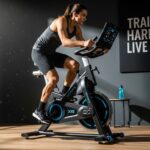
Let’s set the scene. It’s a Tuesday evening. You’re sitting on your sofa, mid-crisp, watching a documentary about ultramarathon runners and thinking, “I could do that. I just choose not to.” Then the advert break hits, and some suspiciously chipper person is pedalling an exercise bike in their impeccably clean home, abs glistening, not a drop of sweat in sight.
You think: a bike. In my house. Brilliant.
And honestly? It IS brilliant. Choosing the right stationary bike can genuinely transform your home fitness routine from a guilt-inducing clothes horse into something you actually use on purpose. BodyMax has quietly built a solid reputation in the home fitness market — they’re not flashy, they’re not trying to sell you a subscription to a virtual cycling village populated by CGI avatars. They just make decent bikes. Different models for different wallets, different goals, and different levels of commitment to the whole “getting fit at home” project.
Whether you’re a complete beginner whose most recent cardio was legging it to catch the bus, or a seasoned cyclist who needs to keep training when the British weather decides to be, well, British — there’s a BodyMax bike that probably has your name on it. Metaphorically. They don’t actually engrave your name on it. That would be weird.
This review covers four of their most popular models. We’ve done the research so you don’t have to sit through seventeen conflicting Reddit threads at 1am. You’re welcome.
Best for: People who mean business. The type who actually writes “gym” in their calendar and then — here’s the kicker — goes. Great for high-intensity interval training, long endurance sessions, sprint work, and anyone who wants the genuine road-cycling feeling without the genuine risk of being clipped by a lorry on the A4.
The Review:
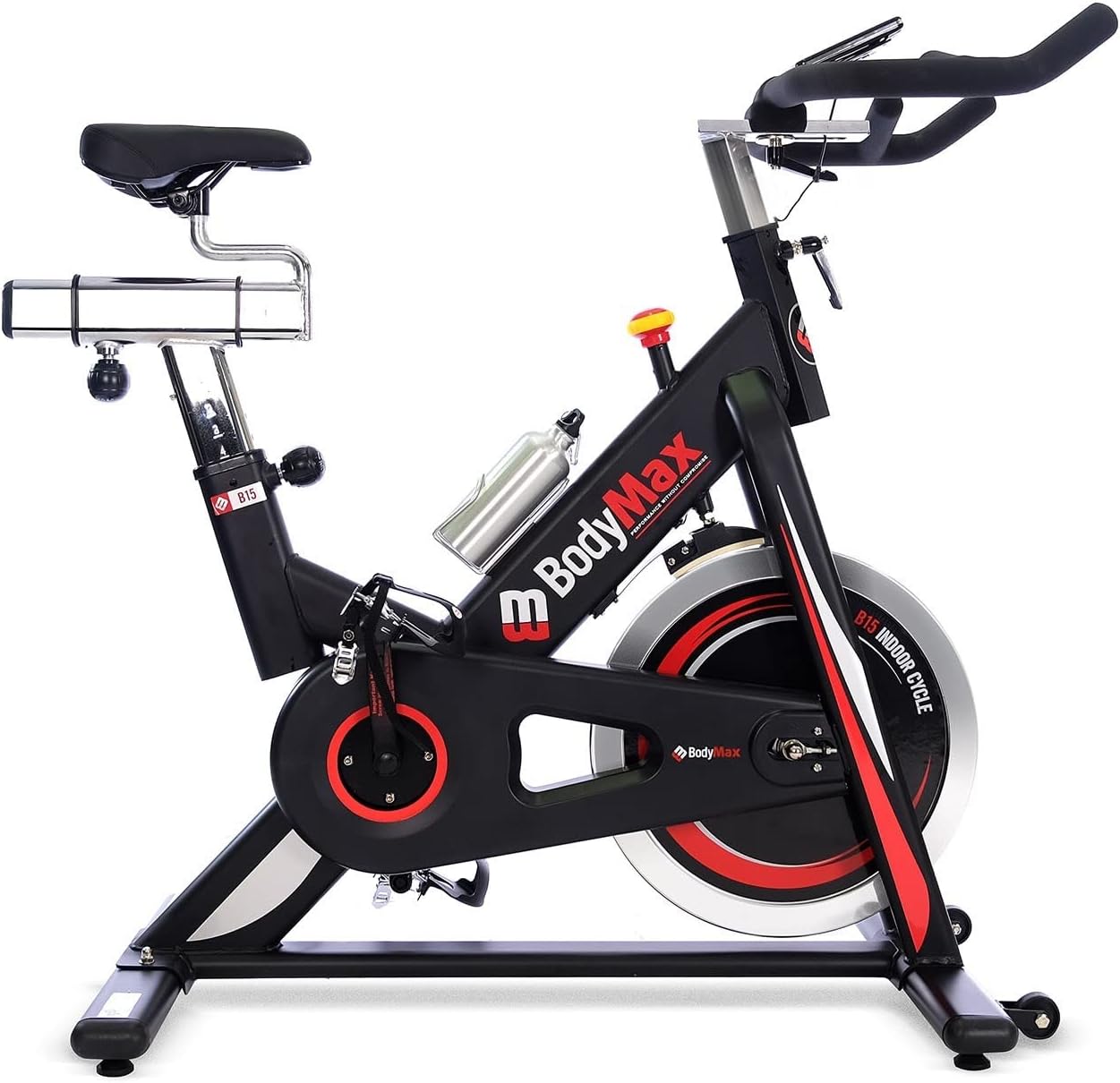
The B15 is what happens when a brand stops messing about. It’s got a 20kg flywheel — and before your eyes glaze over at the number, just know that heavier flywheel = smoother ride = fewer moments where the pedalling feels like you’re churning butter in a bad mood. You’ll actually feel the momentum build as you pick up cadence, which is exactly what makes it feel like real cycling rather than a frantic scramble on a children’s toy.
The seat and handlebars are micro-adjustable, which sounds like marketing fluff until you’re 6’2″ trying to fold yourself onto something designed for someone significantly more compact. The adjustability here is genuinely useful. It comes with a German TÜV safety certification, which is the fitness equipment equivalent of a very thorough German engineer peering at it, nodding once, and saying “ja, das ist gut.”
Some users report a bit of noise during all-out sprint efforts, but then again so does every human being going all-out. The LCD console tracks your speed, RPM, distance, time, calories, and heart rate (chest strap sold separately, because of course it is). Assembly takes around 30 minutes — so pour a tea before you start, and have another one ready to celebrate when you finish.
Key Features:
20kg flywheel (the good, smooth kind)
Micro-adjustable seat and handlebars (for humans of various shapes)
LCD console: time, speed, RPM, distance, pulse, calories
Heart rate monitor compatible (chest strap not included — budget accordingly)
German TÜV safety certification (serious German engineers approved this)
Friction resistance system
Heavy-duty construction
Specifications:
Dimensions: 120cm (L) × 55cm (W) × 120cm (H)
Flywheel: 20kg
Resistance: Friction/manual
Display: LCD console
Pedals: Wide platform with adjustable straps
The B15’s 20kg flywheel is the star of the show here, and rightly so. That momentum means smooth pedalling whether you’re grinding at low cadence or spinning like you’ve had three espressos and someone’s stolen your biscuit. The friction resistance system is old-school in the best way — twist a knob, feel the burn, regret it, and then do it again because apparently that’s growth.
The ergonomics are genuinely well thought out for a bike that doesn’t need to borrow space from a multi-gym setup. Proper seat positioning reduces knee and back strain during longer sessions, which matters a lot more than it sounds when you’re on minute forty-five of a ride and your body is filing a formal complaint.15 particularly suitable for users recovering from injuries or those prioritizing sustainable fitness practices. The integrated heart rate training compatibility (via optional chest strap) enables precise zone training, essential for structured fitness plans aimed at improving cardiovascular health and building stamina.
Best for: Households where multiple people need to use the same bike without a family summit to discuss settings. Also excellent for anyone who wants that commercial-gym quality feel at home, without the suspicious smell of other people’s effort.
The Review:
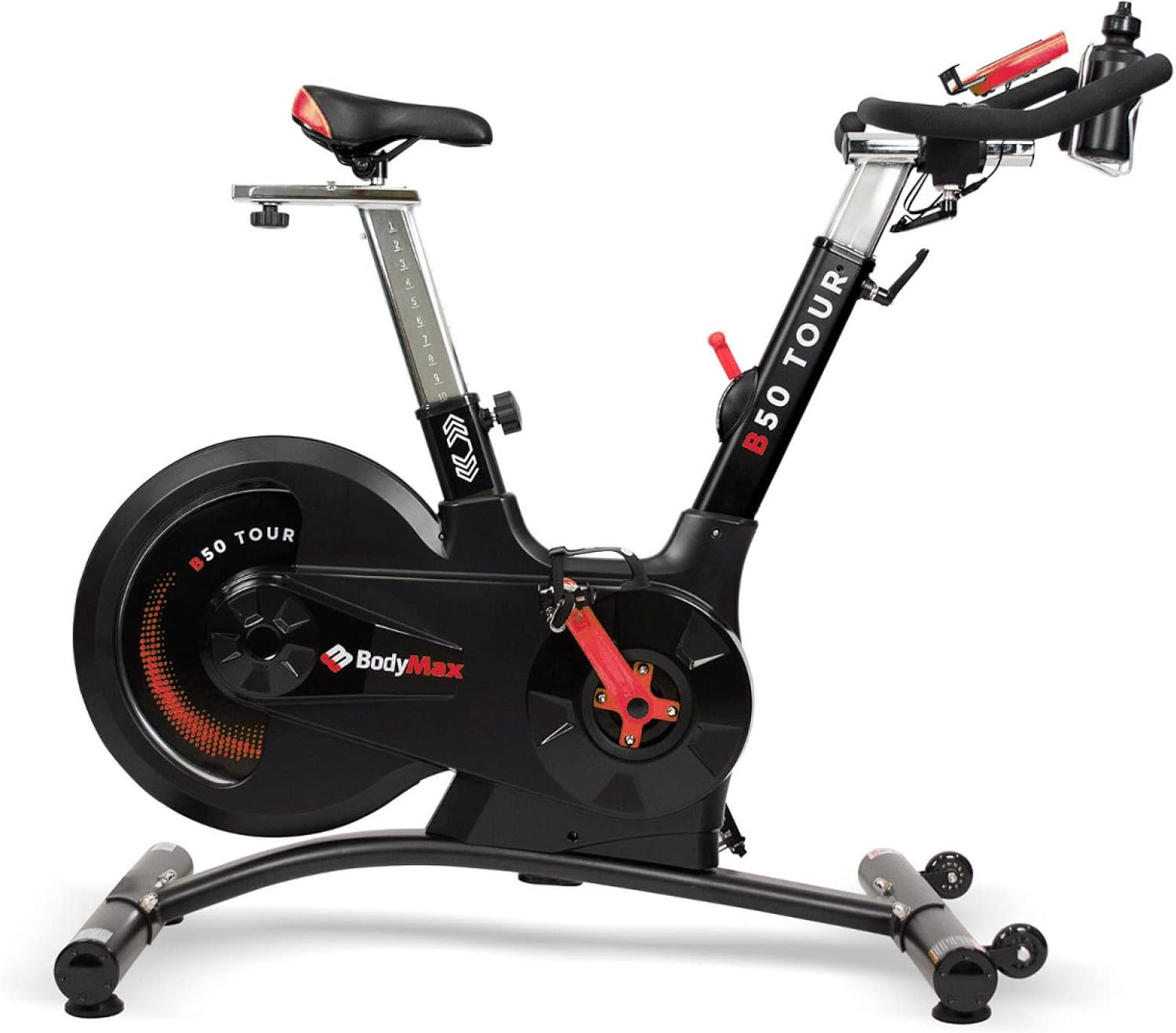
The B50 went and did something clever: it put the flywheel at the back. This isn’t just design for design’s sake — rear-wheel placement creates a noticeably more stable platform, especially when you’re doing standing climbs or sprint intervals and your legs are less “powerful athlete” and more “angry spin class participant who’s starting to question their life choices.”
The resistance control is a gear lever system — the same kind you’d find on an actual road bike — mounted on the handlebars. This means you can change resistance without taking your hands off the bars mid-effort, which is both safer and more satisfying than fumbling with a knob while trying not to fall over. British Cycling’s indoor training guidelines specifically emphasise maintaining form during resistance changes, so this lever system is genuinely smart design, not just a gimmick.
Eight resistance levels covers a solid range for most riders, though hardcore trainers might eventually crave more. The handlebar-mounted LCD tracks calories, distance, speed, pulse, and time. Assembly is best with two people due to the bike’s substantial 49kg frame — this is not a job for one person, a flat-pack Allen key, and misplaced confidence.
Built-in transport wheels mean you can move it around without recruiting a second person every time you need to vacuum behind it.
Assembly Time: ~30 minutes (with a friend, ideally)
The handlebar computer keeps your workout metrics visible mid-session, useful whether you’re following a structured leg and core programme or just keeping an eye on how many calories you’ve burned so you can make a very specific biscuit-related calculation afterwards. The B50’s robust construction also makes it excellent for cross-training — it won’t wobble and judge you when you come to it after a run on tired legs.istent daily exercise routines. Its transport wheels facilitate easy repositioning, making it ideal for small space workout areas where equipment must be mobile.
Best for: Beginners, budget-conscious buyers, apartment dwellers, and anyone who wants to dip a toe into indoor cycling without immediately spending a mortgage deposit on equipment they might use twice before it becomes an expensive drying rack.
The Review:
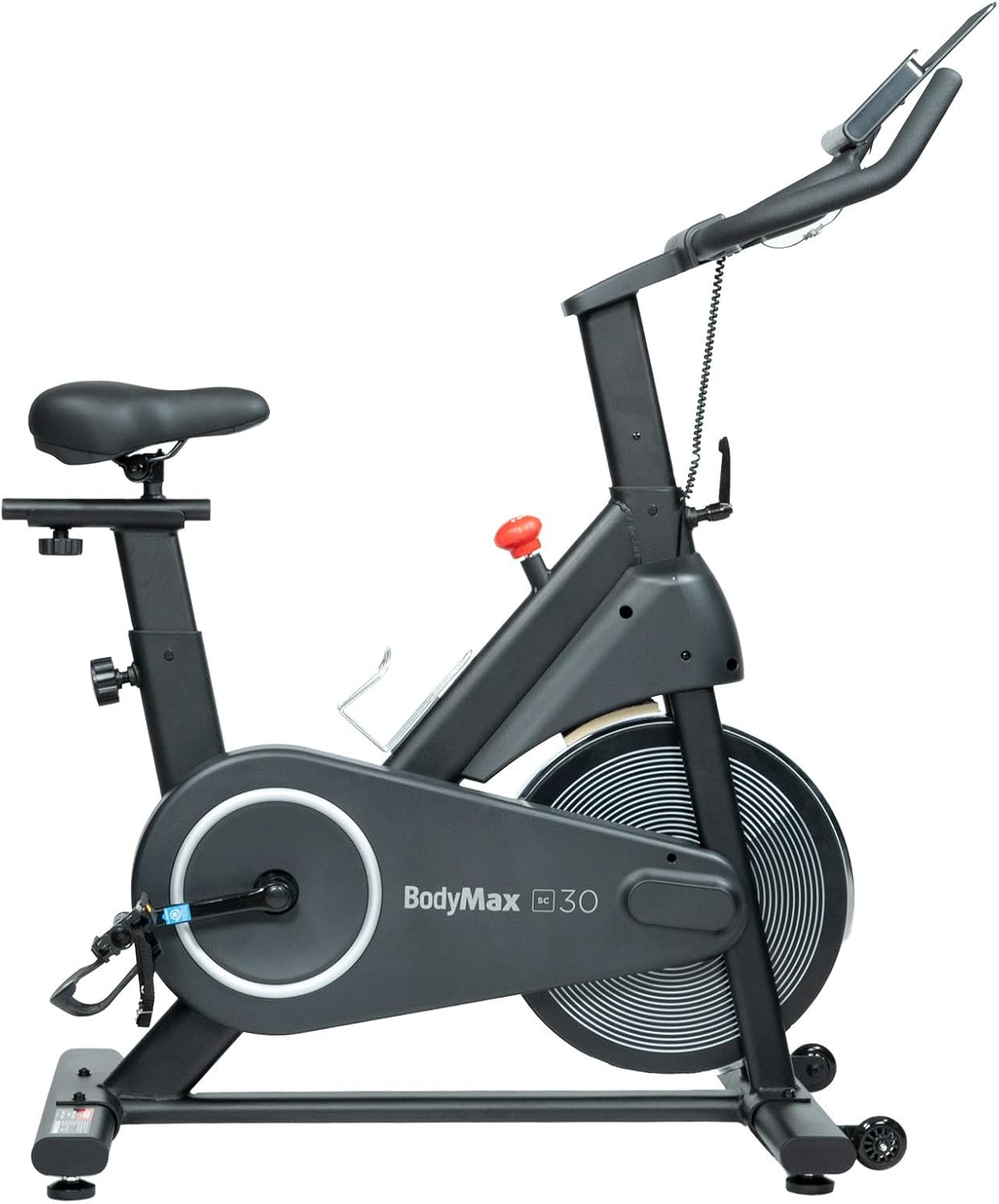
The B200 is the sensible friend in this lineup. It doesn’t have flashy features or 32 resistance levels or a name that sounds like a fighter jet. What it has is reliable functionality at an accessible price, which is actually what most people need and far fewer people admit to needing.
The friction resistance is straightforward and direct — you feel the effort you put in, and the machine responds honestly. The design is compact, the transport wheels make it easy to move, and the basic LCD console covers your fundamentals: time, distance, estimated calories. It’s not going to sync with your phone or project a virtual mountain pass onto your wall, but it will help you get fitter if you use it consistently, which is ultimately the point.
Seat comfort could be improved for longer sessions — a gel seat cover is a worthwhile £15 investment if you’re planning rides beyond 30 minutes. The friction pad will need replacing eventually with heavy use, which is minor maintenance anyone can manage. Think of it like changing a lightbulb, but for your exercise equipment.
The quiet operation compared to treadmills or rowing machines is a genuine perk — no one downstairs will feel the need to send a passive-aggressive note. This makes the B200 particularly appealing if weight loss is on the agenda and daily use is the plan, since daily use becomes much easier when you don’t need to negotiate with your neighbours first.
Key Features:
Compact, space-saving design (does what it says on the tin)
Footprint: Compact (fits in rooms that aren’t exclusively dedicated to fitness)
For anyone just starting out, the B200 removes the common barriers to entry without making you feel like you need a degree in sports science to operate it. It goes in your spare room, you get on it, you pedal. Revolutionary in its simplicity. It’s not trying to be the hero. It’s content being the reliable option that actually gets used, which in home fitness terms is worth more than any number of features you’ll never touch.s minimal disruption to household members, supporting sustainable long-term fitness commitments.
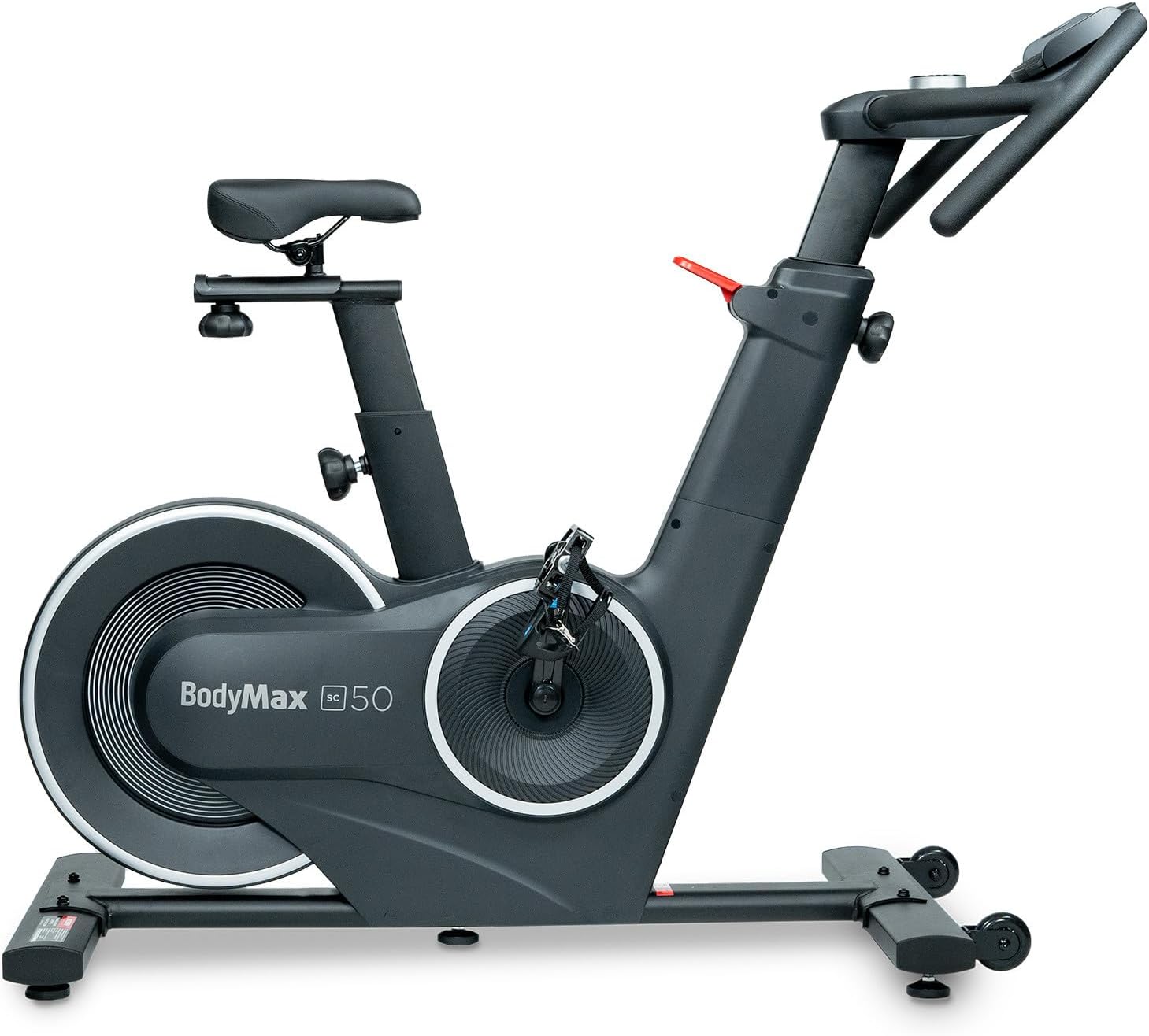
Best for: Tech-savvy fitness enthusiasts who want precision. Serious cyclists. People who live in flats and can hear their neighbour’s kettle. Anyone who wants 32 resistance levels, because apparently 8 just isn’t enough — and honestly, fair enough.
The Review:
The SC50 is BodyMax’s premium offering, and it knows it. Not in an annoying way — in a “we’ve thought carefully about this and added features that actually make a difference” way.
The headline act is the magnetic resistance system. Unlike friction-based bikes, magnetic resistance involves no physical contact between components — which means virtually silent operation, almost zero maintenance, and an incredibly smooth feel across all resistance levels. We’re talking library quiet. Mouse-on-carpet quiet. The kind of quiet where you can hear your own thoughts, which during a hard interval is largely just “WHY.”
32 resistance levels gives you genuinely fine-grained control — from an easy recovery spin to climbs that will make your legs file for independence. The smart knob display shows your current resistance level in real time, so you’re never guessing where you are in the range. The LED display tracks comprehensive workout metrics.
The 12kg flywheel is lighter than the B15 and B50, but the magnetic system more than compensates — the ride quality is smooth and consistent throughout. Platforms like TrainingPeaks use indoor cycling workouts as a cornerstone of structured training plans, and the SC50’s precision makes following those plans genuinely effective rather than approximate.
Some users have asked for app connectivity. It’s a reasonable ask, and worth noting if virtual group rides or third-party data tracking are important to you.
Key Features:
32-level magnetic resistance (all the levels)
12kg precision-balanced flywheel
Smart knob display with LED resistance indicator
Near-silent magnetic operation (your neighbours will never know)
Comprehensive LED workout display
Multiple adjustable touchpoints
Integrated transport wheels
Specifications:
Flywheel: 12kg
Resistance: Magnetic
Resistance Levels: 32
Display: LED with smart knob interface
Operation: Whisper-quiet
Build: Commercial-grade construction
The SC50 is the one you buy when you’re serious. Not “New Year’s resolution serious” — actually serious. If you’re planning structured training, working with a coach, or following periodised plans, the precision this bike offers translates into genuinely better outcomes. The silent operation means you can ride at 5:30am without announcing it to every living being within a 30-metre radius.play’s comprehensive metrics support evidence-based fitness approaches, tracking not just basic data but enabling heart rate training zones crucial for optimizing cardiovascular health and respiratory health. For tech-savvy users embracing the fitness community aspect of modern exercise, the SC50’s sophisticated interface makes following virtual indoor cycling classes or participating in fitness challenges more engaging and effective.
Choosing the Right BodyMax Exercise Bike (A Brief Decision Guide)
Right, let’s cut through it.
You want the road-cycling feel with serious flywheel momentum: B15 or B50. Both have 20kg flywheels. The B15 uses a traditional knob for resistance; the B50 uses a handlebar lever. If you hate taking your hands off the bars, go B50. If you’re happy with the classic approach and want to save a bit of money, go B15.
You’re new to this and not sure you’ll stick with it: B200. It does the job, doesn’t cost a fortune, and if it does end up doubling as a laundry post for six months, at least you haven’t remortgaged the house. You can always upgrade later once you’ve confirmed you’re actually committed to this.
You live in a flat, wake up at unreasonable hours, or want maximum precision and minimum noise: SC50. The magnetic resistance is in a different league for quietness, and 32 levels is plenty of room to grow into.
Consider your living situation carefully. The difference in noise between friction and magnetic resistance is meaningful — not catastrophic either way, but meaningful. The NHS recommends at least 150 minutes of moderate-intensity activity per week, and you’re significantly more likely to hit that if your equipment fits seamlessly into your life rather than disrupting it.
Maintenance and Longevity (Or: How Not to Ruin a Good Investment)
Indoor bikes are low-maintenance, which is part of their appeal. But “low” maintenance isn’t “no” maintenance. Treating your bike like a houseplant that thrives on neglect will shorten its life considerably.
For friction-based models (B15, B50, B200): The brake pad will need replacing every 6–12 months depending on how hard you use it. This is a minor job and cheap parts are easy to find. Check and lubricate the chain periodically. Wipe the frame down after each session — sweat is surprisingly corrosive, and your bike didn’t sign up for a salt treatment.
For the magnetic SC50: Congratulations, you’ve opted for low-maintenance royalty. No friction pads to replace, no contact wear. Just clean it regularly and check that bolts haven’t worked themselves loose. That’s essentially it. The contactless system means it’s well-suited to households where multiple people use it daily.
All models will benefit from being placed on a quality exercise mat — it protects your floor, dampens vibration, and stops the bike from slowly migrating across the room during intense efforts like some kind of determined fitness equipment escaping towards the door.
Training Programs and Workout Ideas (For When You’ve Run Out of Excuses)
Once the bike is assembled and positioned and you’ve stood next to it feeling virtuous for a day, you’ll eventually want to actually get on it. Here are some approaches that work well:
Start with steady-state cardio. 30–45 minutes at a comfortable pace where you can hold a conversation (or, more realistically, follow along with a TV show without losing the plot). This builds your aerobic base and, crucially, builds the habit.
Add interval training. Alternate between hard efforts and easier recovery periods. A simple starting point: 30 seconds hard, 90 seconds easy, repeat 8–10 times. It’s brutal but brief, and the calorie-burning effect lingers long after you’ve collapsed onto the sofa.
Try hill climbs. Increase resistance progressively and hold a steady cadence as though you’re actually climbing. Five-minute climbs are a good entry point. These are excellent for leg strength and stamina, and require exactly the kind of stubborn perseverance that the British climate has helpfully cultivated in most of us.
Use recovery rides. Low resistance, easy cadence, 20–30 minutes. Perfect for active rest days when you want to move without stressing the body. The indoor bike earns its keep here compared to a treadmill or rowing machine — it’s genuinely easy on the joints.
There’s no shortage of free structured sessions on YouTube or through fitness apps. Many coaches publish indoor cycling workouts specifically designed for home bikes — tap into those rather than reinventing the wheel (so to speak).
Frequently Asked Questions
Q: Which model is best for a complete beginner? The B200. Simple design, straightforward functionality, kinder price tag. As your fitness improves and your ambitions evolve, you can always upgrade. Start where you are, not where you imagine you’ll be in six months.
Q: How much space do I actually need? Allow roughly 2m × 1.5m — enough to mount and dismount without performing a yoga pose, and enough airflow so you don’t overheat. All models have transport wheels, so repositioning isn’t the ordeal it sounds.
Q: Can different family members use the same bike? Yes. All models have extensive seat and handlebar adjustability to accommodate different heights and body types. The B50’s lever system and SC50’s digital controls make resistance adjustments particularly easy for households where multiple people are at different fitness levels.
Q: How loud is a friction bike compared to a magnetic one? Friction bikes produce a soft whooshing sound during use, typically 60–70 decibels — roughly the level of a normal conversation. The SC50 operates at around 40–50 decibels, which is closer to a quiet room. For most houses, either is fine. For flats with thin walls and light-sleeping neighbours, magnetic is the more civilised choice.
Q: Do I need extra accessories? The basics work straight out of the box. If you want extras: a gel seat cover dramatically improves comfort for longer rides, a phone holder lets you follow online sessions, a small fan positioned nearby is genuinely transformative during intense workouts, and an exercise mat protects your floor. A chest-strap heart rate monitor adds useful precision if you want to train in specific zones.
Q: How long does assembly take? Around 30–45 minutes for most models. The B50 benefits from a second pair of hands. Instructions are clear, necessary tools are included, and there are assembly videos online for visual learners. Crucially: read the instructions before starting, not halfway through when something doesn’t look right.
Q: What’s the warranty situation? BodyMax typically offers a 12-month parts warranty on home-use models, with longer frame warranties. Register your purchase and keep your receipt. Basic maintenance as outlined in the manual helps keep your warranty valid and your bike functioning the way it should.
Wrapping It Up
Four bikes, one brand, zero excuses left for not exercising. You’ve made it this far — might as well commit.
Beginners or those watching the budget will be well served by the B200 — no fuss, does exactly what it says, and won’t make you feel like you’ve wandered into a cockpit. For that proper road-bike feel with a serious flywheel behind it, the B15 is hard to beat. If you’ve got multiple people in the house who all think they’re at different fitness levels (they’re not, but let them have it), the B50‘s lever resistance and rear-wheel stability handles the lot of them. And if you want 32 levels of whisper-quiet magnetic resistance and the kind of precision that makes your training plan actually mean something, the SC50 is the one.
Any of these will outlast your gym membership, your next fitness phase, and probably at least one very enthusiastic New Year’s resolution. Pick the one that fits your space and budget, get on it regularly, and the rest takes care of itself.
Jodie Carter is a REPS Level 3 certified personal trainer with over 8 years of experience in strength training and home gym design. She holds qualifications in exercise physiology and has helped over 500 clients design effective home workout spaces. Jodie regularly contributes to UK fitness publications and maintains continuing education in the latest exercise science research.
Disclosure: This article contains affiliate links to products I personally use and recommend. When you purchase through these links, I may earn a small commission at no additional cost to you. All recommendations are based on my genuine experience and testing—I only recommend products I actually use in my own home.
So. Here you are. Reading a guide about treadmills instead of actually using one. Honestly, same. There’s a beautiful poetry to it. You’ve decided to get fit. Magnificent. You’ve decided to get fit at home, which is even better — no commute, no awkward eye contact in the changing rooms,…
Introduction Somewhere between “I’ll start Monday” and “I bought a gym membership I’ve used twice,” most of us realise that the real answer to getting fit is dragging some heavy metal into our homes and hoping for the best. Welcome to strength training — the sport where you voluntarily make…
By Jodie Carter, Certified Personal Trainer (REPS Level 3) & Home Gym Specialist Introduction: You’ve Decided to Get Fit. Congratulations, You Absolute Hero. Let’s be honest about how you got here. You didn’t wake up one morning in a zen-like state of physical motivation, brew a green tea, and calmly…
We use cookies to ensure that we give you the best experience on our website. If you continue to use this site we will assume that you are happy with it.