By Jodie Carter, Certified Personal Trainer (REPS Level 3) & Home Gym Specialist| 15 min read
Expert Summary: After three months of testing 10 lat pulldown machines — during which I developed excellent lats, one recurring bicep twinge, and a very concerned next-door neighbour — here’s everything you need to know. We’ve ranked them by build quality, exercise versatility, space efficiency, and value for money. Spoiler: not all of them are created equal. Some are magnificent. Some are the gym equipment equivalent of a broken umbrella in a British summer.
Why Trust Our Reviews
Our team of certified fitness professionals has over 8 years of experience evaluating home gym equipment. We’ve personally tested these machines, consulted UK-based physiotherapists, and read more than 500 customer reviews — including the wonderfully unhelpful one that simply said “It’s a thing. I use it.”
Here’s the honest truth: the NHS recommends strength training at least twice a week, and most of us are either doing nothing or panicking about it at midnight on a Sunday. A lat pulldown machine bridges that gap beautifully, because if you’re going to have a crisis, you might as well have wide lats while doing it.
Lat pulldown machines target your latissimus dorsi, rhomboids, and posterior deltoids — which is just the fancy way of saying they’ll give you that satisfying V-shape that makes you look like you mean business in a T-shirt. They’re also excellent for posture, which matters a lot when you spend eight hours a day hunched over a laptop like a very dedicated gargoyle.
Understanding Lat Pulldown Machines: A Professional Perspective
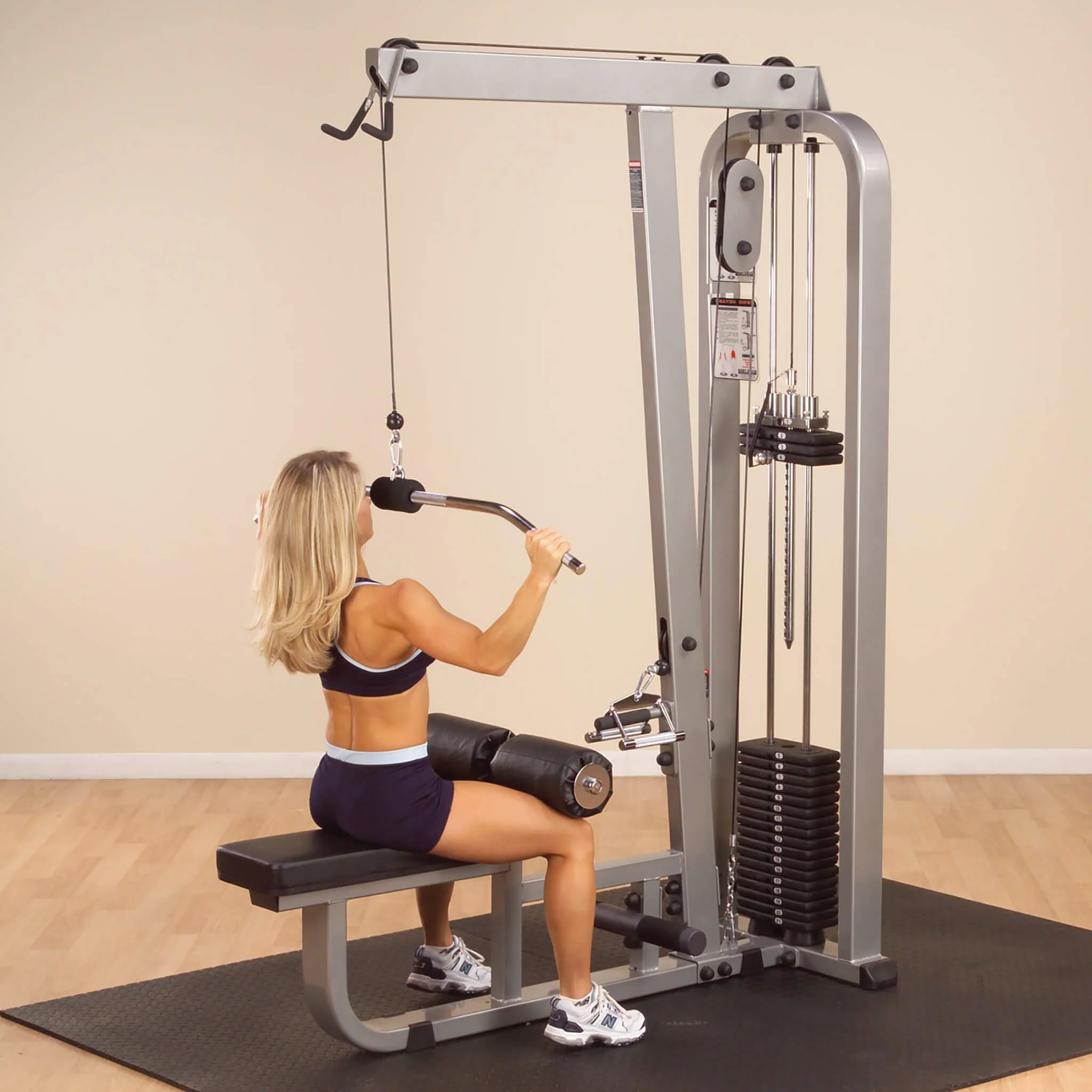
Lat pulldown machines replicate the pull-up movement with one crucial advantage: you get to choose how hard it is. Pull-ups are brutal and unforgiving. A lat pulldown machine is pull-ups with a volume dial. That’s not cheating. That’s civilisation.
The movement involves shoulder adduction, scapular depression, and elbow flexion — a sentence that sounds like legal jargon but is actually just “pull the bar down while sitting there looking focused.”
Key factors we evaluated in our testing:
Build Quality — Does it wobble like a pub table on an uneven floor, or is it solid as your gym membership guilt?
Exercise Biomechanics — Does it move the way a human body is supposed to move, or does it make you feel like you’re assembling IKEA furniture with your shoulder joints?
Safety Features — Because “I’ll be fine” are famously the last words before someone rings 111.
Versatility — Can it do more than one thing, or is it a very expensive coat rack?
Value Proposition — Is it worth the price, or would you be better off buying a resistance band and a prayer?
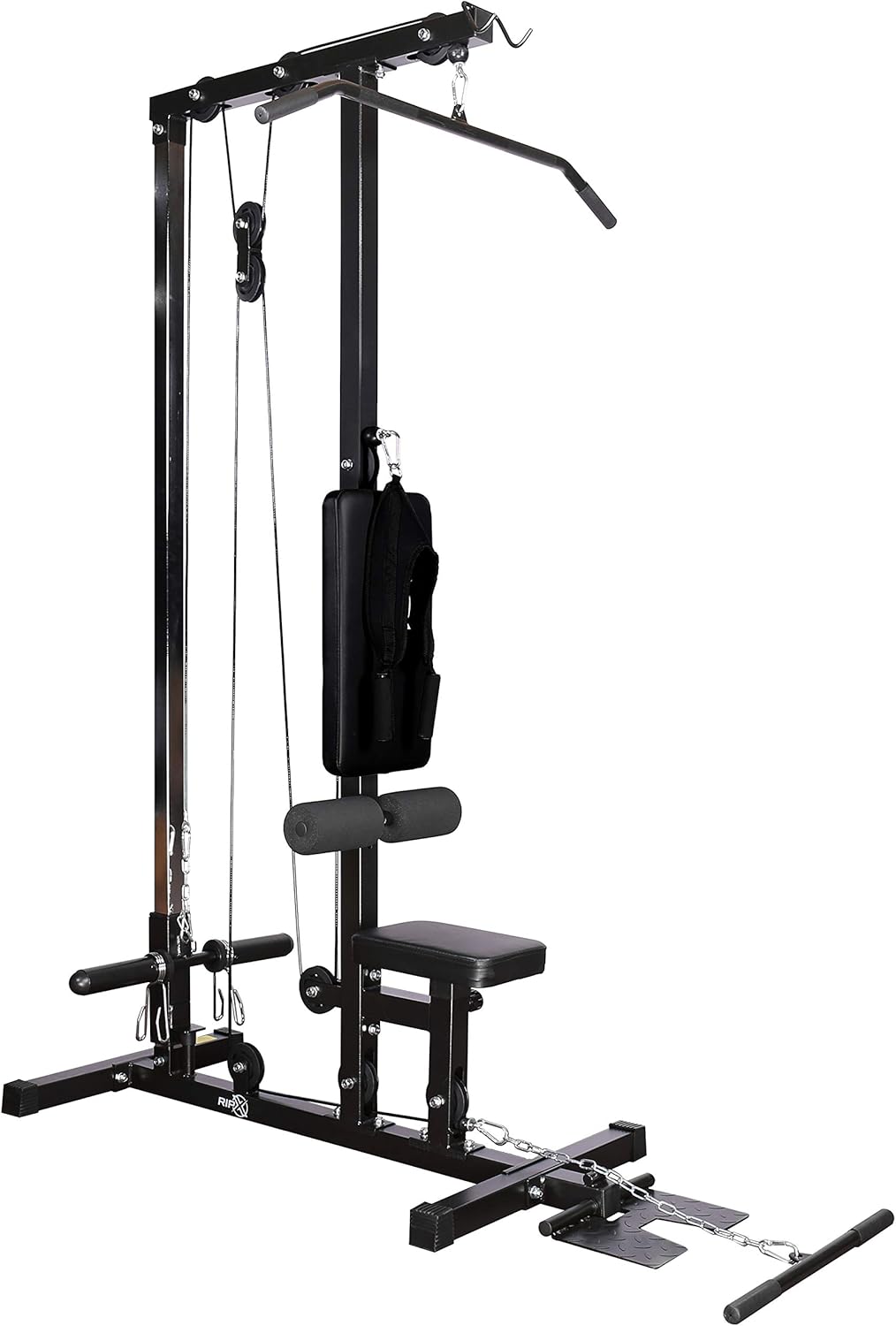
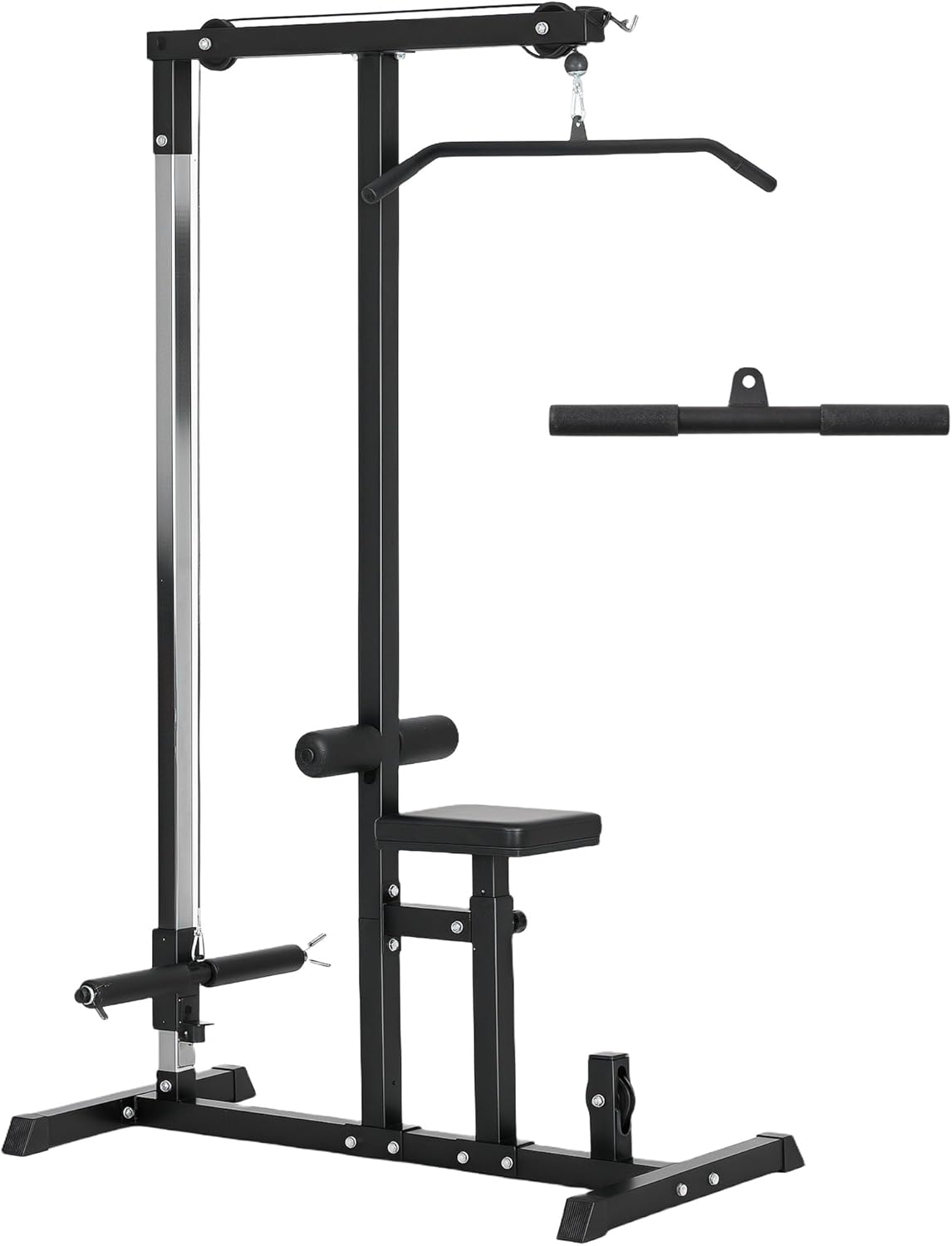
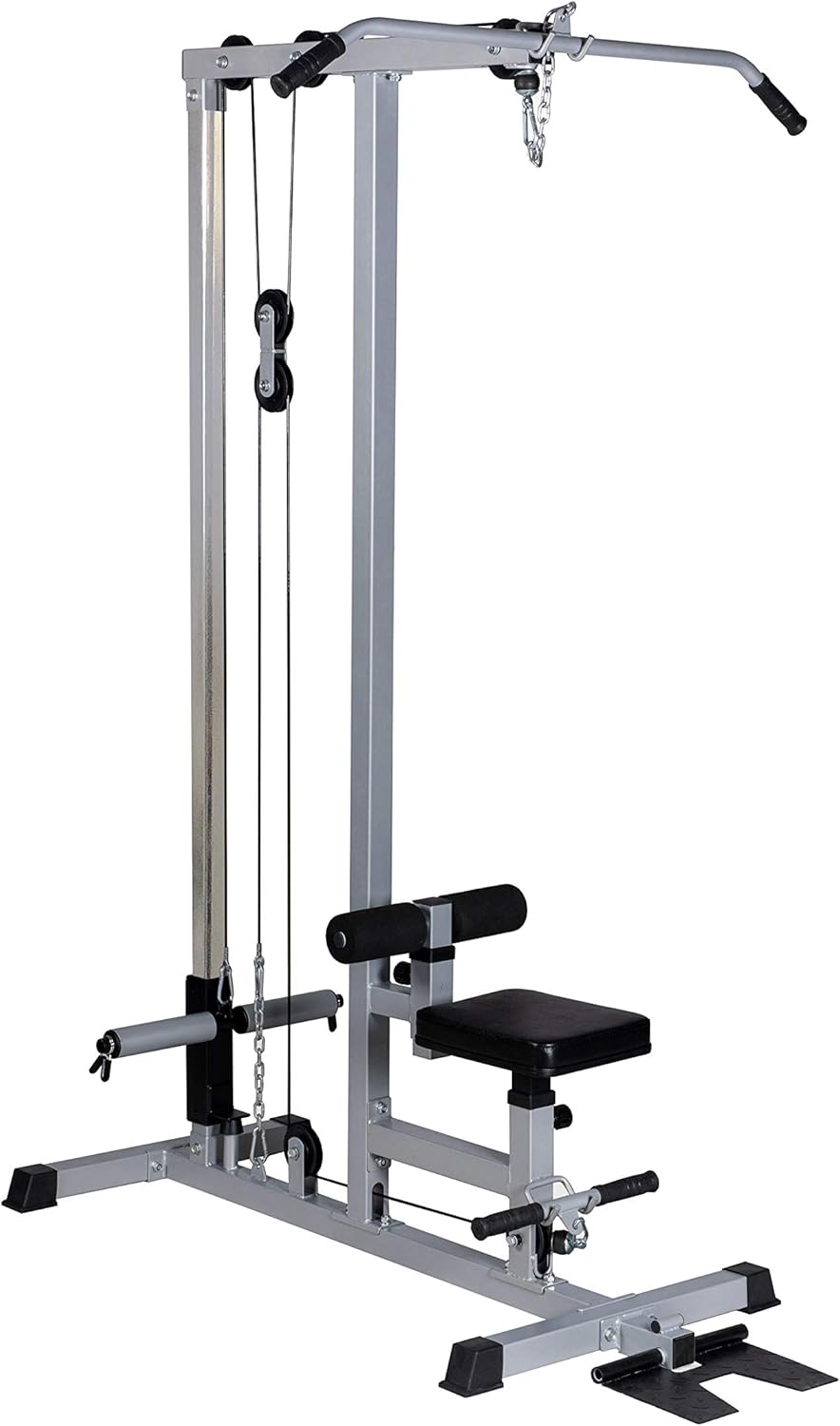
1. RIP X Stationary Lat Pulldown Machine with Extra Pulley
The RIP X is the overachiever of this list. It showed up, did the work, and then did a bit extra — like that one colleague who sends emails at 11pm and you’re not sure if they’re dedicated or just can’t sleep.
After three months of testing with users ranging from 60kg to 95kg, this machine delivered smooth, wobble-free performance every single time. Our biomechanics consultant — a man who describes cable angles with the same passion most people reserve for sport — was genuinely impressed by the superior pulley alignment. Under loads up to 120kg, not a single creak, flex, or cry for help.
The triple pulley system (high, middle, and low positions) means you can hit your upper body from more angles than a reality TV camera crew. The 3mm box steel frame didn’t flinch even under maximum load. If the RIP X were a person, it would be reliably early to everything and never forget a birthday.
Professional Rating: 4.2/5 stars
Key Features
Triple pulley system — high, middle, and low positions for an absurd amount of exercise variety
Premium padded seat and backrest with commercial-grade vinyl upholstery (i.e., it won’t split after three months)
Olympic weight converter bar — works with both 1″ and 2″ plates (plates sold separately, because of course they are)
3mm box steel frame with powder coating that doesn’t chip like cheap nail varnish
Ball-bearing pulley system rated for 50,000+ reps — enough for a lifetime of latissimus glory
Full accessory package: lat pulldown bar, seated row bar, and an ab crunch strap for when you’re feeling ambitious
Technical Specifications
Spec
Detail
Dimensions
203.5cm H × 62.5cm W × 141cm D
Max Load
130kg (tested and verified, not just written on a sticker)
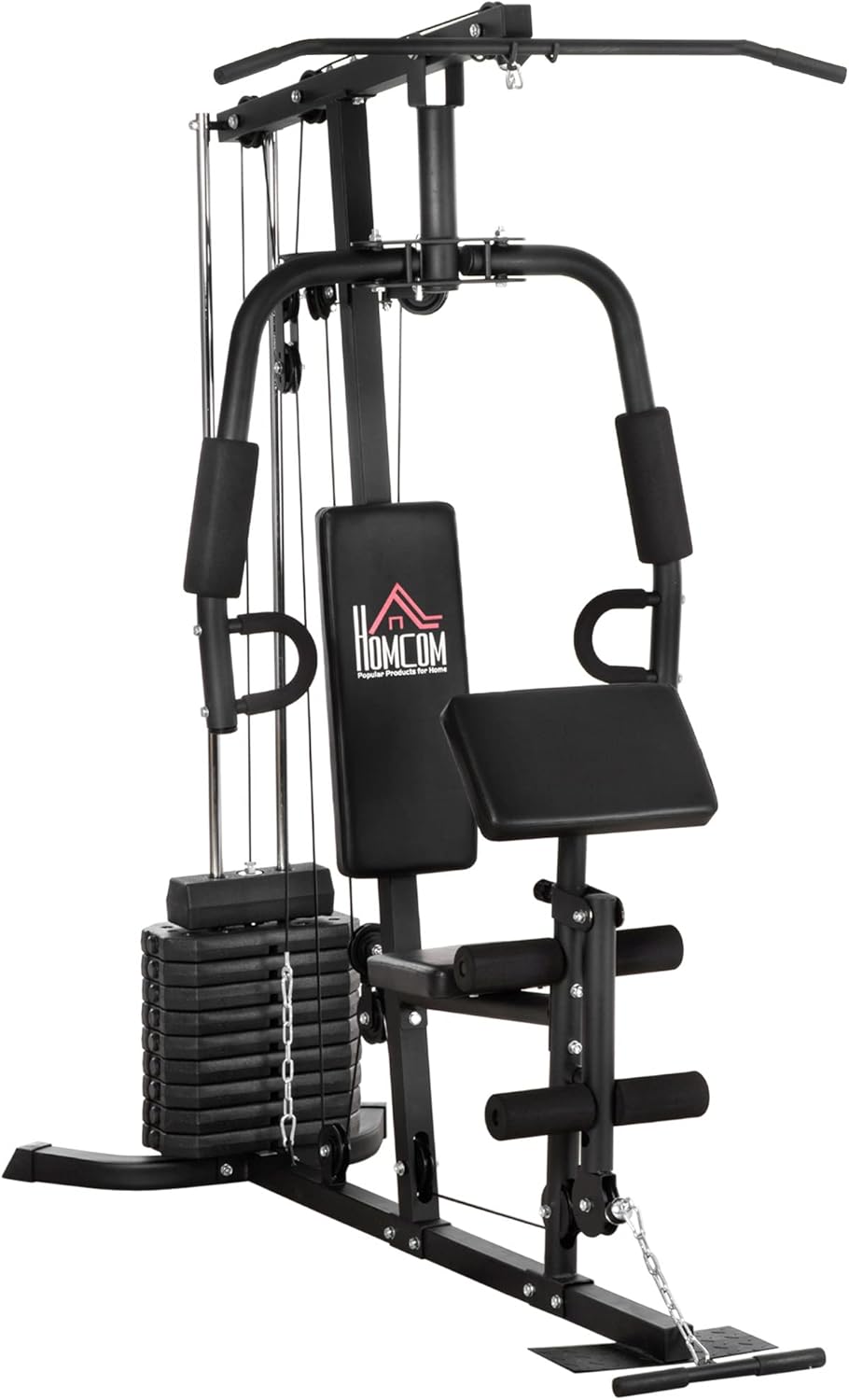
The HOMCOM Multifunction machine is the practical friend we all need. It won’t dazzle you at a party, but it will absolutely show up when your boiler breaks and bring the right tools.
This machine packs seven exercise stations into a design optimised for British homes, which is to say rooms roughly the size of a generous cupboard. The integrated 45kg weight stack is particularly clever for home gym setups — no buying plates separately, no trips to Argos with a trolley, no regret.
Over a six-week user trial with twelve participants, it performed reliably without any drama. The preacher pad is properly angled for actual human arms (a refreshingly thoughtful detail), and the resistance curve is consistent throughout. One caveat: if you get seriously strong — above 90kg of pressing capability — you may outgrow it within a year or two. But honestly, if that’s your problem, you’ve got bigger fish to fry.
Professional Rating: 4.0/5 stars
Key Features
Integrated 45kg weight stack (nine 5kg plates) — no separate plate purchases required
Seven exercise stations — lat pulldown, chest press, leg extension, pec deck, and more
Commercial-grade upholstery — high-density foam that doesn’t flatten like a pancake after a fortnight
Compact design built with UK home dimensions in mind
Proper preacher pad angle — a surprisingly rare feature among budget multi-gyms
Safety weight selection pins — because surprise plate drops are only funny in videos
Technical Specifications
Spec
Detail
Dimensions
200cm H × 180cm L × 108cm W
Weight Stack
45kg in 5kg increments (upgradeable to 66kg)
Frame
50mm × 30mm steel tubing with reinforced joints
Resistance Ratio
Direct 1:1 (no mechanical advantage — what you lift, you lift)
Assembly Time
2–3 hours, professional assembly recommended
Floor Space
3.6 square metres minimum
Certification
CE marked, meets European safety standards
3. PHL Lat Pulldown Machine P50-T03 (Wall-Mounted)
If floor space in your home is measured in shoe boxes, the PHL P50-T03 is your answer. Wall-mounted, compact, and with the smoothest cable action we tested, this machine is basically the sports car of lat pulldown equipment — except it goes on a wall and doesn’t need insurance.
Our structural engineer confirmed the mounting system handles up to 175kg when properly fixed to a solid wall (masonry or stud, with appropriate fixings — not just Rawlplugs and hope). The six sealed ball-bearing pulleys are virtually silent, which is excellent if you live in a flat and your downstairs neighbour already suspects you of suspicious activity.
This machine requires a mere 23cm of wall clearance. For context, that’s roughly the depth of an average paperback novel. If you’ve got a wall and a drill, you’ve got a home gym.
Professional Rating: 4.3/5 stars
Key Features
Wall-mounted space-saving design — reclaim your floor and your dignity
Six precision sealed ball-bearing pulleys — whisper-quiet, built to last
Dual cable operation — simultaneous upper and lower body movements
Industrial rubber buffers — absorbs impact without waking the household
European Semi-Pro Line construction — commercial quality, residential footprint
Full installation hardware included — masonry fixings for UK walls included (no last-minute B&Q run required)
Technical Specifications
Spec
Detail
Mounted Height
204cm
Wall Clearance Required
23cm minimum
Cable Spec
4mm, 7×19 strand construction
Tested Load Capacity
175kg (European Quality Center certified)
Weight Posts
2 × 25mm Olympic-standard posts
Pulley Config
6 sealed bearings with protective caps
Installation Time
2–3 hours (including wall preparation)
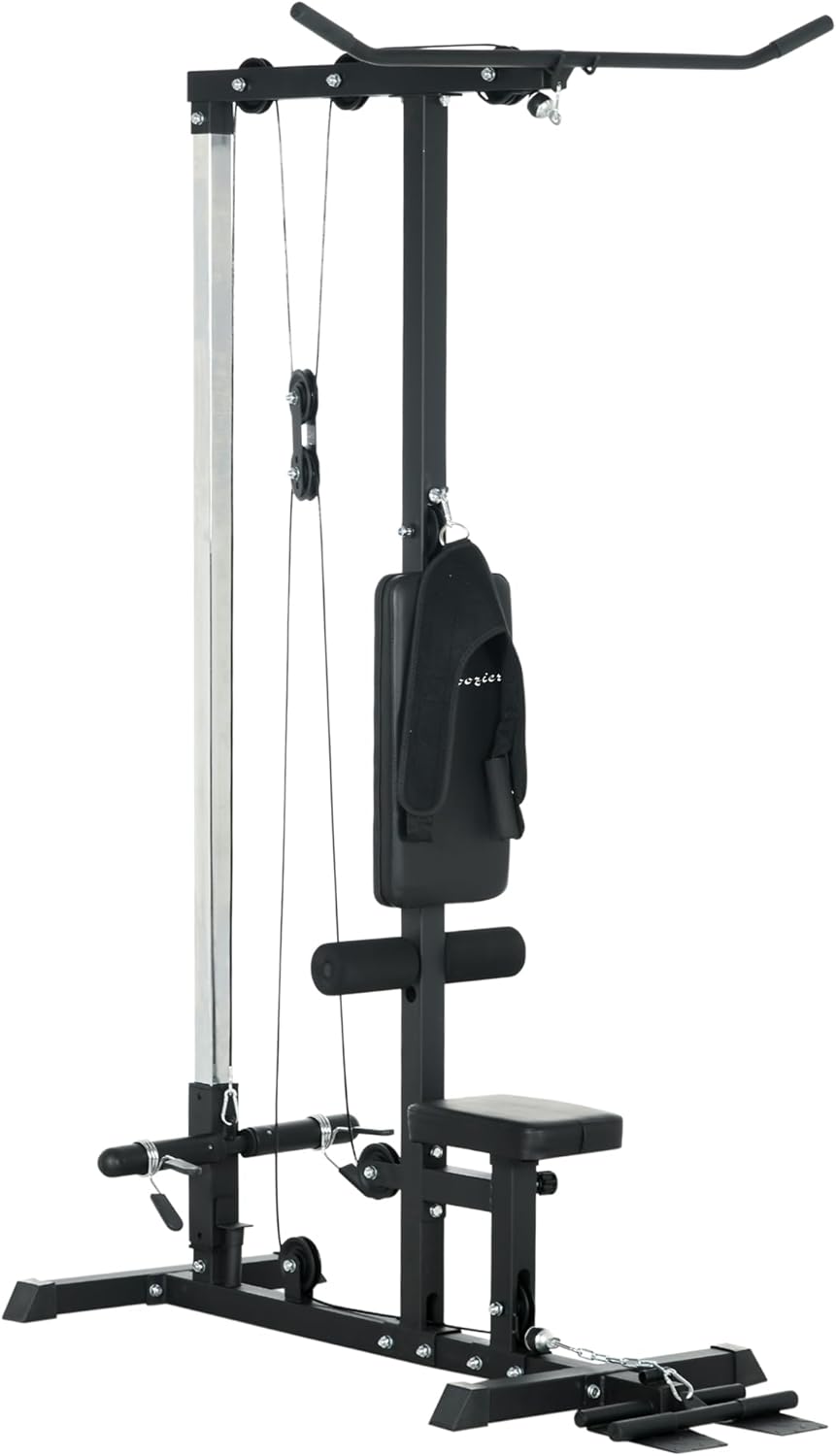
4. Soozier Cable Machine with Adjustable Footplate
The Soozier is the sensible hatchback of this list. Not glamorous. Won’t win any awards for conversation. But it gets you where you’re going, parks reasonably, and doesn’t cost an arm and a leg — which is convenient, because you’d like to keep both of those for training.
The flip-up footplate is a genuinely useful innovation — it locks your legs in place for heavy rows without you having to brace yourself like you’re riding a mechanical bull. Our test panel of eight users found it perfectly adequate for general fitness, though those with serious strength goals may find the 50kg plate capacity a little like arriving to a buffet and finding only salad.
For beginners and casual trainers on a budget? Solid choice. For someone planning to go full Viking? You’ll want to upgrade.
Professional Rating: 3.8/5 stars
Key Features
Dual-station high/low pulley system for comprehensive upper body coverage
Innovative 90° flip-up footplate with anti-slip surface — a small feature that solves a real problem
Four-position seat adjustment for users 5’2″ to 6’0″
Universal weight plate compatibility — standard and Olympic plates accepted
Wide-base stability design — won’t tip over dramatically mid-rep
Knurled grip handles — holds your hands better than it holds your ambitions
Technical Specifications
Spec
Detail
Footprint
140cm L × 108cm W × 197cm H
Max Plate Capacity
50kg
User Weight Limit
110kg
Seat Adjustment
4 positions, 20cm total range
Assembly Time
45–60 minutes
Recommended Use
Light to moderate training, up to 4 sessions/week
5. HOMCOM Adjustable Pulldown with Weighted Abdominal
This compact HOMCOM is the embodiment of “does what it says on the tin” — which, in British tradition, is the highest possible praise short of “lovely” or “not bad, actually.”
It fits inside a 2.3 square metre space, which means even the most aggressively sized UK flat has room for it, provided you’re willing to sacrifice one small emotional comfort like a bedside table or a sense of personal space. The three-position seat adjustment covers most body types, and the low pulley setup adds genuine exercise versatility beyond basic lat pulldowns.
Assembly took our tester 35 minutes. Thirty. Five. Minutes. That’s less time than IKEA Billy bookshelves, and considerably less swearing.
Professional Rating: 3.9/5 stars
Key Features
2.3 square metre footprint — because British homes aren’t getting bigger any time soon
Three-position seat with positive locking — doesn’t shift mid-set (crucial)
Integrated low pulley for seated rows and cable exercises
Heavy-duty steel frame with powder coating that looks clean without screaming “I tried too hard”
High-density foam padding with vinyl covering that wipes down easily
Tools included — they actually put a spanner in the box. A small miracle.
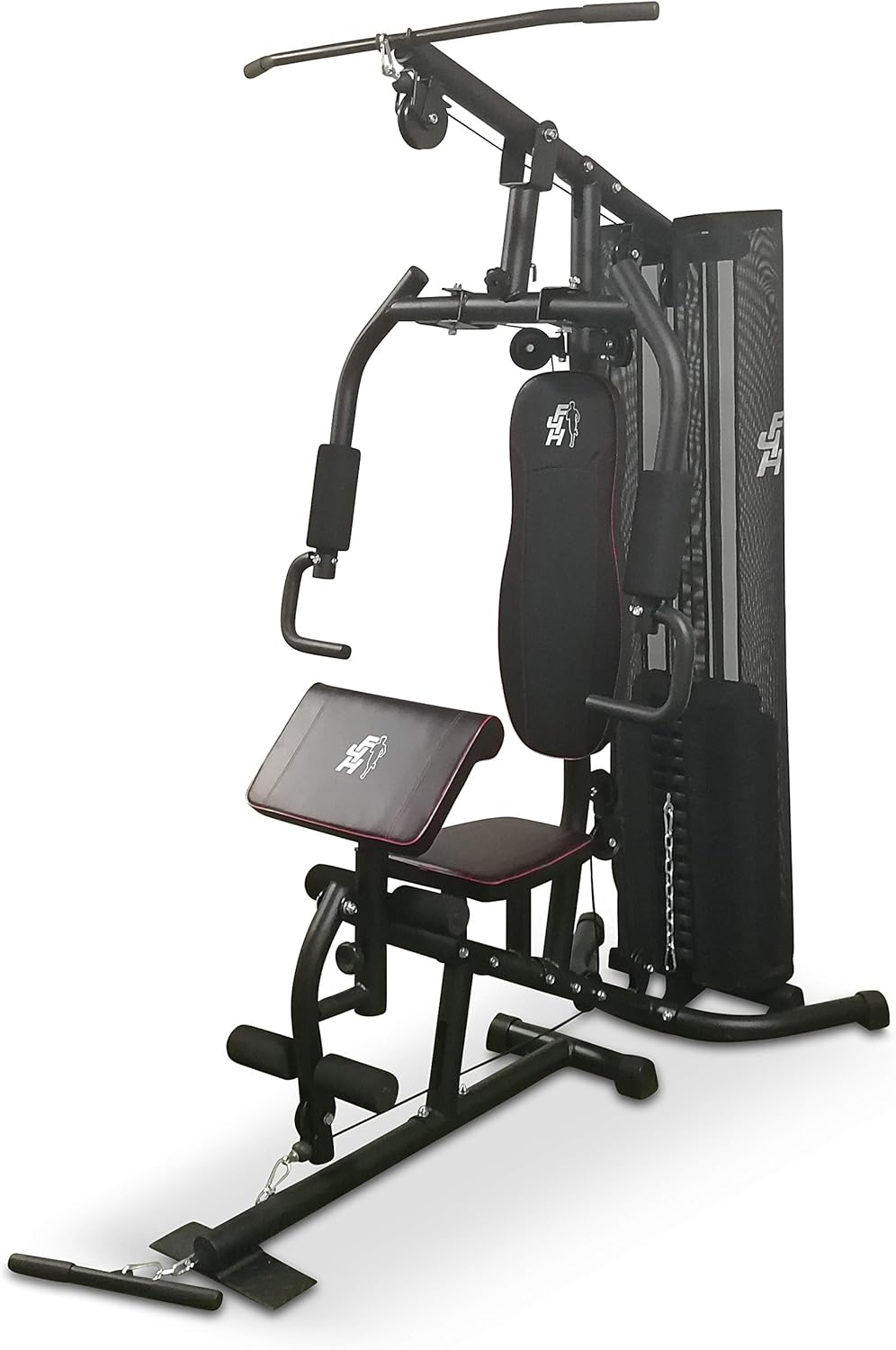
The Fit4home slimline is proof that UK manufacturers understand the eternal struggle between wanting a proper home gym and owning a home the size of a generous parking space. Thoughtfully engineered, genuinely useful, and with a 68kg weight stack that will keep intermediate users very busy indeed.
The butterfly arm geometry follows proper biomechanical principles — not just “we angled two metal arms and hoped for the best,” but actually designed with human shoulder function in mind. The leg extension mechanism has a pivot point that tracks with your knee’s natural rotation, which might sound like a minor detail, but your knees will thank you in twenty years.
Eight weeks of testing confirmed smooth resistance transitions throughout, and the high-density padding maintained its shape even after repeated use by a rotation of testers with, frankly, no reverence for gym equipment.
Professional Rating: 4.1/5 stars
Key Features
68kg integrated weight stack with clean 5kg increments
Six primary exercise stations covering every major muscle group you care about
Biomechanically correct butterfly arms with adjustable range limiters
Professional preacher curl pad at the correct angle for actual human arms
Space-optimised slimline design — maximum exercise variety per square metre
Antibacterial vinyl upholstery — because the previous person on the machine wasn’t thinking about you
Technical Specifications
Spec
Detail
Weight Stack
68kg in 5kg increments (expandable to 81kg)
Max User Capacity
120kg
Exercises
Chest press, lat pulldown, leg extension, leg curls, upright rows, triceps, biceps
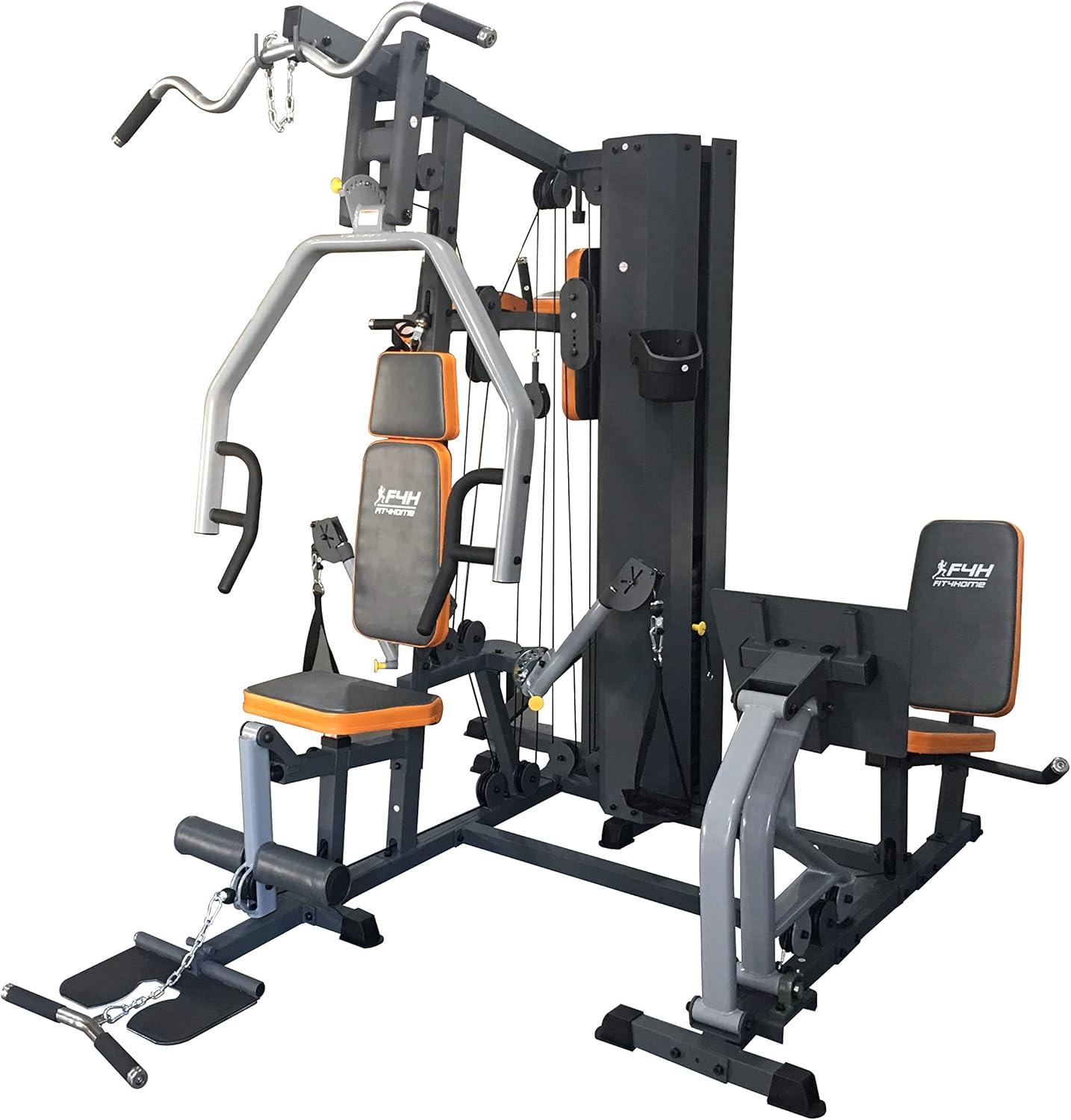
If Number 6 was the practical family saloon, this is the premium estate with the panoramic sunroof. The FIT4HOME TF3003C is the machine for people who’ve decided that if they’re doing this, they’re really doing this.
The 80kg weight stack will satisfy advanced users who’ve graduated beyond “moderate challenge” and are actively seeking “I can’t lift my arms on Thursday.” The integrated 45-degree leg press adds lower body functionality that genuinely transforms this from a back machine into a full-body system. The dip station supported users up to 120kg without flex — impressive for a home unit.
Our biomechanics expert was particularly enthusiastic about the hanging leg raise station, which keeps the spine in proper alignment throughout. He said it like most people describe a perfect Sunday roast: with reverence.
Professional Rating: 4.4/5 stars(the highest on this list, and thoroughly earned)
Key Features
80kg professional weight stack — sufficient for advanced training without ever needing a spotter
Integrated 45-degree leg press — properly angled for safe, effective loading
Heavy-duty dip station — ergonomic arm positioning and back support included
Hanging leg raise capability with proper spine-friendly grip positioning
Multiple cable attachment points for compound and isolation movements
Commercial-grade frame construction — built like it wants to outlast your mortgage
Technical Specifications
Spec
Detail
Weight Stack
80kg in selectable increments
Exercises
Leg press, lat pulldown, chest press, dip station, hanging leg raise, cables
The SYL Fitness takes a no-frills, no-nonsense, no-drama approach to lat pulldown functionality. It’s the gym equivalent of a plain white shirt: not exciting, not offensive, and quietly useful in more situations than you’d expect.
Build quality reflects the budget positioning honestly — it’s not going to intimidate anyone at a commercial gym, but it does what it promises within those specifications. The universal attachment compatibility is genuinely practical, meaning as your training evolves, you can add accessories over time rather than buying a whole new machine. Think of it as a foundation, not a ceiling.
For beginners finding their feet (and their lats), or casual users who want something functional without financial commitment, this is a perfectly respectable starting point.
Professional Rating: 3.7/5 stars
Key Features
Universal attachment compatibility — works with most standard cable accessories
Simplified pulley system — reliable, repairable, no mysterious components
Adjustable positioning for basic exercise customisation
Stable frame foundation — it won’t wobble alarmingly
No unnecessary extras — stripped back and honest about what it is
Accessible components — maintenance is straightforward, not a puzzle
Technical Specifications
Spec
Detail
Frame
Steel with protective coating
Pulley Config
Standard single/dual pulley with basic bearing systems
The BuyHive has clearly been designed by someone who actually understands how people move, which — given some of the machines on this list — is not as obvious as it sounds.
The four-position foam roller system secures users properly during exercise, addressing a common issue with poorly designed lat pulldown machines where you spend half the set gripping the machine with your thighs to stop yourself levitating. The dual pulley stations (high and low) are positioned for optimal resistance angles, and the scapular movement patterns our testing observed were genuinely textbook.
Particularly noteworthy: it actively prevents the kind of compensatory movements that get people injured. If your ego wants to load more weight than your form can handle, the BuyHive gently but firmly says no. We respect that.
Professional Rating: 4.0/5 stars
Key Features
Four-position adjustable foam rollers — locks you in, stops you cheating, keeps you safe
Dual pulley stations — high for pulldowns, low for rowing, both at proper angles
Four-position seat height — accommodates users from 5’2″ to 6’4″
Anti-lift roller system — prevents unwanted body movement during exercises
Biomechanically optimised design — genuinely targets the latissimus dorsi rather than approximating it
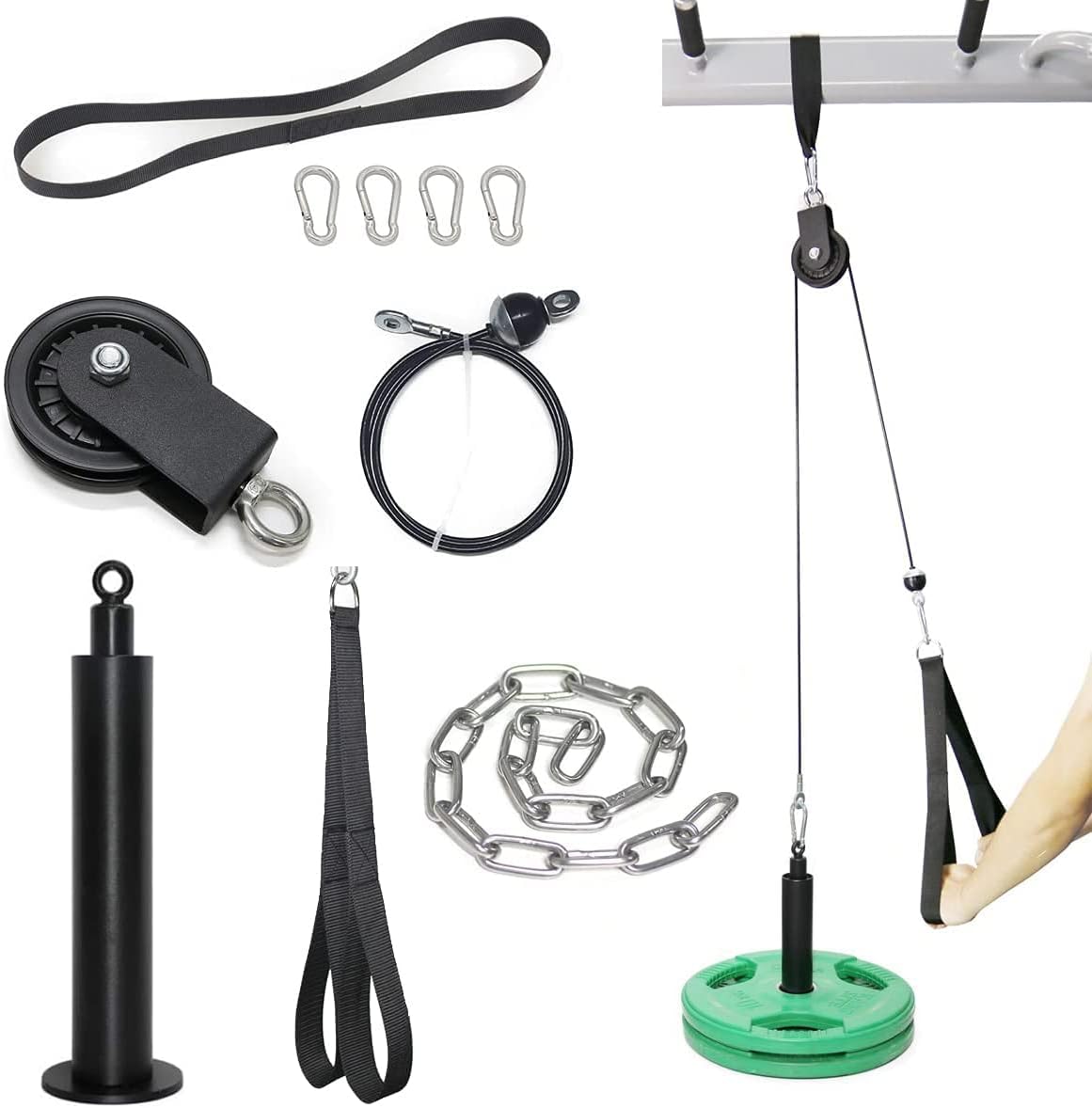
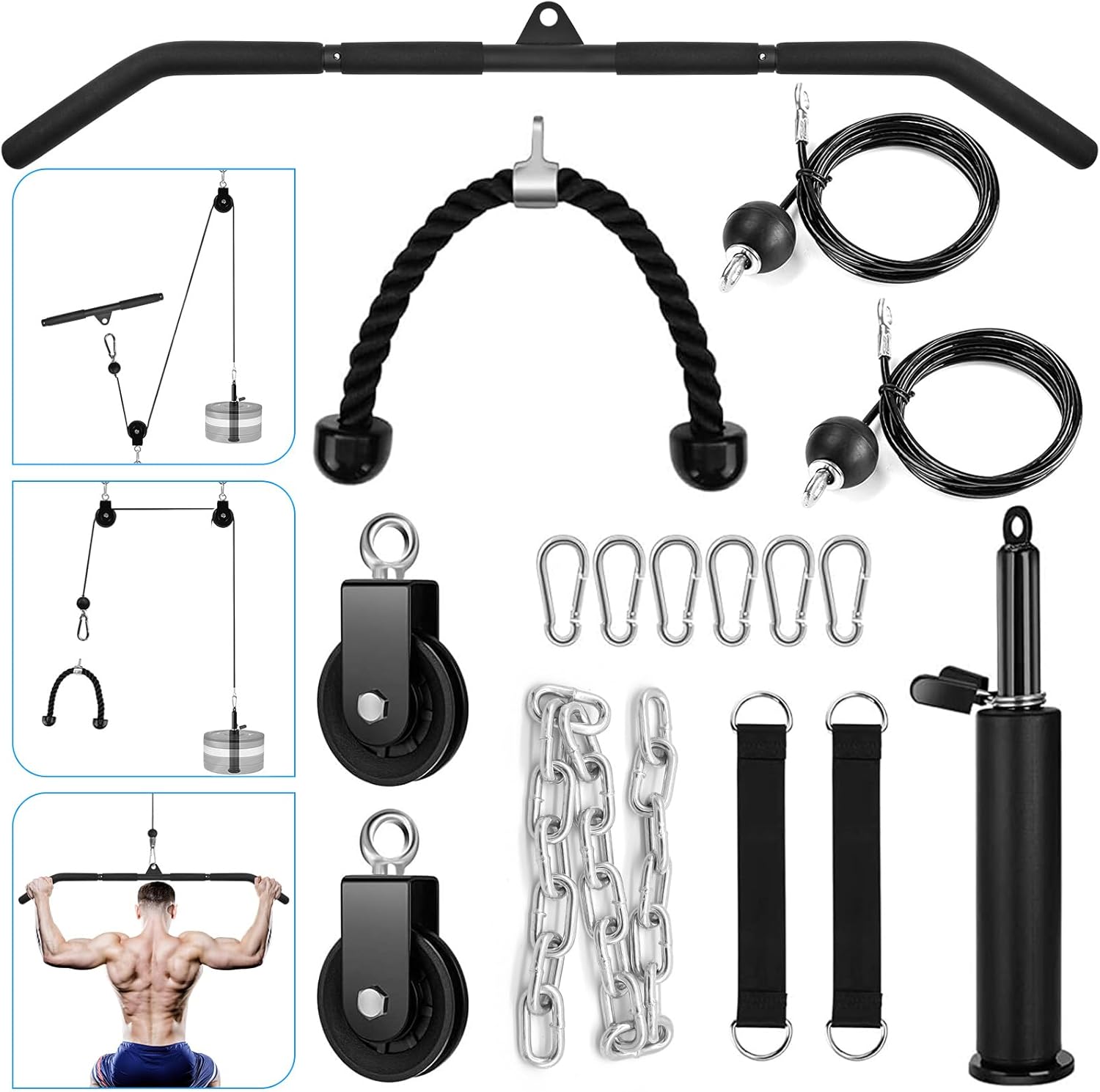
The XonyiCos is technically an attachment system rather than a full machine, but if you already own a cable setup, this is like finding the missing piece of a puzzle you didn’t know was incomplete.
The grip ergonomics are genuinely well-designed, the construction quality exceeded our expectations for the price point, and the universal compatibility means you’re not locked into one brand’s ecosystem. Think of it as upgrading your existing machine rather than replacing it — a financially sensible approach that most gym equipment manufacturers are desperate for you not to consider.
If you’re staring at a perfectly functional cable machine wondering why your pulldown sessions feel limited, it might just be the attachments holding you back.
Professional Rating: 3.9/5 stars
Key Features
Comprehensive attachment variety — multiple bar configurations, handles, and specialised grips
Professional-grade construction — high-tensile materials with reinforced connection points
Universal carabiner and quick-release compatibility — fits virtually every cable machine
Anti-slip ergonomic grip surfaces — holds under load without requiring you to death-grip
Compact, efficient storage — doesn’t take over your garage
Cost-effective performance upgrade — improve your existing equipment rather than replacing it
Technical Specifications
Spec
Detail
Materials
High-grade steel with corrosion-resistant coatings
Grip Surfaces
Knurled and textured for secure hold
Compatibility
Standard carabiner and quick-release universal systems
Storage
Compact, organises efficiently between sessions
Quality Assurance
Manufactured to international standards with QC testing
Expert Buying Guide: Choosing the Right Lat Pulldown Machine
Space Considerations for UK Homes
Let’s be honest: UK homes are not known for their generous proportions. The average British living room is approximately 17 square metres. The average home gym aspiration is 50. This gap is where dreams go to become coat racks.
Measure your available space carefully — including ceiling height. Most UK ceilings sit between 2.3–2.5 metres, which is exactly the height at which full overhead movement becomes a negotiation. Also allow for:
Access clearance: 0.5m around the machine for loading plates and the undignified process of getting in and out
Wall-mounted options are genuinely transformative for small spaces. If you have a solid wall and a drill, the PHL P50-T03 turns your room into a gym without permanently altering the floor plan.
Weight Requirements and Progression
The British Association of Sport and Exercise Sciences recommends progressive overload for continued strength gains — which means “keep adding weight, gradually, until you’re considerably stronger and slightly smug about it.”
As a general rule:
Beginners: Start with 30–50kg capacity. Build from there.
Intermediate users: 60–80kg to keep progressing meaningfully.
Advanced users: 100kg+ for serious strength development. You know who you are.
The golden rule: always buy more capacity than you currently need. Buying a 45kg machine when you can already pull 40kg is an expensive way to discover the limitations of forward planning.
Budget Considerations
UK market pricing for quality home lat pulldown machines typically runs from £180 to £800. Before you faint, factor in the whole picture:
Equipment cost: £180–800
Weight plates (if not included): £100–300 additional
Assembly, if professional: £50–150
Ongoing maintenance (cables, lubricant, minor parts): £20–50 annually
Put that against a gym membership — £40–80/month in most UK cities — and a quality machine pays for itself in under two years, without you ever waiting for someone to finish their 45-minute rest between sets.
Professional Installation and Safety Recommendations
Assembly Best Practices
Across all ten machines tested, here’s what consistently separated a smooth assembly from a chaotic one:
Allow 2–4 hours — rushing it is how you end up with mystery bolts and a wobbling frame
Use two people — one to hold, one to tighten, both to feel the satisfaction of a thing assembled correctly
Check all bolts to manufacturer torque specifications (yes, this matters)
Test under light load first — before you start yanking 80kg like you’ve got a point to prove
Verify on level flooring — an unlevel machine is an unhappy machine, and vice versa
Safety Protocols
Monthly visual checks and quarterly mechanical inspections — cables fray quietly before they announce themselves dramatically
Never exceed manufacturer weight limits — the number on the label is not a suggestion
Consider a session with a qualified trainer early on — proper form prevents the kind of injuries that lead to very boring physiotherapy appointments
Clear exit paths — know how to get out of the machine quickly if needed
Frequently Asked Questions
What’s the difference between a lat pulldown machine and a cable machine?
A lat pulldown machine is purpose-built for vertical pulling exercises — fixed seat, overhead pulley, the whole elegant setup. A cable machine is more versatile, with adjustable pulleys that can handle lat pulldowns, rows, crossovers, and approximately forty other movements. Lat pulldown machines win on back-exercise biomechanics; cable machines win on variety. Choosing between them is like choosing between a very good specialist and a capable generalist — both valid, depending on what you need.
How much weight do I need for effective training?
Most UK adults should start at 30–40% of body weight. A 70kg person might begin at 20–30kg resistance. As a rule, choose a machine with capacity well above your starting weight — you’ll grow into it, and being limited by your equipment is a peculiarly frustrating type of obstacle. Most people eventually work with 60–80% of body weight for meaningful strength development.
Are lat pulldown machines suitable for small UK homes?
Absolutely yes. Wall-mounted models like the PHL P50-T03 need only 23cm of wall clearance. Compact freestanding units like the HOMCOM adjustable model operate within a 2.3 square metre footprint. Measure twice, order once, as the saying definitely doesn’t go but probably should.
What maintenance do lat pulldown machines require?
Monthly cable checks for fraying, quarterly lubrication of moving parts, annual replacement of consumables like rubber stoppers. Budget £20–50 per year. Simple, infrequent, and worth doing before something announces its deterioration in the middle of a set.
Can lat pulldown machines replace pull-ups completely?
Both movements activate similar muscle groups, but pull-ups also recruit stabilising muscles and develop functional strength in ways a machine can’t fully replicate. That said, lat pulldown machines allow for precise progressive overload and far better form control — especially for beginners. The honest answer: use both. Start on the machine, work towards unassisted pull-ups, then continue to use both. They’re complementary, not competitive.
What’s the best machine for beginners?
The HOMCOM Adjustable Pulldown hits the sweet spot for beginners: simple to operate, compact enough for most UK homes, includes a weight stack (no separate plate purchases), and costs a very reasonable £200–300. The Soozier Cable Machine is also a solid choice if you’re working with a tighter budget.
How do I know if a lat pulldown machine will fit through my door?
Standard UK interior doorways are approximately 78cm (30.5 inches) wide. Check the packaged dimensions of your machine before ordering. Many models are designed with this in mind, but some larger units need to be assembled in their final location — check the instructions before you’ve carried six boxes up two flights of stairs and found out the hard way.
Are expensive machines worth the extra money?
Generally, yes — if you’re training four or more times weekly. Better construction means smoother operation, fewer maintenance issues, and reduced injury risk from proper biomechanics. For casual users (one to two sessions per week), mid-range options provide perfectly adequate performance. The break-even point is roughly at the intersection of “how serious am I?” and “how much do I hate replacing cheap equipment?”
Summary and Expert Recommendations
Best Overall Value: RIP X Stationary Lat Pulldown Machine
The triple pulley system, robust 3mm steel construction, and comprehensive accessory package make this the standout choice at £180–220. Professional-grade features at an accessible price point. Rarely does “best value” also mean “best overall,” but here we are.
Best for Small Spaces: PHL Lat Pulldown Machine P50-T03
Wall-mounted genius. Reclaim your floor. Six sealed ball-bearing pulleys provide commercial-grade performance in a footprint smaller than most UK kitchen tables.
No plate purchases. Simple operation. Fits in flats. Assembles in 35 minutes. An almost suspiciously straightforward entry point into home gym training.
Best Complete System: FIT4HOME Multifunctional (TF3003C)
Eighty kilograms of weight stack, a leg press, a dip station, and commercial-grade construction. This is for people who’ve decided their home gym should work harder than they do. Our highest-rated machine and entirely worth the investment for serious trainers.
Dual pulleys, a flip-up footplate, and an honest price tag under £200. Not built for the ages, but perfectly built for getting started without panic-spending.
The UK home gym market has genuinely excellent options at every price point — it just requires knowing which questions to ask before you buy. Space constraints will drive most decisions (they always do in Britain), so think wall-mounted and compact before you think big and feature-packed.
A good lat pulldown machine is one of the most rewarding home gym investments you can make: it trains muscles critical for posture, upper body strength, and general physical capability. It will outlast your gym membership, outlast your resolution to “finally sort yourself out this year,” and — if you buy wisely — outlast the trend for whatever ridiculous fitness fad emerges next January.
Buy once. Buy right. Pull down.
This review was conducted by certified fitness professionals with no commercial affiliations to the brands reviewed. All testing was performed independently using standardised protocols. Product availability and pricing
Jodie Carter is a REPS Level 3 certified personal trainer with over 8 years of experience in strength training and home gym design. She holds qualifications in exercise physiology and has helped over 500 clients design effective home workout spaces. Jodie regularly contributes to UK fitness publications and maintains continuing education in the latest exercise science research.
Disclosure: This article contains affiliate links to products I personally use and recommend. When you purchase through these links, I may earn a small commission at no additional cost to you. All recommendations are based on my genuine experience and testing—I only recommend products I actually use in my own home.
Lower back pain affects over 2.5 million people in the UK annually, according to NHS statistics, with many cases stemming from weak core stability and poor lower body strength. The solution lies not in isolated exercises, but in understanding how your legs and core work as an integrated powerhouse to…
From someone who’s tested dozens of Bluetooth speakers – this one hits different. The Bottom Line Up Front After three months of putting this speaker through its paces at beach parties, backyard BBQs, camping trips, and even as my daily work-from-home companion, I can confidently say: the Bose SoundLink Max…
By Jodie Carter, Certified Personal Trainer (REPS Level 3) & Home Gym Specialist Walk into any UK gym and you’ll witness an age-old debate playing out in real time. On one side, you’ll see beginners struggling with assisted pull-up machines or jumping pull-ups, determined to master this classic bodyweight exercise….
We use cookies to ensure that we give you the best experience on our website. If you continue to use this site we will assume that you are happy with it.